Flavia Regaldo
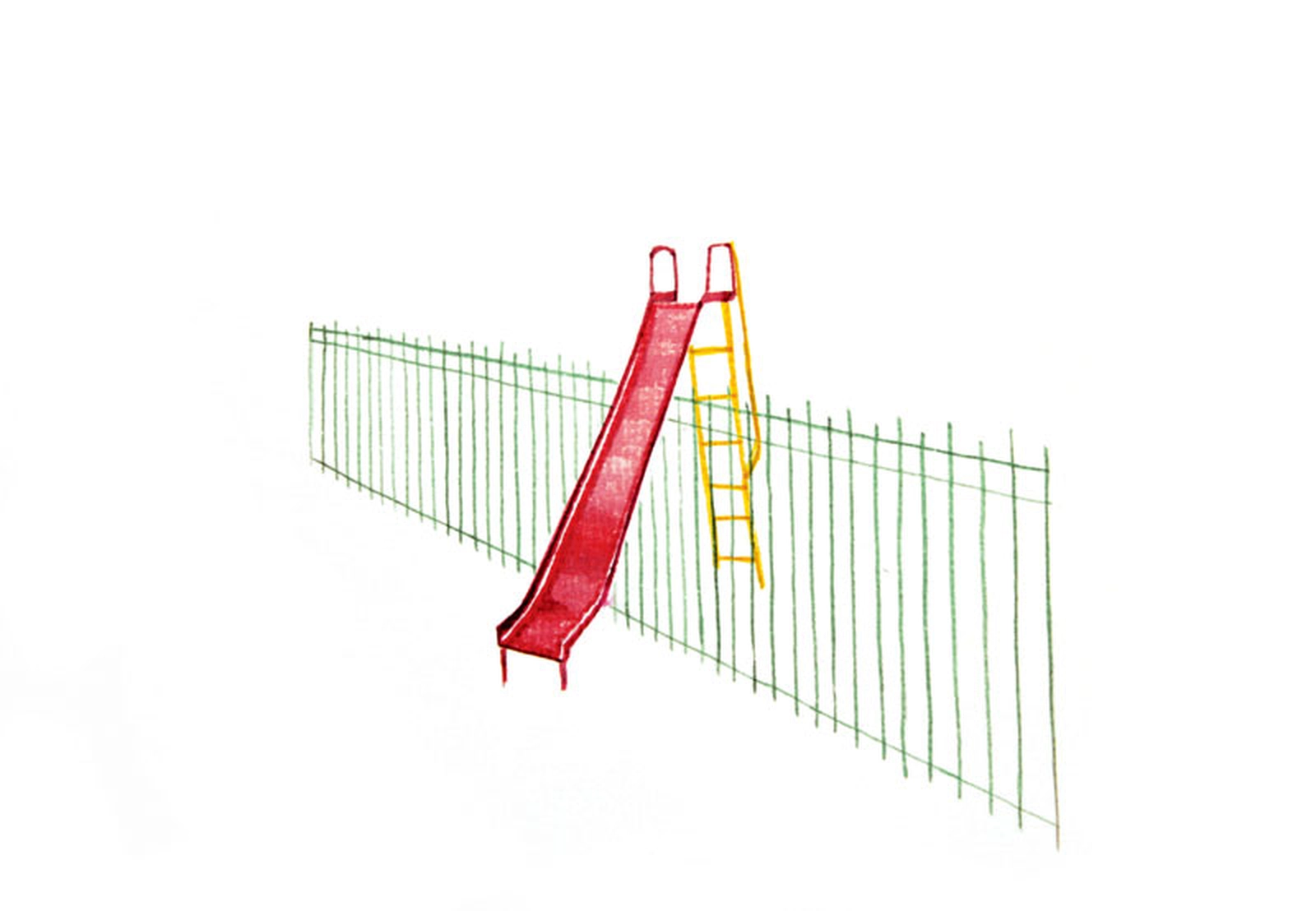
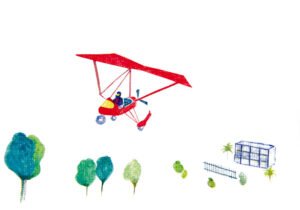
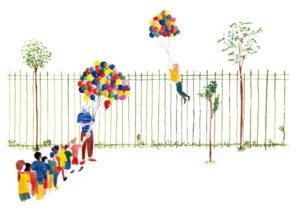
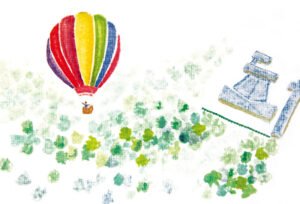
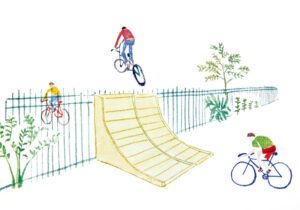
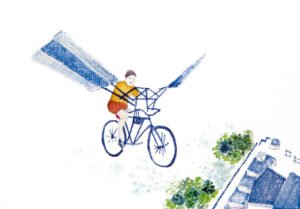
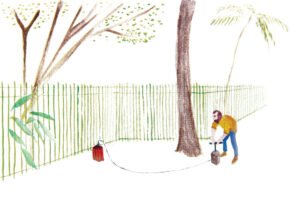
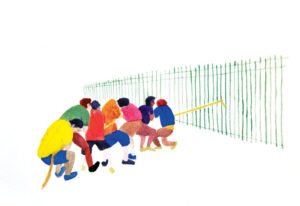
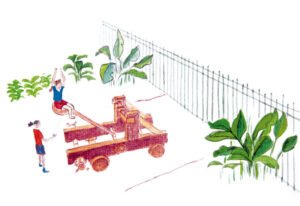
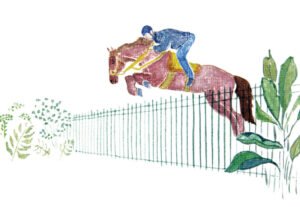
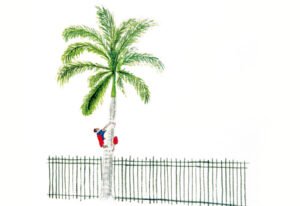
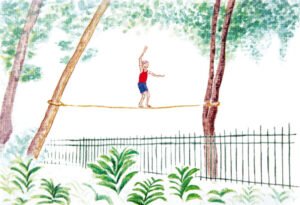
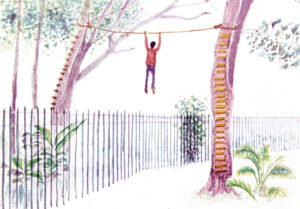
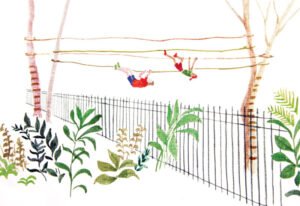
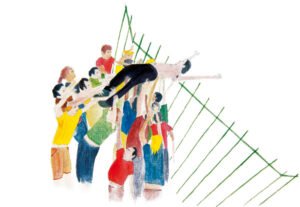
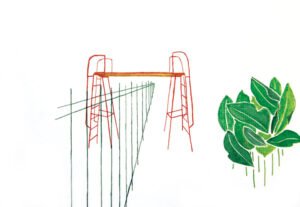
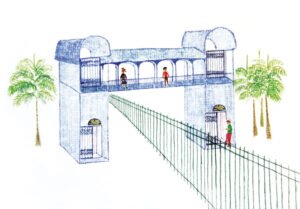
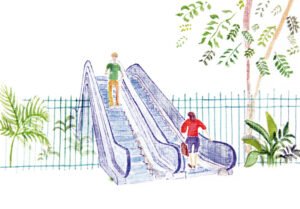
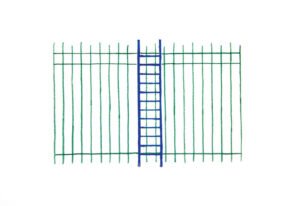
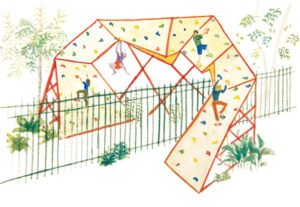
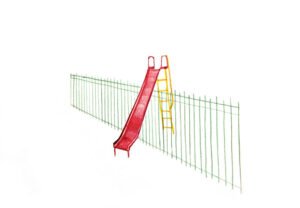
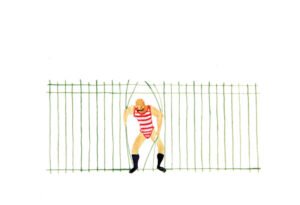
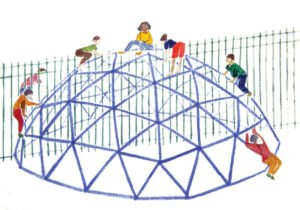
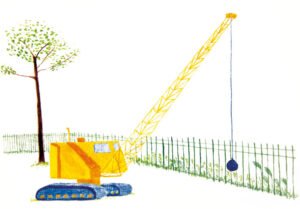
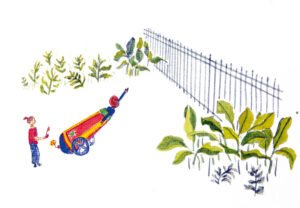
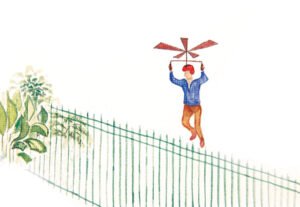
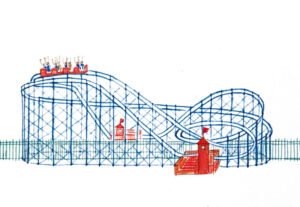
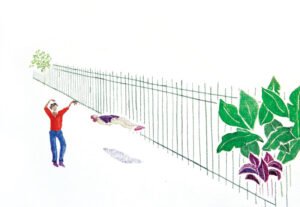
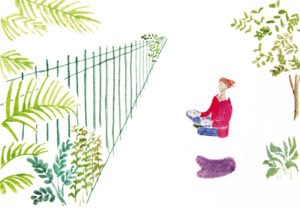
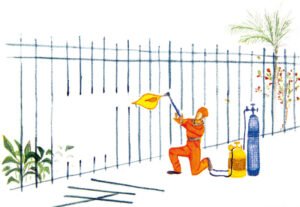
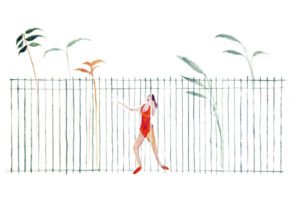
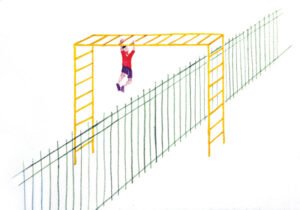
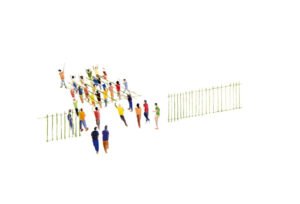
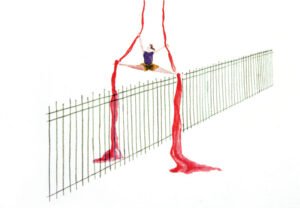
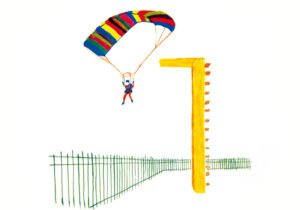
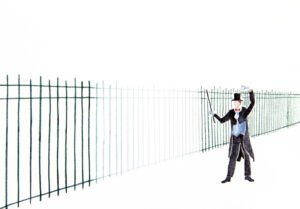
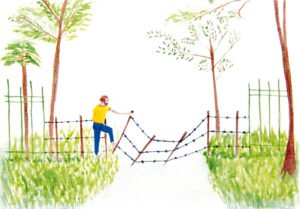
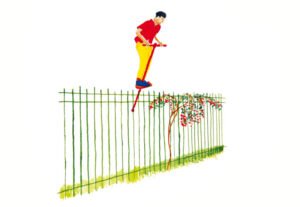
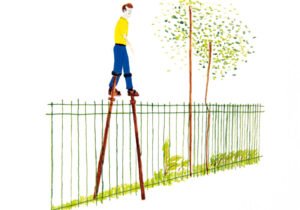
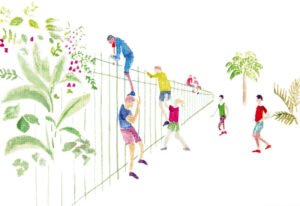
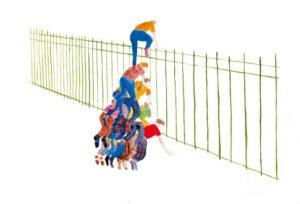
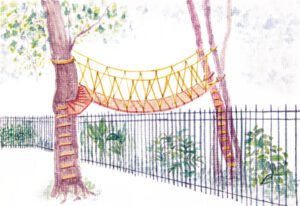
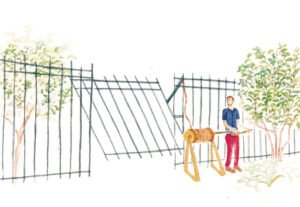
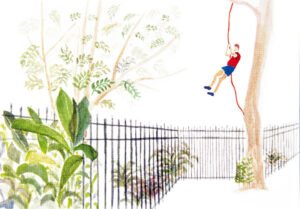
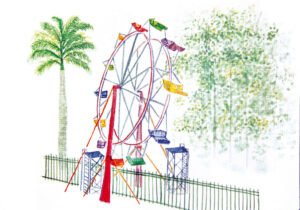
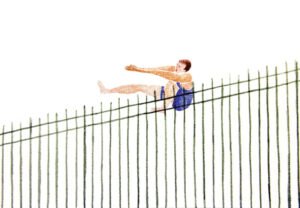
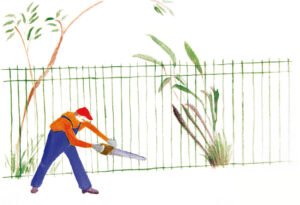
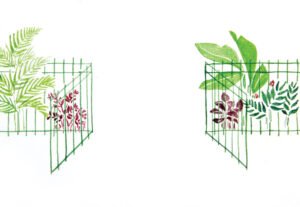
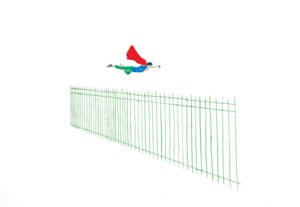
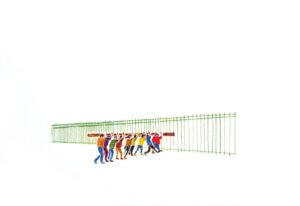
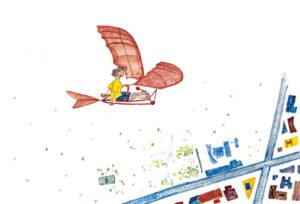
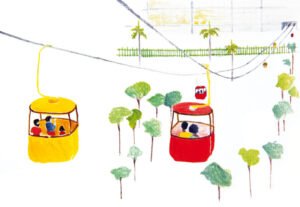
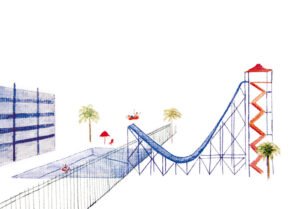
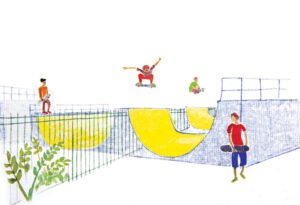
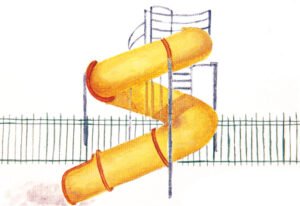
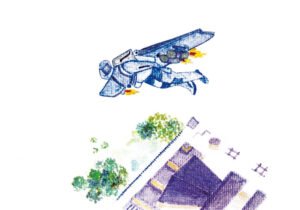
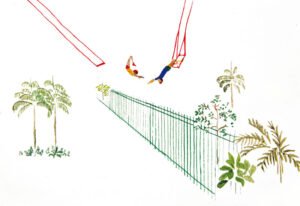
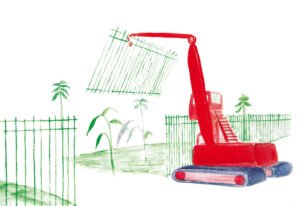
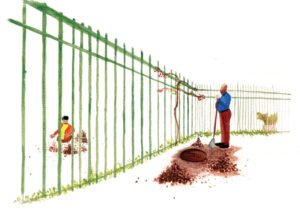
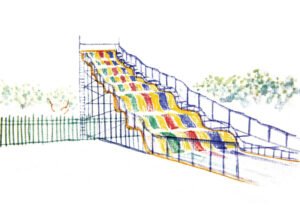
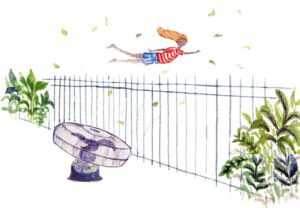
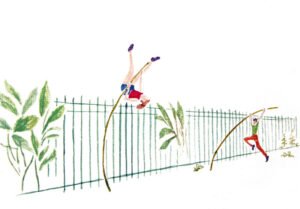
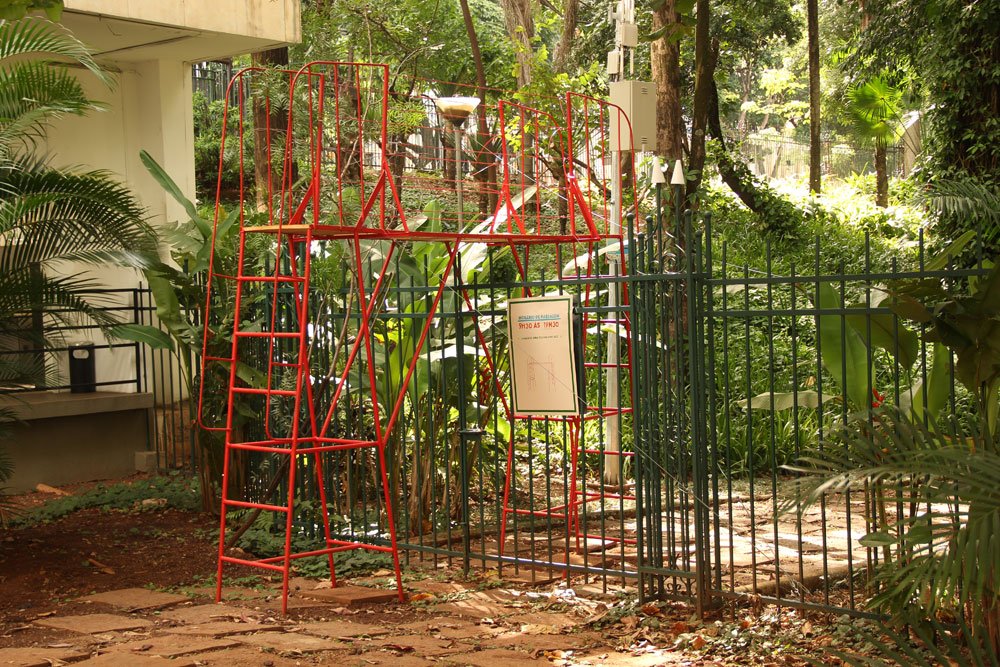
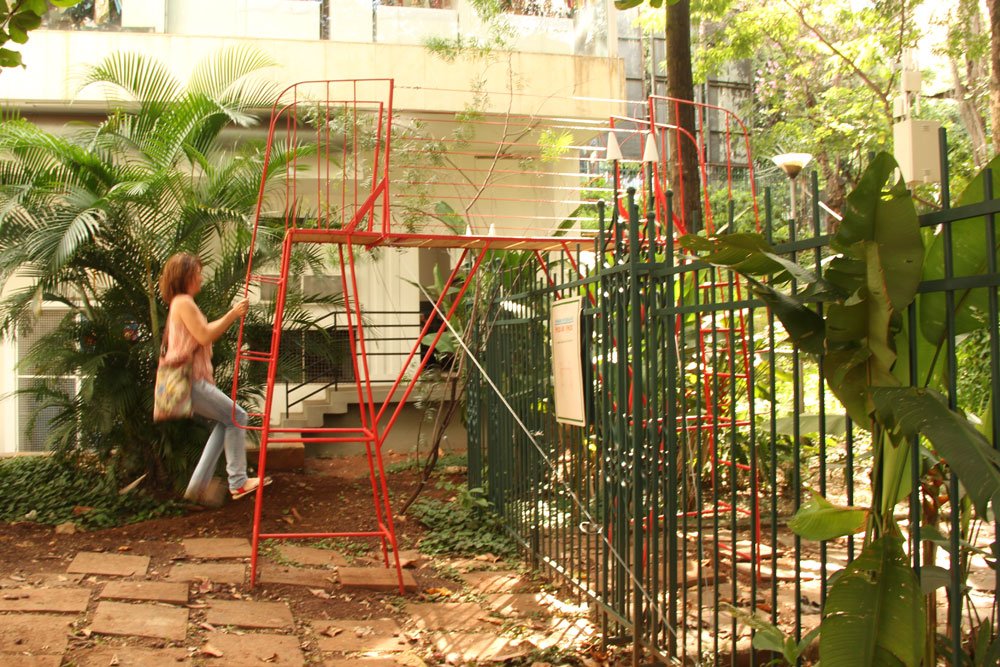
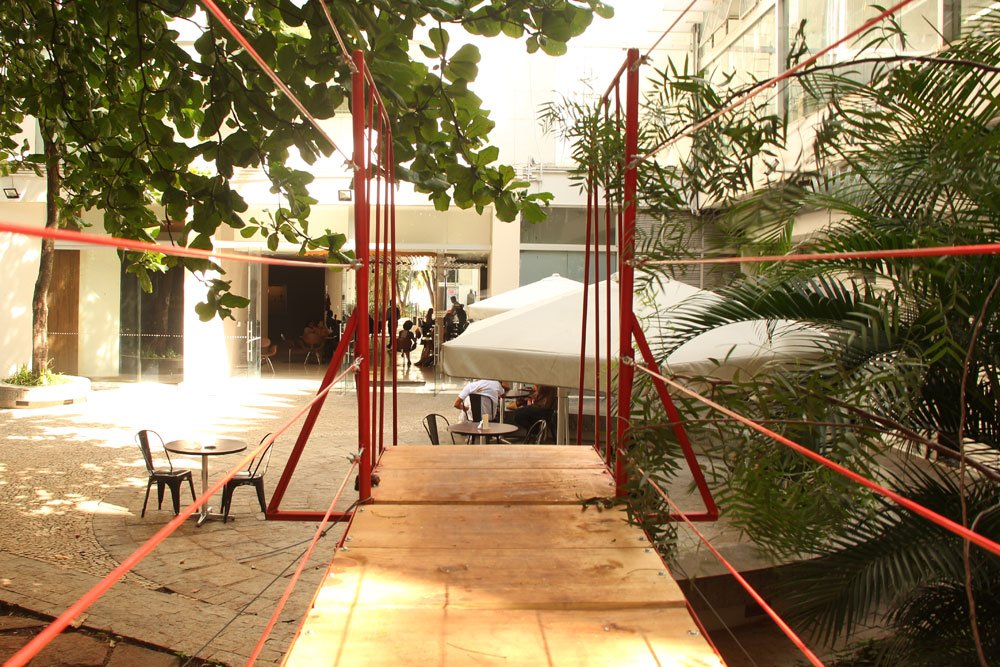
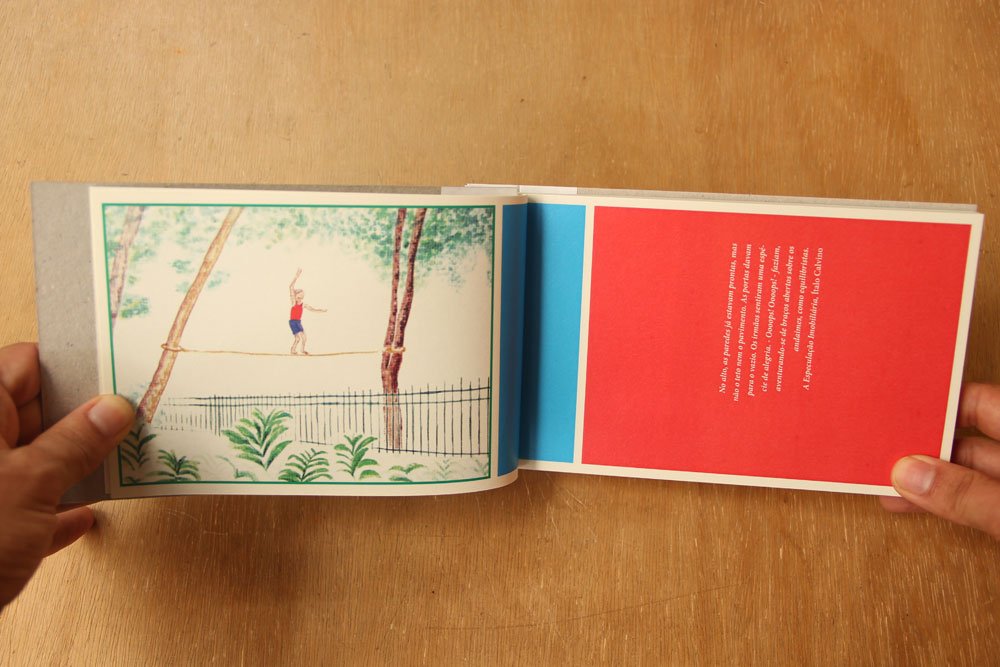
Between the Palácio das Artes Cultural Centre and Belo Horizonte Municipal Park, there is a metal fence running the entire length of the boundary. In Passing, we began negotiations with state and municipal institutions to obtain permission to install a bridge between the two sites. The intangible system, the bureaucracy, the unreachable sides. The length of the bridge may not measure the distance between the park and the gallery. And if the passage is unattainable, it is in utopia that fabulous projects are conceived to reach the other side of the fence.
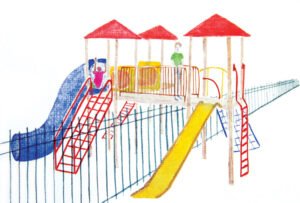
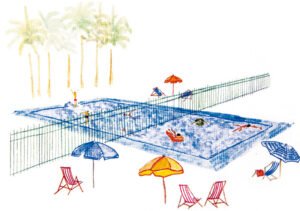
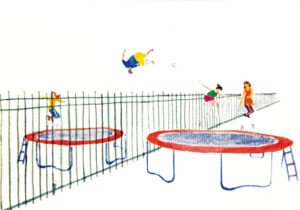
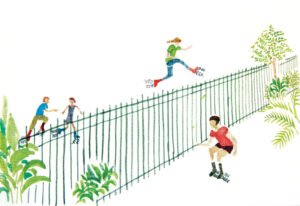
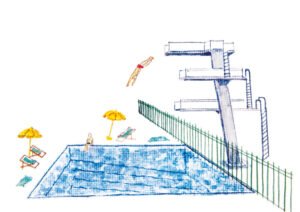
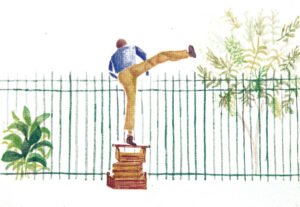
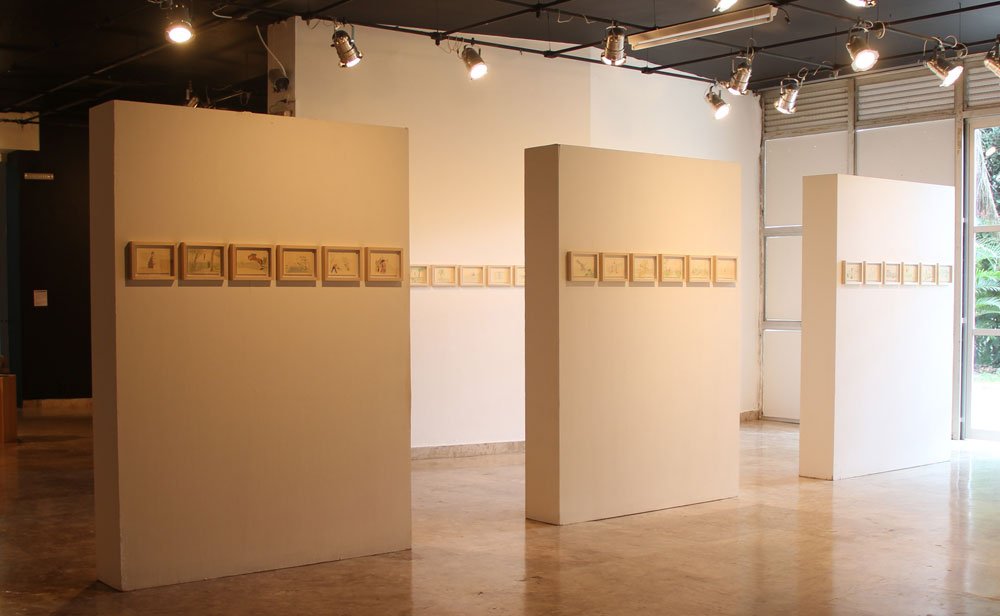
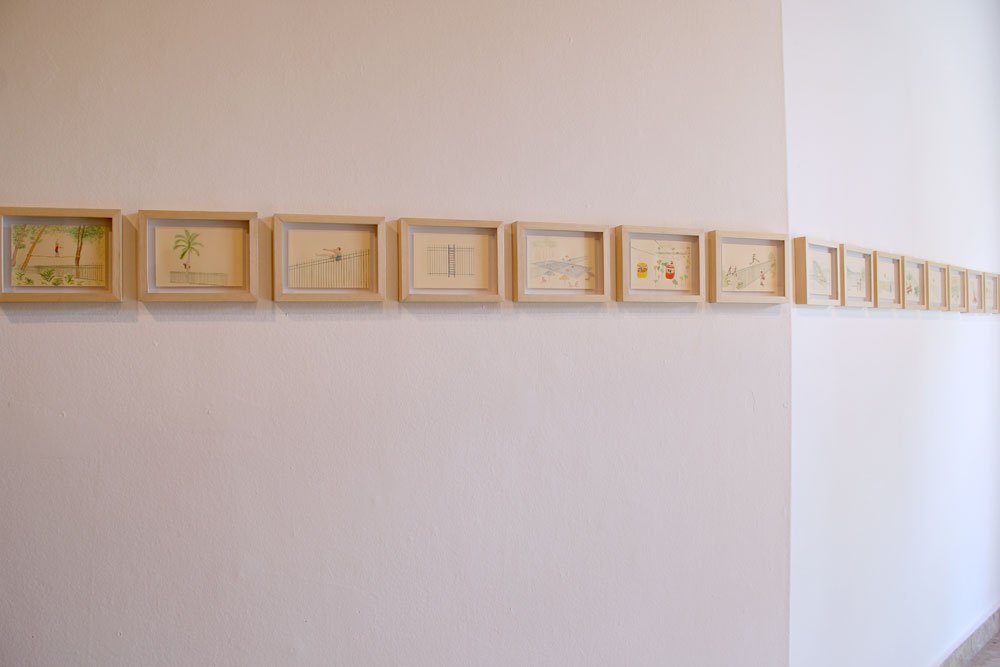
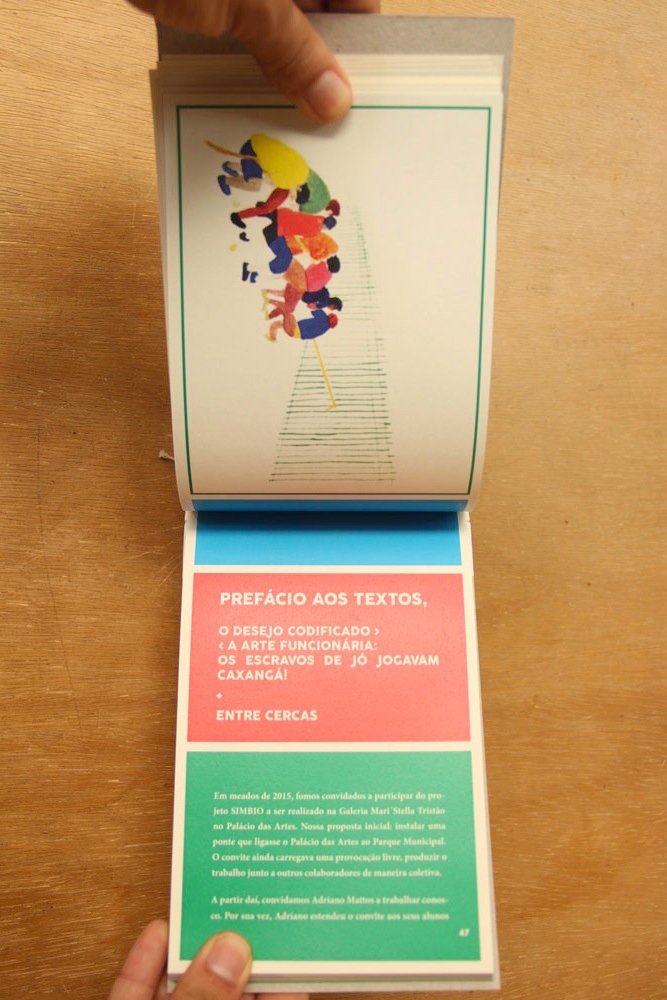
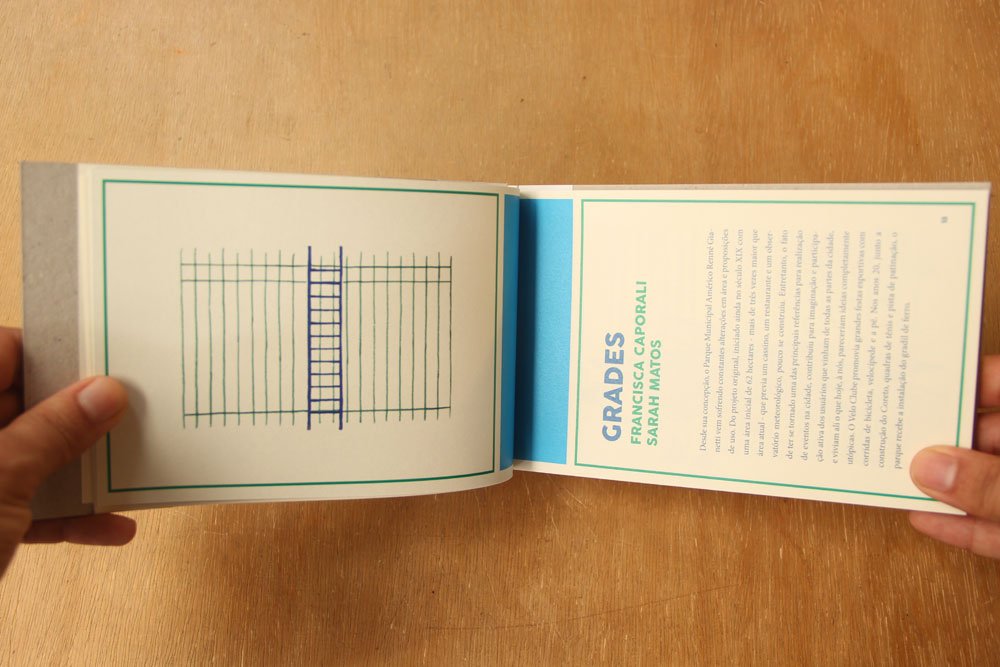
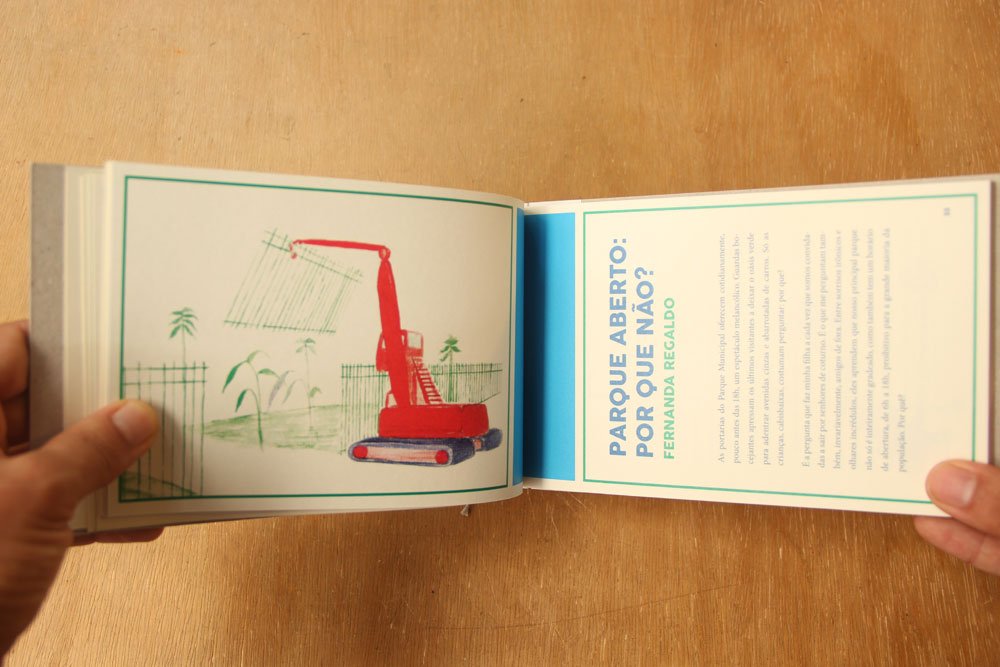
A series of 70 drawings and installation of a footbridge linking the Palácio das Artes to the Municipal Park in Belo Horizonte, Brazil, during the exhibition’s opening period.
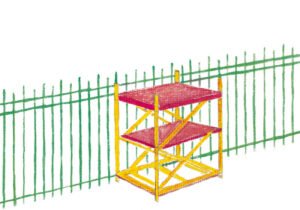
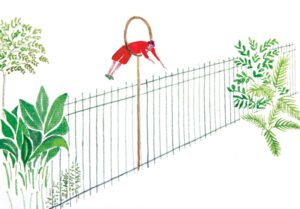
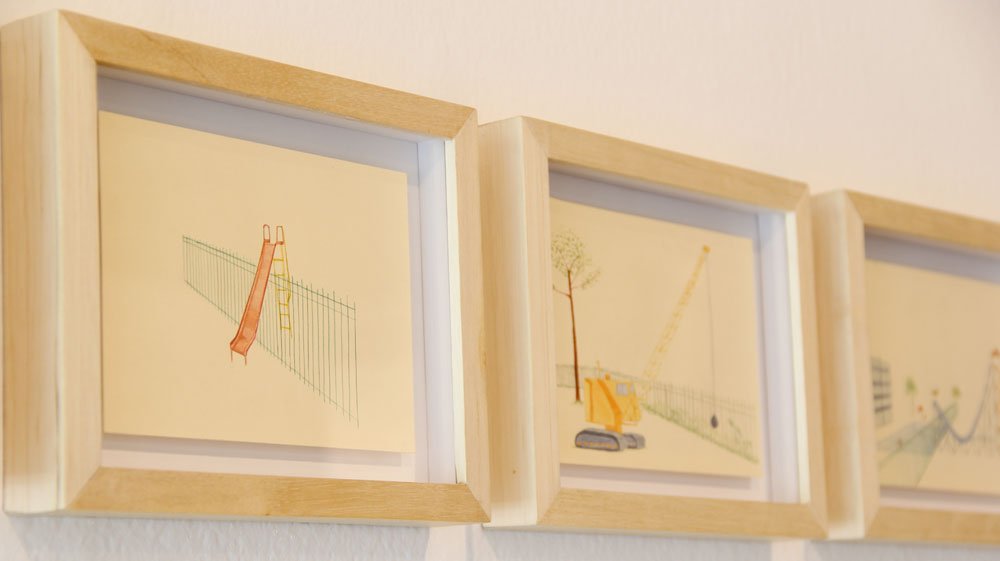
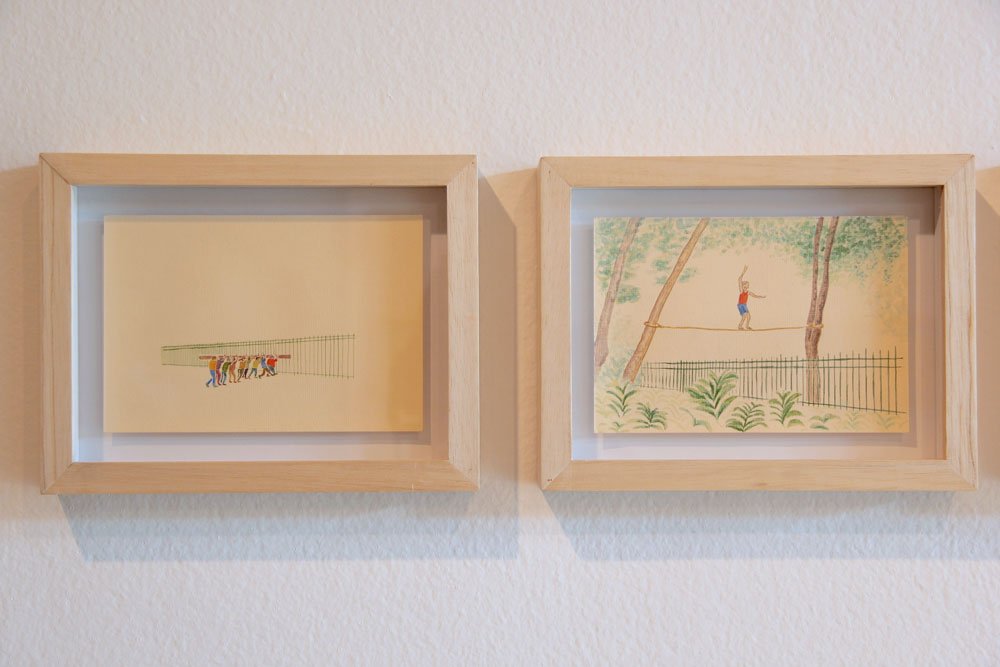
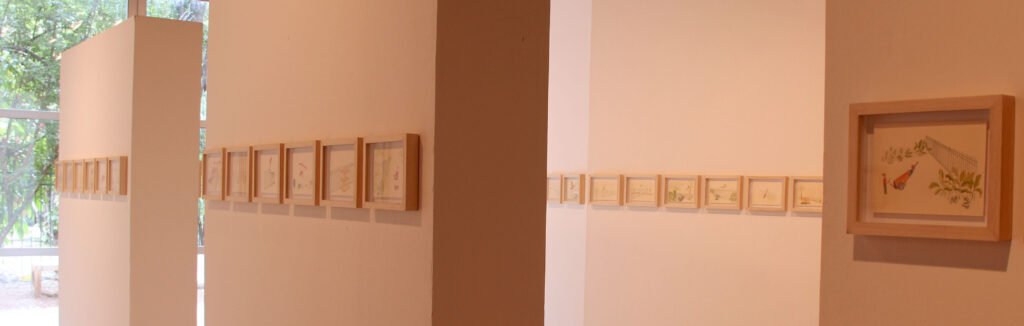
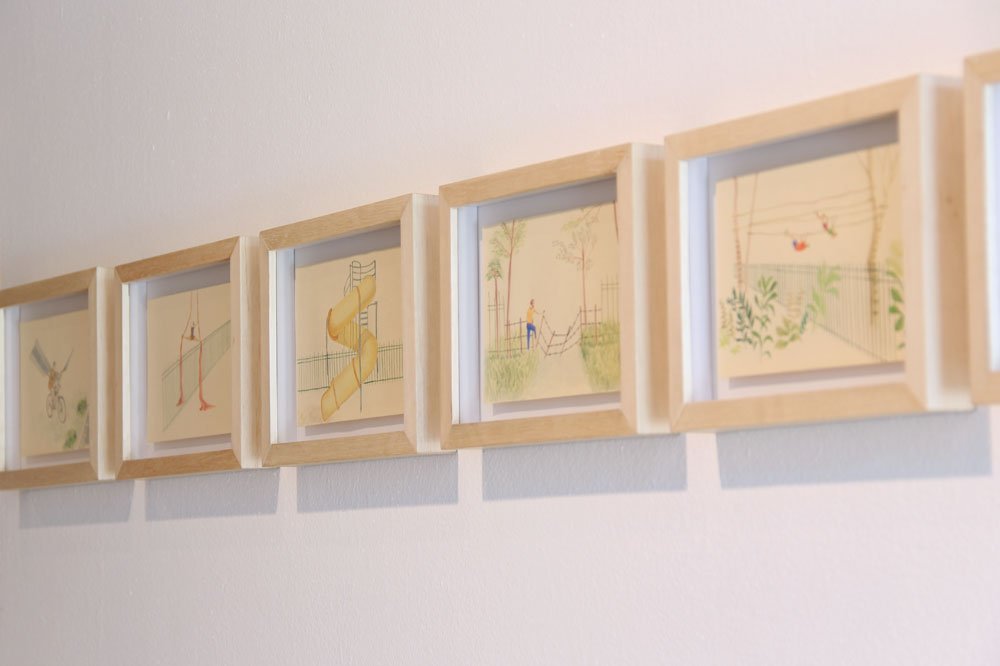
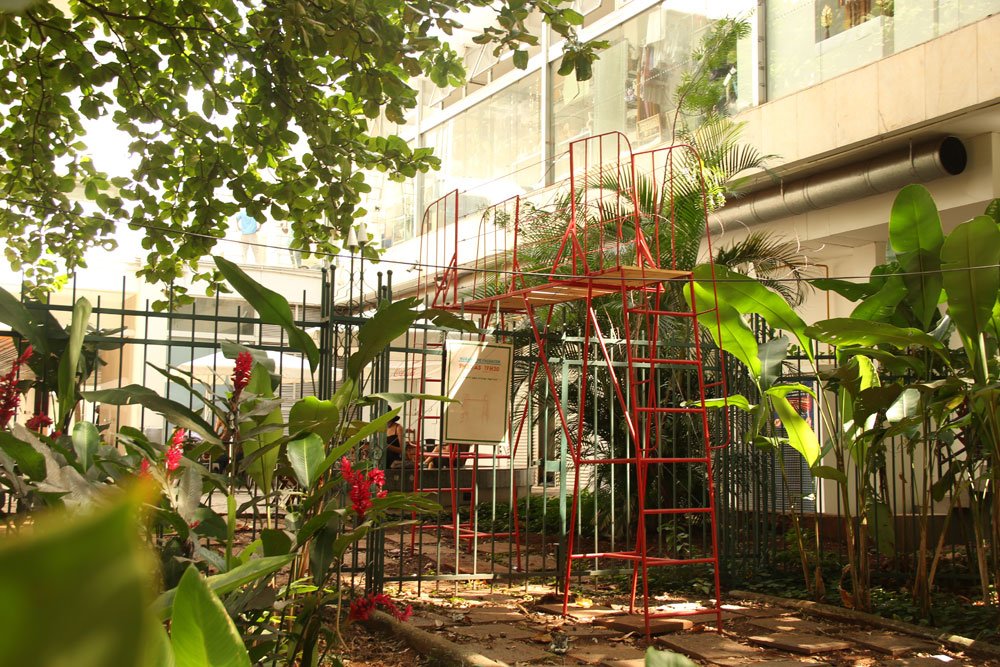
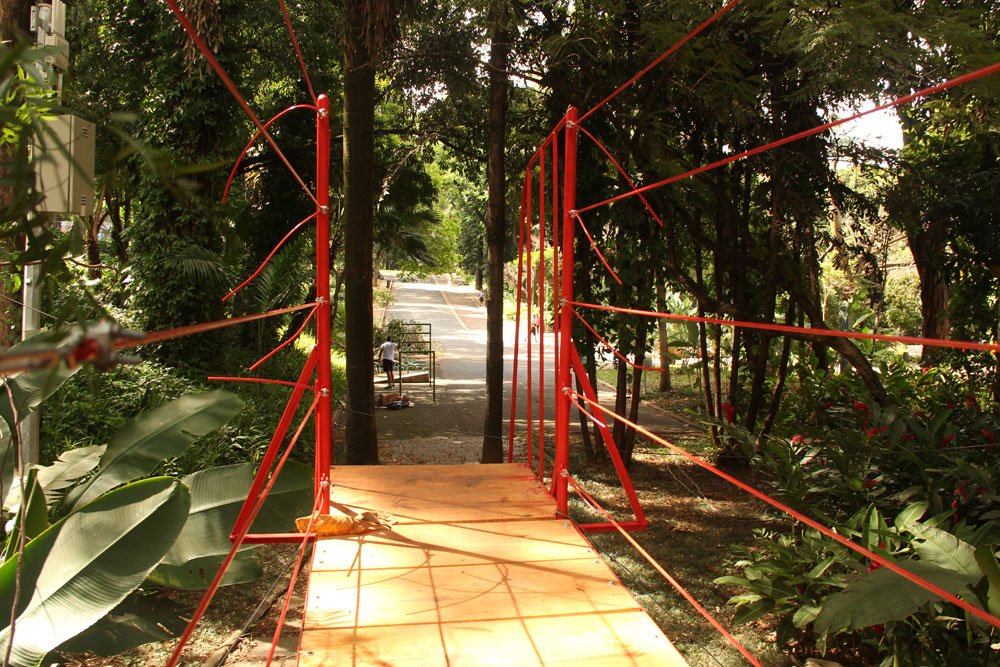
Passing
142 pages
Screen-printed cover on Horlle paper
Laser-printed interior
Japanese manual binding
download
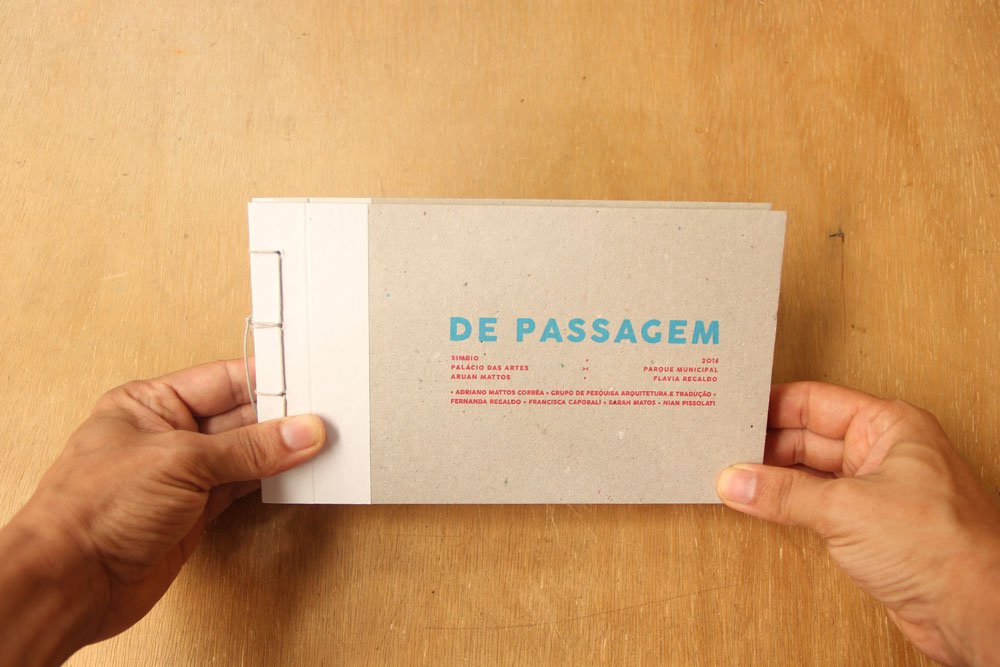
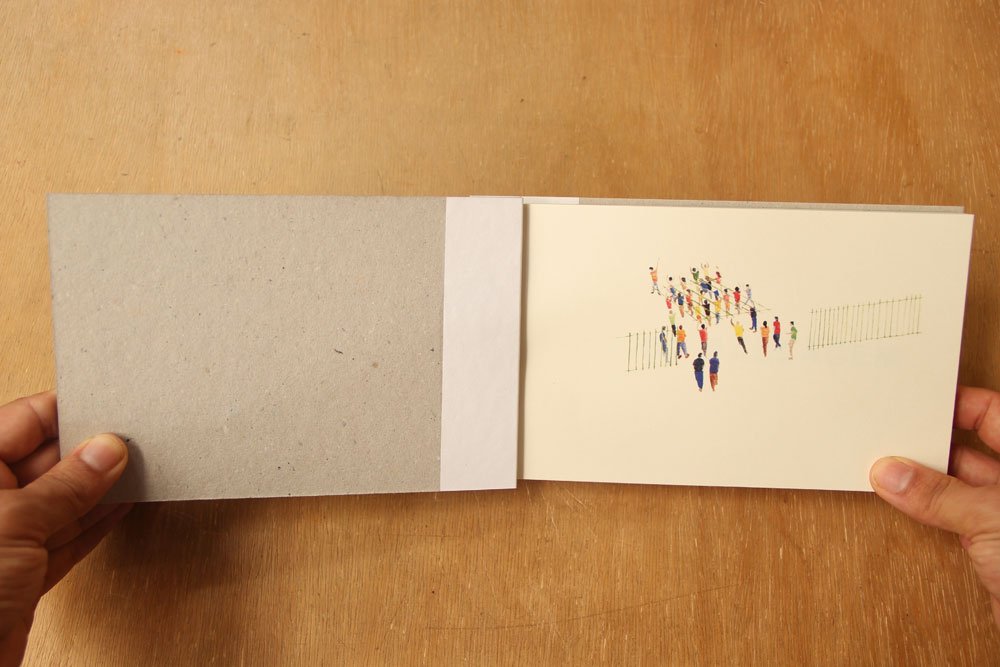
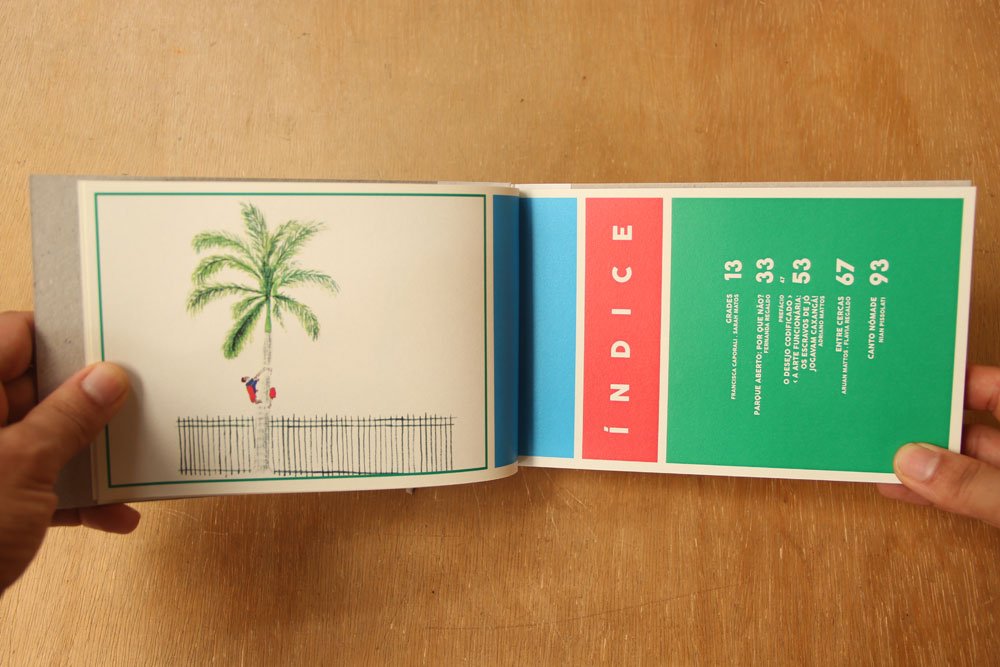
Nomadic Chant
Nian Pissolati
The coded desire
Adriano Mattos, Aruan Mattos and Flavia Regaldo
Open park: why not?
Fernanda Regaldo
Fences
Francisca Caporali
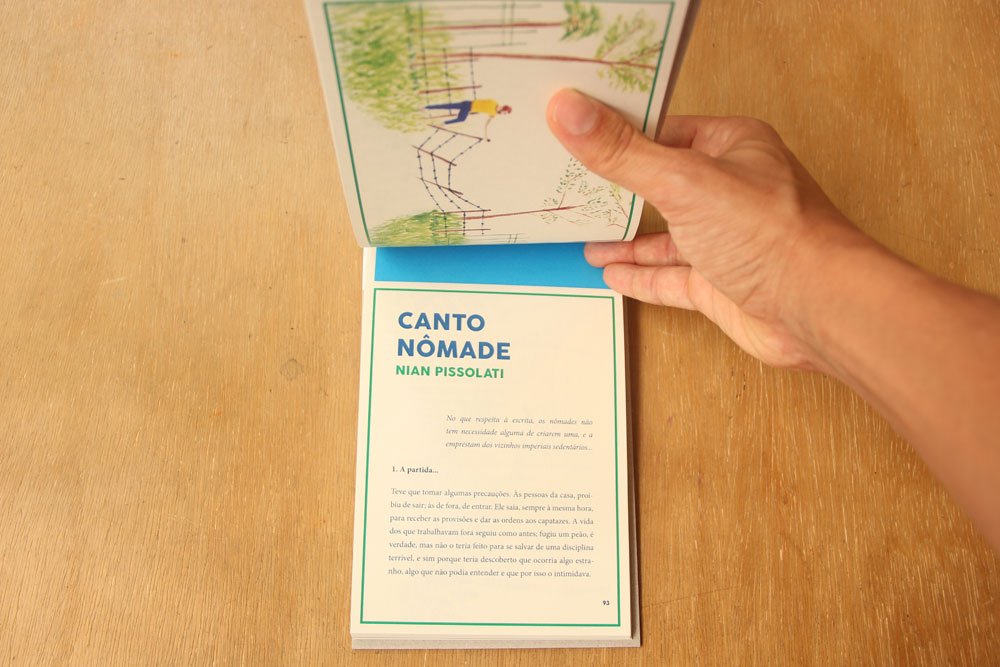
Nomadic Chant
Nian Pissolati
With regard to writing, nomads have no need whatsoever to create one, and borrow it from their sedentary imperial neighbors...
1. The departure...
He had to take a few precautions. The people of the house were forbidden to go out; outsiders, to come in. He went out, always at the same hour, to receive supplies and give orders to the foremen. The lives of those who worked outside continued as before; one laborer fled, true enough, but not, it seemed, to escape a terrible discipline — rather because he had discovered that something strange was happening, something he could not understand and which therefore intimidated him.
And so the many nights
Seem[ed] like only one
or at most two:
the other being
the night inside the house
lit by electric light
Night puts the chickens to sleep
and sets cinemas in motion
radio programs, provokes
arguments at the dinner table, excesses
Inside, since order had always been strict, the system of repetitions fulfilled itself naturally. No one escaped; more than that: no one even appeared at a window.
(There is a silent password through which certain things manage to pass the gate.)
Every day seemed the same day. It was as though time stopped every night; as though they lived inside a tragedy forever interrupted at the end of the first act. A year and a half passed like this. He imagined himself in eternity.
To his own people he spoke only courteous words. Good evening, pass me the sugar, please, excuse me while I withdraw. The house was like a metaphor for himself. The simulated and orchestrated movements never ceased, nor did they conceal — though they did not clearly reveal — what was happening. Restraint was prized. He never committed the indiscretion of admitting, especially to himself, the fear that his desire to abandon the city might be reciprocal — that the city wished to abandon him as well. Leaving of one’s own will would be quite different from being expelled, from capitulating with lowered head before a mediocre adversary, or worse, from being seen as someone fleeing. Which nevertheless changed nothing in his decision: he would leave. One reaches a point where it is more fitting to flee not the malignity of men but their incandescent goodness. Through abstract goodness we become atrocious.
Of the other strategies he would need to adopt, the principal ones seemed to concern himself. It was necessary to maintain the superiority of the one who abandons over the abandoned, the lucidity of the lover who bids farewell and who, from an illuminated and irresistible point along the timeline, decides to be alone. To guarantee this status before his personal diaspora was, as one sees, unavoidable.
A year and a half had already been devoted to preparation. On the last night, he drank tea while looking at the frame of the kitchen window, thinking that more than challenging geography, his departure sought to become a slip in time itself: to count hours, weeks, years exclusively by the soles of his feet. He lay down well past midnight; the whole house slept. No one moved afterward. No one said another word when the first creaks were heard and the door began to give way, pressed by some colossal force. From inside came something like the panting of a cornered beast.
The boy who vanished in the morning does not return.
He hung his still-cold shovel on the hook
— at dawn — and no one dared follow him:
he headed for certain hills...
No one
dared follow him. It was an icy day
... when tree trunks seem made of dried blood.
No one sensed in the breeze
the future heat.
(“Men who have seen the world,” they say, “become very self-possessed, full of social confidence.” Not always, however: Ledyard, the great traveler of New England, and Mungo Park, the Scot, did not feel at ease in drawing rooms at all. But perhaps merely crossing Siberia on a dogsled, as Ledyard did, or a long solitary walk on an empty stomach through the black heart of Africa, to summarize Mungo’s labors — perhaps such journeys are not the best means of attaining a polished social veneer. Yet in most cases it may be acquired anywhere.) The maxim, however romantic and ironic, was for him precisely that: inescapable. All that remained was to experience it in life. Thus began the journey.
2. ...of the broken city
Morning passed;
workers, women, are released from the factory.
In the lovely sun there are those who — in half an hour work
begins again — stretch out hungry and eat.
But one feels the dampness biting into the blood,
with a green shiver in the earth.
He kept saying to himself: the supernatural exists within us. Life with God is hypocritical; without God it is cynical. Men and women passed by. All wore on their faces a triumphant and cruel stupidity.
In perfect limousines, the wives of the very rich displayed, beautiful and smiling, their insolent vermin of offspring — long-legged girls in silk, dark and disdainful boys. The whole city moved, revolved. Maniacs, defeated dreamers, also made the bent and aged skeletons trot in the circling dance, without perceiving the uselessness of their gestures of haste.
His first steps through the city itself felt like those of a stunned animal. Sensations surged through him without pause, from lethargy to excitement. Again, the clear impression of drifting at sea. The successive phases of trance resembled a maritime voyage, life inside a cabin. Obviously, this was the world seen through glass. A sort of web now formed. Everything blurred into a black background, like in poor-quality engravings:
The scarecrow of death, the cabarets of the beyond, the shipwreck of the clearest reason in sleep, the oppressive curtain of the future, the towers of Babel, the mirrors of inconsistency, the impassable wall of money spattered with brains — these penetrating images of human catastrophe may perhaps be only images. Everything indicates the existence of a certain point of the spirit where life and death, the real and the imaginary, past and future, the communicable and the incommunicable, the high and the low, cease to be perceived as contradictory.
He thought with a trace of joy,
Now yes
I slip into this skin of elastic silk
and run out into the world
Moments later one already hears the distinct noise of machines, the muffled beating of paddles, the metallic tolling of bells — in short, the whole ensemble of sounds born from the floating factories that are the seafaring vessels of the twentieth century.
3. Turning the world
Of travels, of places, there is much to tell but little can be retained through the construction of the edifice of graphic words. Writing exists in function of law; law inhabits writing; and to know one is no longer to be able to ignore the other. Every law is therefore written, every writing an index of law. The great despots who serve as landmarks of history teach us this, as do all kings, emperors, pharaohs, all Suns, in short, who knew how to impose their Law upon peoples: always and everywhere, reinvented writing immediately proclaims the power of law, engraved in stone, painted upon bark, drawn on papyrus. This is why the paradoxical task of constituting an account of nomadic movement through writing reveals itself from the outset to be doomed to failure. Besides, what is to be said of this term, creator-creature of production? Labor is a driving cause that collides against resistances, operates upon the exterior, consumes or expends itself in its effect, and must be renewed from one instant to the next. Free action is also a motor cause, but one that has no resistance to overcome, operating only upon the moving body itself; it is not consumed in its effect and prolongs itself between two instants. Whatever its measure or degree, velocity is relative in the first case, absolute in the second (the idea of a perpetuum mobile). In labor, what counts is the point of application of a resultant force exerted by the source of action upon a body considered as “one” (gravity), and the relative displacement of that point of application. In free action, what counts is the way the elements of the body escape gravitation in order to occupy absolutely a non-punctuated space.
What can be attempted, then, is the capture of snapshots of the serpent’s traces, gliding and never stopping — the enterprise, therefore, is not a hunt for the viper but a groping toward what passes, a pedagogy of the trace.
Two days of travel separate a man — especially a young man who has not yet created firm roots in life — from his everyday world, from everything he usually calls his duties, interests, cares, and projects. The space that, spinning and fleeing, stretches between him and his place of origin reveals forces generally believed to belong exclusively to time; hour by hour it produces new intimate metamorphoses very much like those wrought by time, but in a certain sense even more intense. Like time, space generates forgetting; but it does so by detaching the individual from his relations and placing him in a free, primitive state; it even transforms, at a single stroke, a pedant or petty bourgeois into a kind of vagabond. They say time is like the River Lethe; but the air of distant regions also represents a similar potion, and though its effect is less radical, it is no less rapid.
And days invariably become weeks, which build into months. Those he had once called his own — whose bonds, with the accumulation of kilometers walked, thinned irreversibly — one day received a strange, brief letter that said everything without saying anything.
What could he tell them of this city full of trees, stretching far away yet always presenting the closed aspect of a neighborhood of dandies? Buildings never rise beyond the second floor, and the streets soon close in. Here architecture is as futile as life; schools of Fine Arts everywhere, for only architects graduated in Paris work here. Though banal, it is not ugly... The eyes linger neither on familiar outlines nor on memorized garlands. They are entirely free and surrender themselves to the idols passing by; ... it is Sunday all week long...
Time passes, distances increase, letters like this become rare. It is as though the burst of colors lived through his eyes made him more and more mute. As when everything became desperately green. It was morning. The air was stifling, hot. The excess humidity indicated that very soon the ship would arrive at the jungle. Everyone lay sprawled on deck chairs. In silence.
Now begins the encrypted forest!
The terrain quickly took on a savage aspect. Great forests gave way to thickets of tamarinds and dwarf palms. Then vast and arid plains, bristling with shrubs and in certain places covered with large blocks of syenite... During the course of that day few animals were seen, only some monkeys that fled making a thousand grimaces and contortions. The distance traveled during the day was forty kilometers. No incident marked that night. Some howls of wolves, tigers, and panthers, mixed with the shrill cries of monkeys, occasionally disturbed the silence. At six in the morning they set out once more.
But reproducing the traces of the wanderer is difficult,
— soul copied by geography.
What is known is that from that point onward the journey, which until then had advanced rapidly in an almost straight line, became delayed. There were detours and complications. It was exactly as the old riverman had predicted before the white lake, in the general tongue (which he had to learn by touch, since he no longer believed in labor: the absolute concern was to live):
“The forest does not like to be questioned. Of course there is an evil side too, certainly. For years and years the lagoon accumulated poisons enough to kill fish, endured so much gunpowder and authority that it burns whoever dares offend it.”
He walked near the borders with Colombia and Venezuela. He went from flooded forest to swamp, but without the arrogance of doing so carelessly, nor alone. Every swamp lies far away. To reach one, it is necessary to walk many hours on solid ground, keeping distance from the riverbanks. In the swamp one walks with water up to the shins. Dark water. Black, truly. You cannot see it, but life teems inside the swamp. A furtive and silent life. Scorpions, tarantulas, poisonous frogs, and snakes slipping among the suspended roots of mournful trees. It is shadowy, humid, still, lugubrious. You feel you are within the domains of a malevolent, tremendous, abyssal entity. The Indigenous people do not pronounce its name, lest it awaken. Not even when they are outside the swamp. No, it is not the curupira, sir. I will not say the name.
It was then that something deeper happened to him, though he could not put it into words. Words grew heavier and heavier for him, so that little by little he abandoned them, leaving them lost in the swamps, upon the rocks where he rested, reheated by patches of sunlight that pierced the green and black canopy, in the streams he learned to cross. He no longer wore shoes because after some years his feet had toughened with the forest. More than that, it was as though living required his skin to be constantly covered in earth.
Animals feel time, and the boy
felt it at dawn.
... the earth
takes everything.
4. The afternoon spread its red wing
He now lived alongside what he did not understand, what he could neither foresee nor see, only feel. Certain nights were more painful because he could not always manage to hold fear between his hands, as he had learned to do. In such moments of overflow, there was nothing to be done but remain very still, very small, beside a weak fire that endured through the night.
Night and the vein of birds in the winged and black pulse
of the forest!
Bat wings vibrate in the air, owl cries intersect, and a thin sinister whistle that enters the soul cuts through space, leaving the caboclos terrified, chattering with cold. They anxiously examine the darkness around them, exchange silent glances, frozen with fear, and return trembling to the riverbank, haunted. For the black tiger was coming near... The jaguar swallowed a league and a half of terrain in an instant, yet it still came crouched low. They made such tremendous noise that the little birds became very tiny with fear and the night grew heavier because it could not move. And the uproar was haunted still by the moans of the nightjar... The nightjar is Father of the Night, boys, and he wept for his daughter’s misery.
It was the boiúna, the great serpent, the mother-of-water who created all that, hallucinating those poor creatures within that horrible nightmare. But dreams remained the cardinal step of wandering. It was through them that he traversed landscapes still farther from anything his skin had ever seen: “There is a snow-covered trail leading into ecstasy. That trail is death.”
He stared attentively into the darkness and it seemed to him that through thousands of versts of blackness he could glimpse his homeland, his province, his district; he saw the darkness, the barbarity, the cruelty and obtuse, implacable, bestial indifference of the people he had left there; his vision blurred with tears, yet even so he continued looking far away, where the pale lights of the steamer barely shone, and his heart tightened with longing for his land, and he wished to live.
He felt a weakness, a slight anxiety, as though standing at the edge of a portal that for some reason would not be crossed, and the anxiety and weakness came from not being able to cross it and yet feeling right in that state. Hurt, confused, with all papers in disorder, comb broken, shirts missing buttons, shaken by a wind that tore away pieces of time, of face, of dead life, he appeared once again, more deeply, before the half-closed and impassable door from which perhaps something might be possible with greater right, something born from him and belonging to him, his work and reason for being, once he left behind so many things he had judged acceptable and even necessary. But he was still far away.
He turned his back on them and began walking the long road deep into the night beneath the clarity of moon and stars.
Epilogue
Book, now you have reached the end. Lately I have written at a rapid pace. From one line to the next I leapt between nations, seas, and continents. What is this fury that has taken hold of me, this impatience? One would think I am waiting for something. What more can I await besides new pages to be written...
FOOTNOTE
This text is a narrative error: a wandering through literary territories that experiments with its composition through the appropriation of fragments from the writings of authors here freely assembled.
Traversed Writings
Andrade, Carlos Drummond de. Walks on the Island – Musings on Literary Life and Other Matters. São Paulo: Cosca Naify, 2011.
Andrade, Mário de. Macunaína – the hero without any character. São Paulo: Martins Fontes, 1978.
Andrade, Oswald de. The Condemned. São Paulo: Círculo do Livro. n.d.
Bioy Casares, Adolfo. The Perjury of Snow. In: Fantastic Stories. Translated by José Geraldo Couto. São Paulo: MEDIAFashion, 2012.
Bopp, Raul. Cobra Norato and Other Poems. Rio de Janeiro: Civilização Brasileira, 1976.
Benjamin, Walter. Hashish. Translated by Flávio de Menezes and Carlos Nelson Coutinho. São Paulo: Editora Brasiliense, 1972.
Breton, André. Second Manifesto of Surrealism (1930). In: Manifestos of Surrealism. Translated by Luiz Forbes. São Paulo: Editora Brasiliense, 1985.
Calvino, Italo. The Nonexistent Knight. Translated by Nilson Moulin. São Paulo: Companhia das Letras, 2005.
Cortázar, Julio. The Prizes. Translated by Glória Rodrigues. Rio de Janeiro: Civilização Brasileira, 1983.
Clastres, Pierre. On Torture in Primitive Societies. In: Society Against the State – Studies in Political Anthropology. Translated by Theo Santiago. São Paulo: Cosac Naify, 2012.
Deleuze, Gilles; Guattari, Félix. 1227 – A Treatise on Nomadology: The War Machine. In: A Thousand Plateaus – Capitalism and Schizophrenia, vol. 5. Translated by Peter Pál Pelbart. São Paulo: Ed. 34, 1997.
Cuenca, J.P. Before the Fall. In: Granta 9. Rio de Janeiro, Objetiva, 2012.
Gullar, Ferreira. Dirty Poem. Rio de Janeiro: José Olympio, 2001.
Le Corbusier. The Journey to the East. Translated by Paulo Neves. São Paulo: Cosa Naify, 2007.
Mann, Thomas. The Magic Mountain. Translated by Herbert Caro. Rio de Janeiro: Nova Fronteira, 1980.
Márquez, Gabriel García. Nabo, the Black Man Who Made the Angels Wait. In: Blue Eyes. Translated by Remy Gorga Filho. Rio de Janeiro: Editora Record, 1974.
Melville, Herman. Moby Dick. Translated by Péricles Eugênio da Silva Ramos. São Paulo: Abril Cultural, 1983.
Morais, Raimundo. The Boiúna and the Irapuru. In: Stories and Landscapes of Brazil – I. The Rivers and the Forest – Amazonas and Pará. São Paulo: Editora Cultrix, 1963.
Pavese, Cesare. Working is Tiring. Translated by Maurício Santana Dias. São Paulo: Cosac Naify, 2009.
Pires, José Cardoso. O Delfim. Lisbon: Moraes Editores, 1971.
Pissolati, Nian. Nomadic Songs. In: In Transit, Aruan Mattos; Flavia Regaldo. Belo Horizonte: 2016.
Pozzobon, Jorge. Stupid White Man. In: “You Whites Have No Soul” – Stories of Borders. Rio de Janeiro: Beco do Azougue; São Paulo: Instituto Socioambiental, 2013.
Sabino, Fernando. The Great Fool. Rio de Janeiro, São Paulo: Editora Record, 1980.
Stigger, Verônica. Opisanie swiata. São Paulo: Cosac Naify, 2013.
Chekhov, Anton. The Murder and Other Stories. Translated by Rubens Figueiredo. São Paulo: Abril, 2010.
Thomas, Dylan. In the Countryside. In: Collected Poems: (1934–1953). Translated by Ivan Junqueira. Rio de Janeiro: José Olympio, 2003.
Verne, Jules. Around the World in 80 Days. Translated by Vieira Neto. Guanabara, São Paulo: Editora Matos Peixoto, S.A, 1965.
The coded desire
Adriano Mattos, Aruan Mattos and Flavia Regaldo
The Coded Desire >< Functional Art: Jó’s slaves played Caxangá
Adriano Mattos
+
Between Fences – Flavia Regaldo and Aruan Mattos
In mid-2015, we were invited to participate in the SIMBIO project to be held at the Mari’Stella Tristão Gallery at the Palácio das Artes. Our initial proposal: to install a bridge linking the Palácio das Artes to the Municipal Park. The invitation also carried an open provocation — to produce the work collectively, together with other collaborators.
From there, we invited Adriano Mattos to work with us. In turn, Adriano extended the invitation to his students from the Research and Extension Group of the School of Architecture at the Federal University of Minas Gerais, Architecture and Translation. Thus began our partnership in the conception and production of the Bridge.
Soon after, Adriano and his students, prompted to reflect on the project and the collaboration, produced a questioning essay within the academy. A textual debate quickly unfolded between us, along with the desire to publish the texts in such a way that one would pass through the other. We immediately began here, with Adriano’s informal writing taken from an email exchange:
One piece of writing provokes another...
...thus unfolds a series of arguments that gain force and voice when they oppose one another, overlap, add themselves together.
I believe the format of a multiplied conversation-dialogue (and note that the text we sent already stems from many voices), such as the one adopted by Paul Valéry in Eupalinos or the Architect, gains consistency through the heated unfolding of the debate between Socrates and his disciple Phaedrus — one and the other flay, divert, slide, deceive, strike true, pull rugs from under each other, and join forces in the undertaking.
I suggest a layout for the publication in which the texts overlap... converse, attack one another, and accumulate, opening breaches and failures for the experimental reader to also enter the writing.
Thus the texts follow, rearranged freely and essayistically. So much so that, from time to time, one may lose track of where the provocation originated.
________________________________
De Passagem risks transposing the instituted borders between entities that affirm themselves: one promoting ART — the PALÁCIO DAS ARTES — and the other preserving NATURE — the MUNICIPAL PARK. Neighbors in downtown Belo Horizonte, the two entities are separated by a fence and by strained regulations and operational rules.
The challenge of crossing a fence just over two meters high becomes irrelevant before the undertaking of overcoming the differences between these two institutions — recognized in our city as AUTHORITIES concerning ART and NATURE. Such PROPRIETARY ENTITIES are bastions sustaining order and a homogeneous spatiality defined by exclusion and exclusivity. The purpose takes on heroic tones when the difficulties involved in realizing a simple “bridge,” capable of crossing the fence and connecting the two ENTITIES, reveal countless technical and bureaucratic obstacles. Such an almost unpretentious intervention, naïve and at the same time ironic in its compositional principles, acquires the airs of an epic film such as Fitzcarraldo by Werner Herzog. A staging that recounts the saga of an Irish visionary who, in the second half of the nineteenth century, struggles to manufacture ice in the middle of the Amazon rainforest in order to finance the grandiose project of building an opera house in the jungle, to be inaugurated by the Italian tenor Enrico Caruso. In the film, after the character embodied by Klaus Kinski is treated by the rubber barons as a “conqueror of the useless,” Fitzcarraldo decides, obsessively and alone, to undertake such a mission. To do so, it becomes necessary to drag a boat over a mountain in order to reach the bed of another Amazonian river (a feat carried out literally, in the middle of the jungle and through the sacrifice and effort of some 270 Indigenous people, by the film’s no less obsessed director: Werner Herzog). In his civilizing mission, intent on establishing a colonizing connection between ART and NATURE, Herzog and his character deliriously wish to bring the SUPREME ART of OPERA and CINEMA into the Amazon jungle. The epic climax of this undertaking reveals Klaus Kinski, maddened, his white suit progressively stained by the earth and muddy waters of the Amazon river throughout the film, holding a gramophone playing Caruso in the middle of the jungle in an attempt to appease the Indigenous people and the savage nature of the Amazon. A delirious, limping, fragile hope reveals an insignificant man before the foretold ruin of a presumed dominant civilization.
At the opening of Fitzcarraldo, over the image of a distant gaze projected upon the Amazon rainforest, the filmmaker announces to the inattentive spectator or traveler: “(...) the Indigenous people call this territory Cayahuari Yacu, ‘the land where GOD did not finish creation.’ They believe that only when mankind is extinct will GOD return to complete His work.”
Called upon to produce a “contemporary” and “collaborative” artwork, the two artists find themselves confronted with the necessity of technical reports and approvals from various normative instances: a fire-risk report from the Fire Department, an authorization report from the Fundação Clóvis Salgado (manager of the Palácio das Artes), a report from the Parks and Gardens administration (manager of the Municipal Park), an engineering report concerning responsibility for the structure of the proposed object, an approval report from IEPHA (the State Institute of Historical and Artistic Heritage)...
If the contemporary is the “untimely” — “a reckoning with one’s own time, taking a position in relation to the present” (as announced by Nietzsche and developed by the Italian thinker Giorgio Agamben in the essay What Is the Contemporary?) — then we are confronted, in the civilizational present of our community, with the regulation and codification of our contemporaneity. Thus we orient ourselves according to a homogeneous society, ‘empowered’ and ‘dictatorial’ in its norms for our survival; that is, one which imposes upon us the principle that we are incapable of singularly inhabiting and experiencing the PRESENT.
If we imagined that CONTEMPORARY ART, through the very intrinsic meanings of those two words, would make itself “untimely” and propositional of “difference,” announcing other ways of inhabiting the PRESENT and excavating the FUTURE, we encountered the opposite: the ARTIST has been molded into a FUNCTIONARY of a “civilizing machine,” part of a program that has codified desires and interdicted the possibilities for experimentation at the borders established by this civilizing pact.
It is there that the artist realizes that he finds himself alone and restricted to the isolation of his own instituted aquarium.... (here, as announced by Flusser, we attempted a non-alphabetic writing, proposing other modes of reading beyond linear text composed of chained words: we propose ICONS that may be manipulated in diverse ways by whoever dares reflect upon contemporary art — we suggest that the reader cut out these ICONS and attempt to assemble the equation diagrammed here in other ways).
In the case of the proposed installation, the artists developed a series of possible approaches to the aquarium to which they had been subjected. Part of a generation of artists who came into the world already castrated and limited by the interdiction of their desires and experiments in the PRESENT, the two nourish in PLAYFULNESS the possibility of survival for a FUTURE. Understanding PLAYFULNESS, contrary to what would be the contemporary announced by Agamben and his friends, as adherence to the present time without taking distance from it. Are we then practicing occupational therapy? Perhaps a kind of alienating dystopia like that of Fahrenheit 451 by Ray Bradbury: where firefighters burned books — prohibited because they enabled critical reflection and thus represented a threat to the system — so that people would instead content themselves with wall-sized televisions in special rooms where they could entertain themselves and interact with characters called “family.”
And thus we can ‘fleetingly’ play with the ICONS codified in the installation proposed by the artists: (we also propose, as in the previous diagram, that these ICONS may be differently manipulated)
And we have no doubt: irony tyrannizes us. Our diffuse cultural irony is at once so powerful and so frustrating because it is impossible to know clearly what an ironist wants.
— excerpt from Irony by David Foster Wallace
Aware, though not convinced, that in the debate surrounding art the critic and the artist must at times pass through the refinement of irony, we continue the discussion. From object to text, one asks: does every activity become merely an exercise in translation into words? Would we not arrive at the careless desperation of Occupational Therapy through the annulment of things in their application to everything or almost everything? Since we are not a fenced institution, we return to our Fitzcarraldian tasks alongside the proposed discussion. And, thinking about it carefully, it is good to consider that an innocent artwork might ignite discussions across so many rigid instances.
After the invitation to participate in the exhibition at the Palácio das Artes and the decision to install the bridge over the fence, we entered into a cadence of endless bureaucracies. From the outset, we knew that through this device we would enter the repeated, already non-human pathways that systematization had solidified. An image might more or less simplify the undertaking: one document can only be validated upon presentation of another document which, in turn, can only be validated upon presentation of another document, and so on, systematically and infinitely repeating itself. Or another even more distressing image: a first document can only be validated upon presentation of a second document which, in turn, can only be validated upon presentation of the first document, as in an impossible cycle to close. Added to this were meetings that clarified very little and — returning to Calvino’s literary reference at the opening of this publication — placed everything on a conciliatory, vague, procrastinating plane. Also, innocent verbal agreements being shamelessly undone. The image of the mud in Fitzcarraldo is not mistaken. The mud that hindered footsteps, making them slower, and then helped the ship slide backward freely and despairingly over the few meters it had managed to advance.
If we can no longer inhabit the primary residence of things, because it is no longer possible to access them in their freshness, let us content ourselves with a “simulacrum” of the world. The idea of the “simulacrum,” developed by the cultural thinker Jean Baudrillard and considered by many one of the foundations of what came to be called “postmodernism,” criticized and defined certain architectural configurations as the “secondary residence” of things. For example: parks would be nature’s “secondary residence,” shopping malls and hypermarkets the “secondary residence” of goods and commerce, museums the “secondary residence” of works of art, and the various screens we are led to handle all the time as the “secondary residence” of our imagination. And thus, there is no longer space in our daily lives to exist and experiment within the PRESENT.
And thus are configured the PALACES OF ART and the MUNICIPAL PARKS — each one, in itself, instituted PROPRIETORS acting as guardian-promoters of ART and NATURE, a TERRITORIAL RESERVE that enables them to endure crises naturally and remain sustained by the right of PROPERTY.
[Image]
When a work assumes a utopian position, it may seem simultaneously to admit that proto-action was incapable of instituting novelty (and that it is but a small flare), but that the persistence of the movement maintains the noise. There lies the stigma of the utopian: appearing innocent, hysterical, or square. If the history of Western art is remembered through seismic shocks, it is natural that criticism would rely upon these and forget the movement of termites or entropy. Therapeutic boastfulness may simply be a lack of poetry.
Yet perhaps precisely because it attempts a Fitzcarraldian journey, entering into the labyrinths of solid machinery, the undertaking comes closer to the concrete-utopian than to accommodated occupationalism. And excavating the future, unlike movement from past to present, would it not instead be movement from present to future? The free passage between objective and subjective may end up concealing what belongs to one and what belongs to the other — one eclipsing the other. If the narrative of the undertaking reveals latent striations, the undertaking itself might induce a sway in invisible fences.
There are three pillars in De Passagem:
I – the installation of the bridge over the fence;
II – the series of fabulous drawings;
III – the documentation for the realization of the bridge.
I – A bridge over a locked gate is an antagonistic and paradoxical figure. The image that should signify union, free passage, and the shortening of distances seems instead to point toward its opposite. Precisely because of the incompatibility between fence and bridge, the installation points toward a symbolic distance greater than the physical one. Thus union indicates separation; free passage, interruption; proximity, widening. A sudden détour sweetening the relaxed deliriums of those thirsty for encounter and free circulation.
II – It is always good to flee from the empty irony of the point of view or point of departure. Thus, attending to playfulness as a self-ironic game may also camouflage a sincere feeling of the ordinary citizen, diminished by ordering forces. Or is the ordinary citizen forbidden from entering the institution?
Thus, to produce today what we still attempt to name CONTEMPORARY ART, from within such a limited and exhausted territory-repertoire, has become a great challenge for young people aspiring to recognition as ARTISTS. Identifying cracks in the domain, narrow remnants of ground, unmapped scraps, frayed borders, failures in the codified system of the contemporary world... revealed and yet-undomesticated recesses are surveyed and rapidly appropriated by the PROPRIETARY institutions on duty. And once unveiled, domesticated, commandeered, and reproduced to exhaustion, these tiny things that seemed to offer a breath of freshness are quickly consumed, digested, and catalogued. Such apparent “originalities,” apparent “transgressions” of the instituted model, are rapidly transformed into entries in the ATLAS of the arts (as Didi-Huberman would attest). They are promptly naturalized. What had been heralded and published as some “novelty” becomes normalized. The artist is framed with the badge of yet another FUNCTIONARY of art.
A green fence separates the MUNICIPAL PARK from the PALÁCIO DAS ARTES. All that remains for the slaves is to play CAXANGÁ: take, place, put back... let Zé Pereira play! Warrior with warrior make ZIG ZIG ZÁZ!
As a PLAYFUL act announcing the wait for another or COUNTER-CIVILIZATION that may someday arrive to replace or surpass (if such an operation is even possible) the separation between ART and NATURE, between the MUNICIPAL PARK and the PALÁCIO DAS ARTES, let us play CAXANGÁ: awaiting this COUNTER-CIVILIZATION announcing another way of inhabiting and conceiving a shared territory between human beings and the radically other existences inhabiting this same planet.
Or is such a fence merely a MIRAGE to entertain our bodies and minds? A TRAP to capture and pacify the pulse that still stubbornly insists on pulsing? On desiring EXPERIMENT?
Holder of the suit jacket, the book, the gallery, and therefore criticism itself, the small-great institution also possesses a pretentious morbid seriousness and acts, once again, through its disqualifying hierarchical fences. The great palace with its formal attire and serious exhibitions. A palace closed within its fence to those who do not belong to seriousness, shutting its doors during market hours and annulling encounter. To disqualify the masses is to endorse alienation. Yet the possibilities of escape seem as simple as crossing a bridge.
III – The narrative of the undertaking fulfills the prophecy of obstruction. Within the infinite lines of permissions, fantastic literature smiles in reverse.
In this sense, Kafkaesque corridors might be the first memory of such a deliriously obstructed undertaking. Yet the curious biblical reference to Job, through the inventive game Caxangá, juxtaposes the patient and degrading movement of that character with that lived by Klaus Kinski’s character in Fitzcarraldo. Ironically, one recalls the episode in which Job’s friends encounter him and end up interrupting a hopeful recovery, or else reigniting inert despair.
Does the cunning purpose of the ironic device test BORDERS? Or is it merely another reheated therapeutic practice? Is it a collision capable of scraping the impenetrable smoothness of the PROPRIETARY INSTITUTIONS that claim ownership over ART and NATURE? Or is it a perverse tangent announcing yet another toy to compose our contemporary amusement park?
Supported by the thesis defended by architect and artist Breno Luiz Thadeu da Silva, concerning the supposed “homogeneity” opposed to “urban heterology” and the “interdiction of experience in cities,” and also referenced by the French thinker Georges Bataille concerning “experience,” we may reflect that worse than the homogeneity imposed upon named and designed urban space is the homogeneity of conception, or of ideas about life in this common territory. A task which everywhere replaces exterior objects, or the radically other, with classificatory, exclusionary, and exclusive series or rules.
As though the fold emerged spontaneously in the perverse smoothness of rhetoric.
In other times, or through other mouths, art proclaims itself protagonist. An innocent or vivid elusion forgets the naturalization of themes by generalized disciplines, which are devoured by endemic systematization. But if the system tends to naturalize every impulse, within the terms of appropriation and reappropriation — so often pointed out in street countercultures and in their impossibility of being “against” or “outside” or of generating only a freshness, an air, a breath — if we are all functionaries of order, including through possible disorder, then how can dialogue occur? Is dialogue impossible? Sampling the question from our partnership: worse than insistence, are not classificatory rules themselves? The pettiness of aspiring toward institutional recognition is a latent object distributed in crumbs by the tyrant. Thus classificatory rules insist on enduring, and fences continue to be erected beside signs in giant letters:
“ONLY HIGH ART MAY ENTER HERE.”
Open park: why not?
Fernanda Regaldo
Note:
Text published in October 2014 following the executive’s veto of the bill proposing that municipal parks in Belo Horizonte should be open from 7 am to 9 pm.
The park gates of Parque Municipal offer, on a daily basis, shortly before 6 p.m., a melancholic spectacle. Yawning guards hurry the last visitors to leave the green oasis and return to grey avenues crowded with cars. Only children, heads bowed, tend to ask: why?
It is the question my daughter asks every time we are invited to leave by men in combat boots. It is also what friends from elsewhere invariably ask me. Between ironic smiles and incredulous looks, they learn that our main park is not only fully fenced, but also has opening hours — from 6 a.m. to 6 p.m. — that are prohibitive for the vast majority of the population. Why?
Central Park in New York is open 24 hours. Hyde Park in London is open 24 hours. Bois de Vincennes in Paris is open 24 hours. Villa Borghese in Rome, like most North American and European parks, also has no closing time. El Retiro in Madrid stays open until midnight in summer. The Bosques de Palermo in Buenos Aires do not close. Parque Rodó in Montevideo does not either. Ibirapuera Park in São Paulo stays open until midnight. Parque Farroupilha in Porto Alegre does not close. The Flamengo Park in Rio de Janeiro does not close either. Parque da Jaqueira in Recife closes at 10 p.m. Most of them also have extensive nighttime programming.
These examples, moreover, shatter the comfortable fantasy that Brazilians are not inclined to use public spaces — as is the case with our Municipal Park. In the downtown area of Belo Horizonte, easily accessible to residents from all parts of the city, it receives up to 16,000 visitors and passersby per day during the week. The demand for leisure and the park’s potential public beyond its “business hours” becomes even more evident when we look at weekend numbers: more than 60,000 people from all social classes walk, play, or occupy the lawns with colorful picnic blankets.
Even so, the executive branch chose to veto, at the beginning of this month [October 2014], a bill that would have changed the park’s opening hours, extending them from 7 a.m. to 9 p.m. Why?
The extension of hours, explained the mayor’s veto letter, would bring additional costs and negative impacts on fauna. As for costs, the executive merely reiterated what was already known: it is obvious that extending operating hours would generate additional expenses — with security guards, staff, lighting. But that is not the point. Public administration exists to think the city for its citizens and manage expenses. No one expects the park to remain open for free. It is simply a matter of weighing costs and benefits.
As for fauna, what about the more than 40,000 trees cut down in the city between 2008 and 2012 alone? Insects, birds, and small mammals are hardly celebrating the progressive and intense annihilation of their habitat. Nor are they likely to rejoice when more than 1.5 million micro-lights are turned on to decorate Christmas, disturbing their sleep with a kind of extravagance that, incidentally, costs around 2 million reais.
Why not open such a diverse and generous public space later into the night? Why not tear down the fences altogether? It is necessary to respond with sense and honesty. Only then will we be able to reclaim the exuberant human fauna that today remains confined, after 6 p.m., to shopping malls.
Fences
Francisca Caporali
From its conception, Parque Municipal Américo Renné Gianetti has undergone constant changes in both its area and intended uses. From the original project, begun in the 19th century with an initial area of 62 hectares—more than three times its current size—which planned for a casino, a restaurant, and a meteorological observatory, little was actually built. However, the fact that it became one of the city’s main venues for events contributed to the imagination and active participation of users who came from all parts of the city, and who experienced there what, today, might seem like entirely utopian ideas. The Velo Clube hosted large sporting festivals with bicycle, velocipede, and foot races. In the 1920s, alongside the construction of the bandstand, tennis courts, and a skating rink, the park received the installation of an iron fence.
In 1941, Mayor Juscelino Kubitschek initiated the construction of the Municipal Theater—today’s Palácio das Artes—on one of the park’s corners. The project was born within a park that had already lost its fences—recently removed under the influence of the modernist movement in the city—and was therefore integrated into the green territory. Without fences, a series of events took place: open-air piano performances, football, “peteca,” tennis, and especially swimming and rowing.
In the 1950s, the club pavilion was replaced by another building—the Francisco Nunes Theater—and the democratic and social dynamic that existed there was replaced by yet another cultural facility subject to capacity limits. Around the same time, equipment built in the same architectural style was inaugurated in Pampulha, pointing toward a new form of leisure in the city: private leisure. As a result of these substitutions, autonomy and freedom in the occupation of public space weakened, and the sense of belonging seemed to exist only through tickets that proved that part of the space was reserved for the single user who possessed them. At this point, the cultural facility performs an immediate segregating role and begins, within a public park without fences, the construction of a sociocultural barrier.
The completion of the Palácio’s construction was taken over by the state government, which inaugurated it in the 1970s and presented, at the opening event, the manifesto From Body to Earth and the exhibition Object and Participation, which occupied, respectively, the park and the gallery, still within a single territory. Doors were opened to a marble foyer and white galleries, an aesthetic choice that configures an inhibiting architecture, distant from what is found in truly public structures. Regardless of free entry, this choice ends up selecting who enters and who does not. Seven years after its inauguration, the fences that had already surrounded the Municipal Park decades earlier were reinstated, adding another fifty meters of green iron railing that continue, to this day, to divide the urban oasis—controlled by the municipal administration—and the Palácio das Artes, a state institution.
The park is an example of how public spaces have been understood in Brazil. Like it, many other common-use areas in the country have been fenced off, following hygienist policies that sought to displace the growing number of homeless people from public spaces—proposals always disguised as initiatives aimed at public safety. In recent years, some artists have focused on exposing the absurdity of these fences, which often create boundaries around large empty areas, accessible only at set times through gates that limit entry and make crossing the space difficult, leading people to prefer going around the fence to reach their destination. In 2009, the art collective Opavivará! carried out the action “Pulacerca” in Rio de Janeiro, in which painter’s ladders were chained to fences, allowing passersby to access the interior of Praça da República from other points. In 2011, the square became free of the fences to which the collective had chained the ladders. This movement has been carried out in several other Brazilian cities, but in Belo Horizonte the Municipal Park remains fenced and closes at 6 p.m.
In 2012, 35 years after the installation of the iron fence, the discomfort caused by the lack of connection between the two neighboring institutions served as one of the central guidelines of the “White Night in the Park.” The project sought to recognize artistic initiatives that intervened in the city’s everyday dynamics, creating an environment for a single night in which proposals collectively invited a reintegration of the theater with the park and, more importantly, of the park with the city. Artists Shima and C.L. Salvaro built a table and benches that crossed the iron bars and served soup to both audiences, those inside and those outside the fence. The action took place near the point where homeless people—who during the day use the park’s facilities—receive food at night from different social organizations. The benches and tables created by the artists functioned as a possible clandestine entrance to the event, which initially had only one access point: the doors of the Palácio das Artes.
For one night, the 50 meters of fence separating the park from the palace were removed by the organizers of “White Night” and stored away, in a symbolic and hopeful gesture that the permeability experienced that evening might inspire both administrations to avoid reinstalling it—which, of course, did not happen. Thus, at 8 a.m. the following morning, welders hurried to solder the large iron panels back into place.
The year after “White Night in the Park,” the building of the former Imaco School—present in the central area of the Municipal Park for nearly 60 years—was demolished to make way for yet another cultural facility, a Multiuse Space designed by architect Gustavo Penna and budgeted at R$12 million. The school, which could have expanded access to cultural and critical foundations for the effective use of such facilities, once demolished makes clear the lack of vision of our planners. Even after the results of the Praça da Liberdade Cultural Corridor project had already been experienced—five years into its existence, with more than five devices lacking public use—construction continues on yet another apparatus.
The boundary is always double, never a single line of separation or transgression that leads to emptiness, but rather a line that borders two sides and functions both as inclusion and exclusion. In this sense, the fence reveals itself as the materialization and reinforcement of a barrier that has been constructed over many years. It is the result of discriminatory planning that shapes culture and art as elitist alternatives through impactful architecture, in contrast to truly public, creative, and horizontal experiences.
The intensification of political debates on urban issues, especially after the June 2013 protests, created a favorable moment for new proposals. Parks and squares in Brazilian cities have seen fences removed and operating hours extended to 24 hours. Belo Horizonte, in turn, completed the Municipal Park Master Plan, designed for the next 35 years, developed by a recently arrived European office in Brazil through a public-private partnership. Part of a larger project that has been implemented over recent years—the “revitalization” of the city center—which responds to part of civil society’s demands, it strategically designs a differentiated environment so that the city’s wealthier population may feel more at ease in a space that has never ceased to be alive, unpretentious, and popular in character. The plan, which naïvely (or perhaps as publicity) aims to revive the pioneering project designed by landscape architect Paul Villon in 1897, must acknowledge that the sociocultural barrier built over a century of the park’s existence cannot be undone simply by cutting down iron fences. Permeability is one of the concepts that allows a built urban environment to be alive, represented by a space’s potential to offer paths through itself and toward other parts of the city. Although the plan presents such possibilities, it still requires genuinely committed social policies for the common appropriation and use of public space.