Flavia Regaldo
As it Lasts
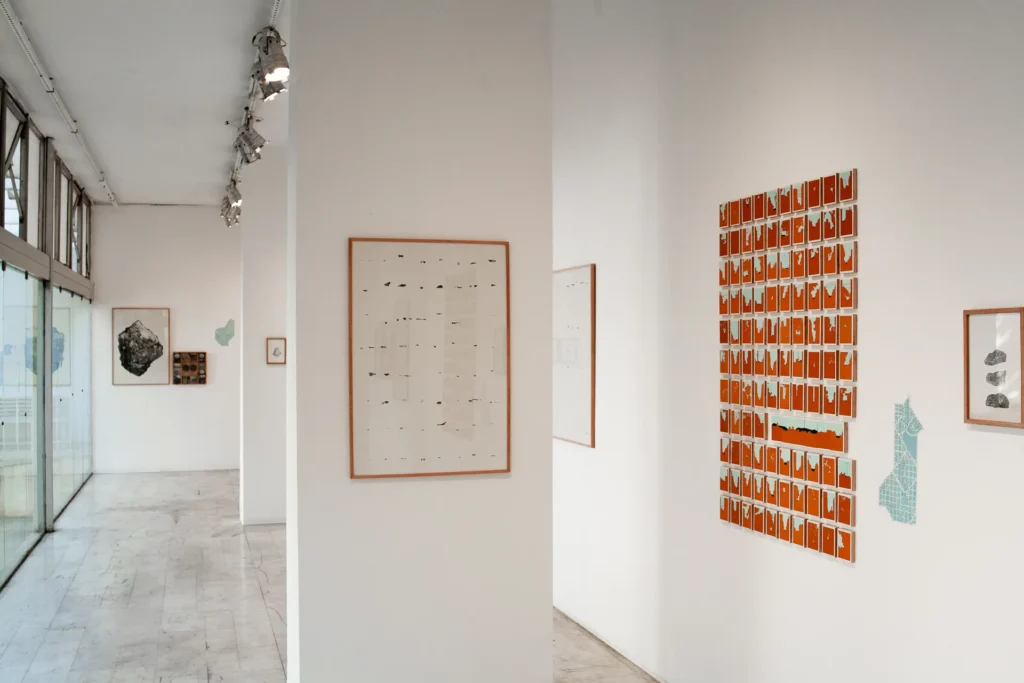
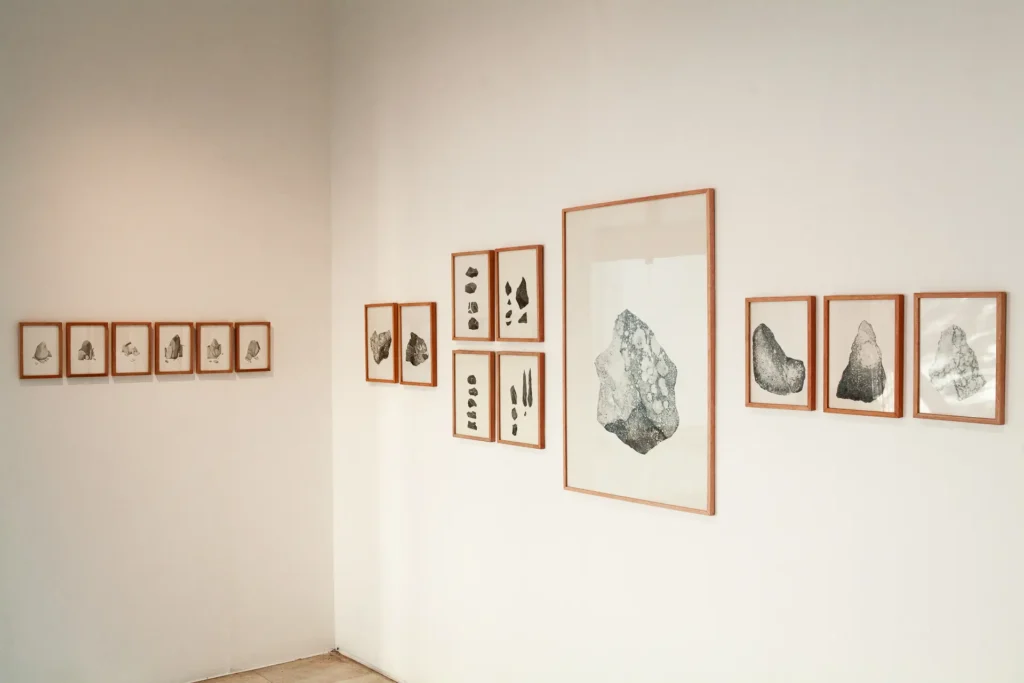
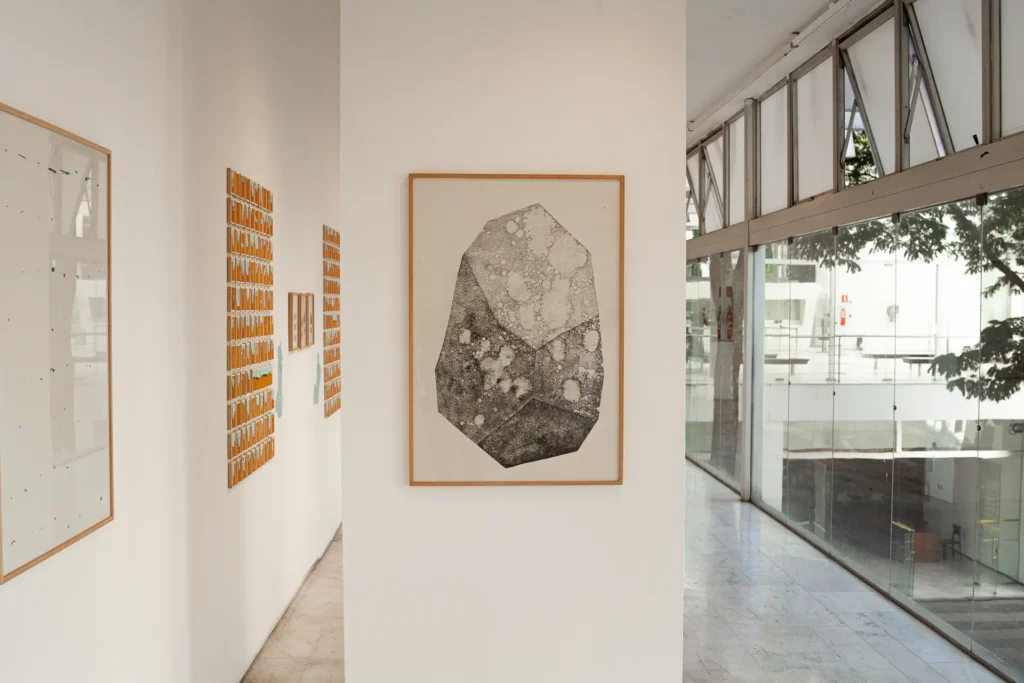
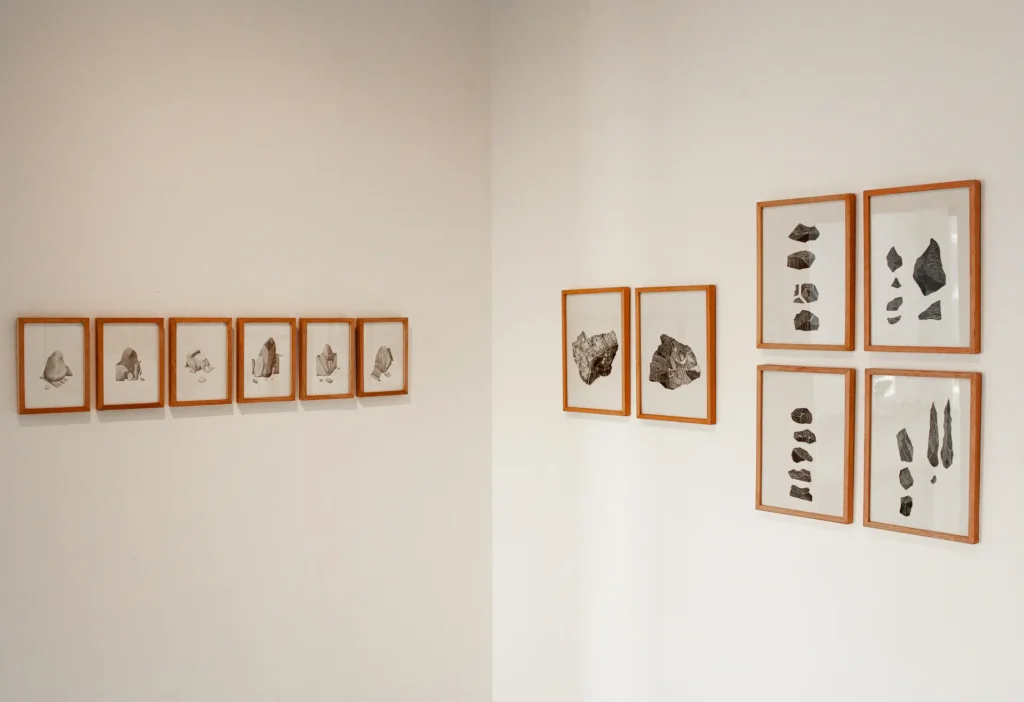
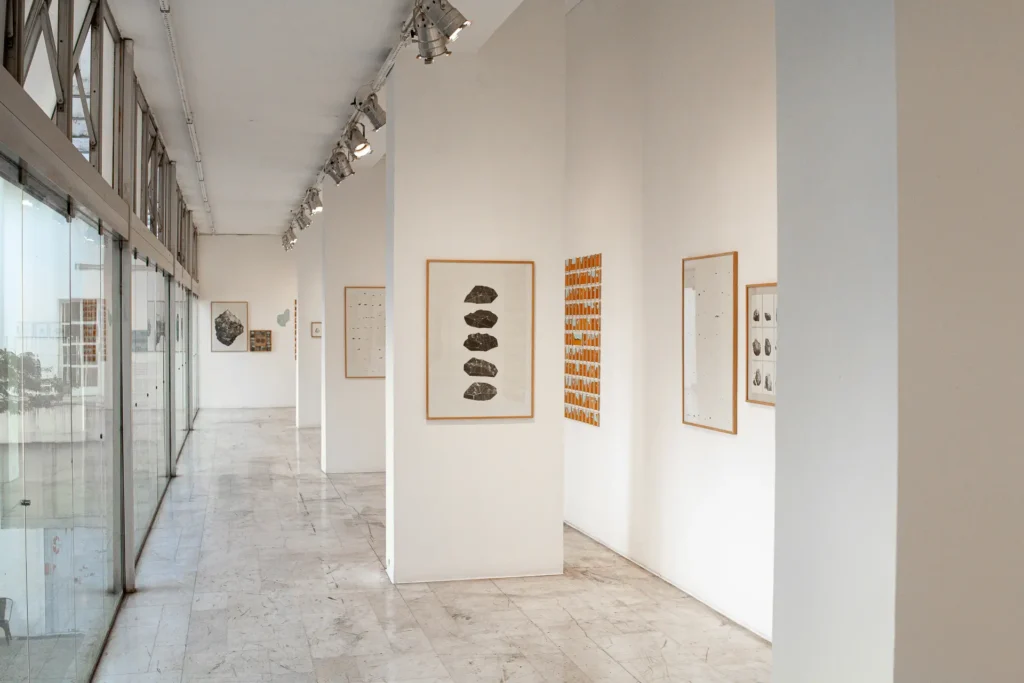
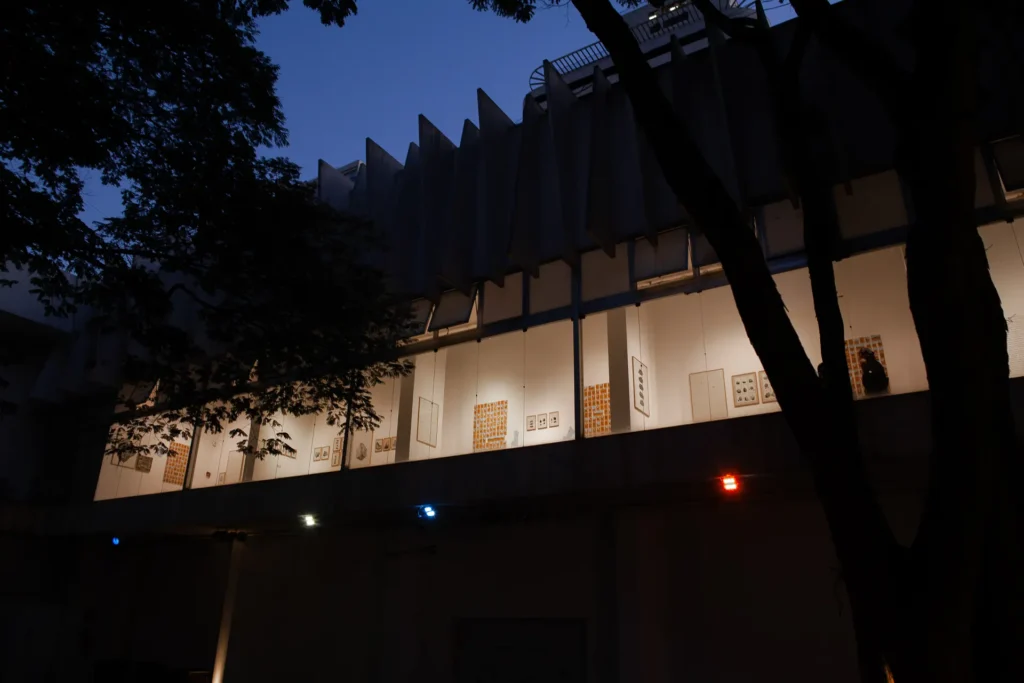
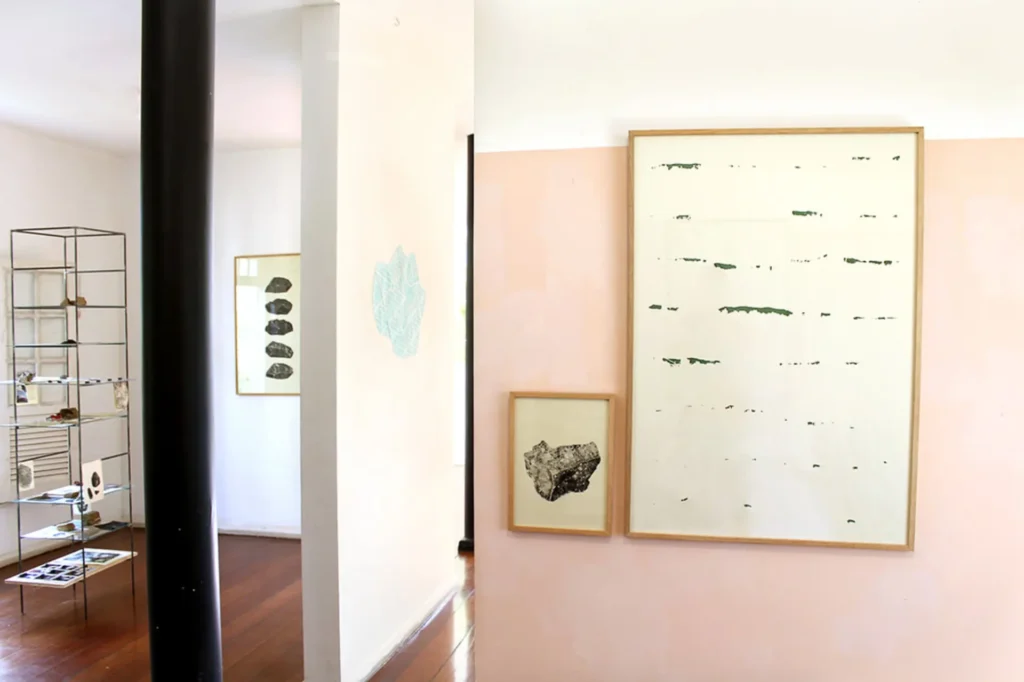
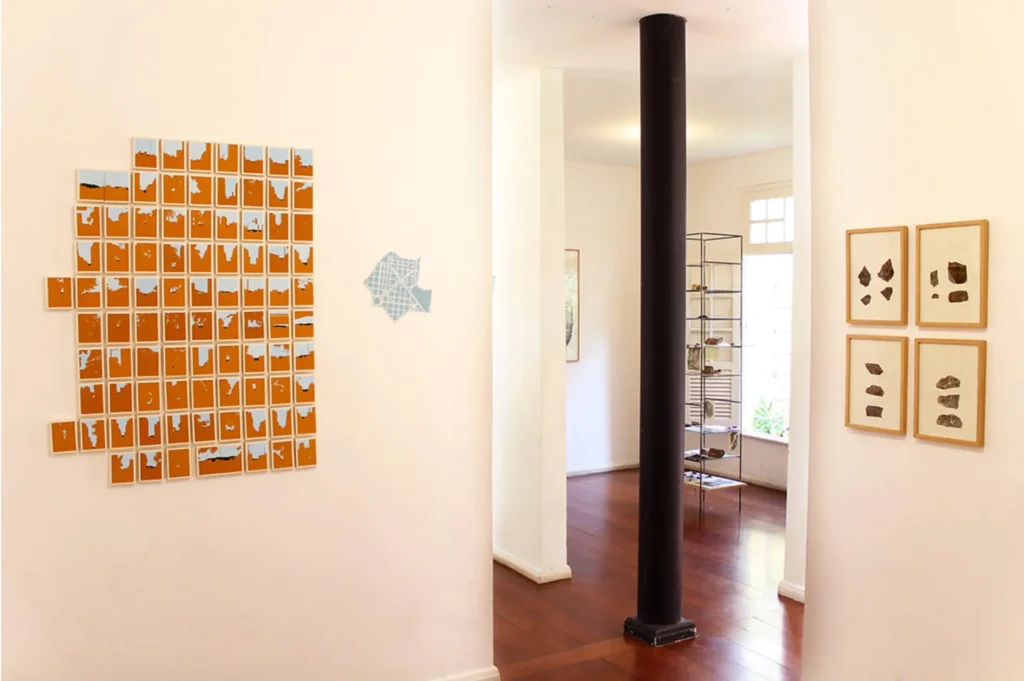
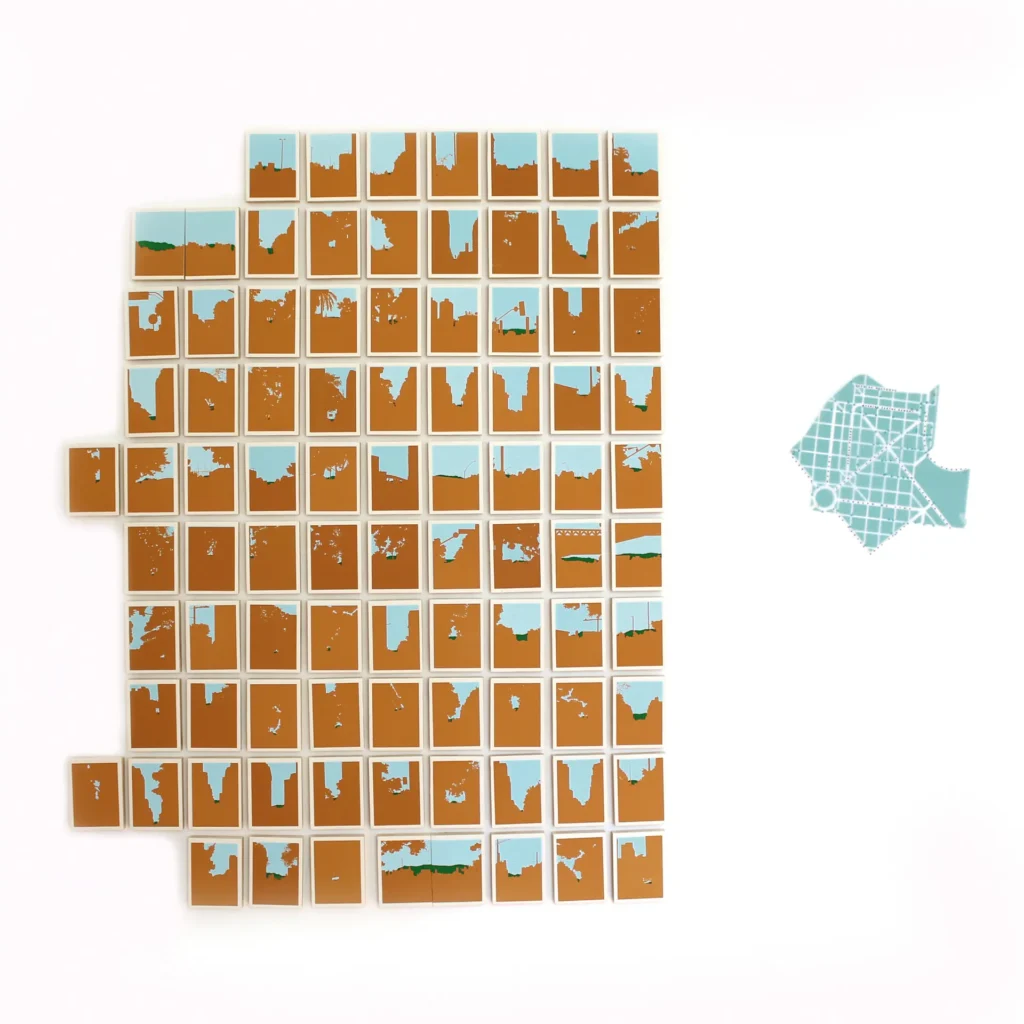
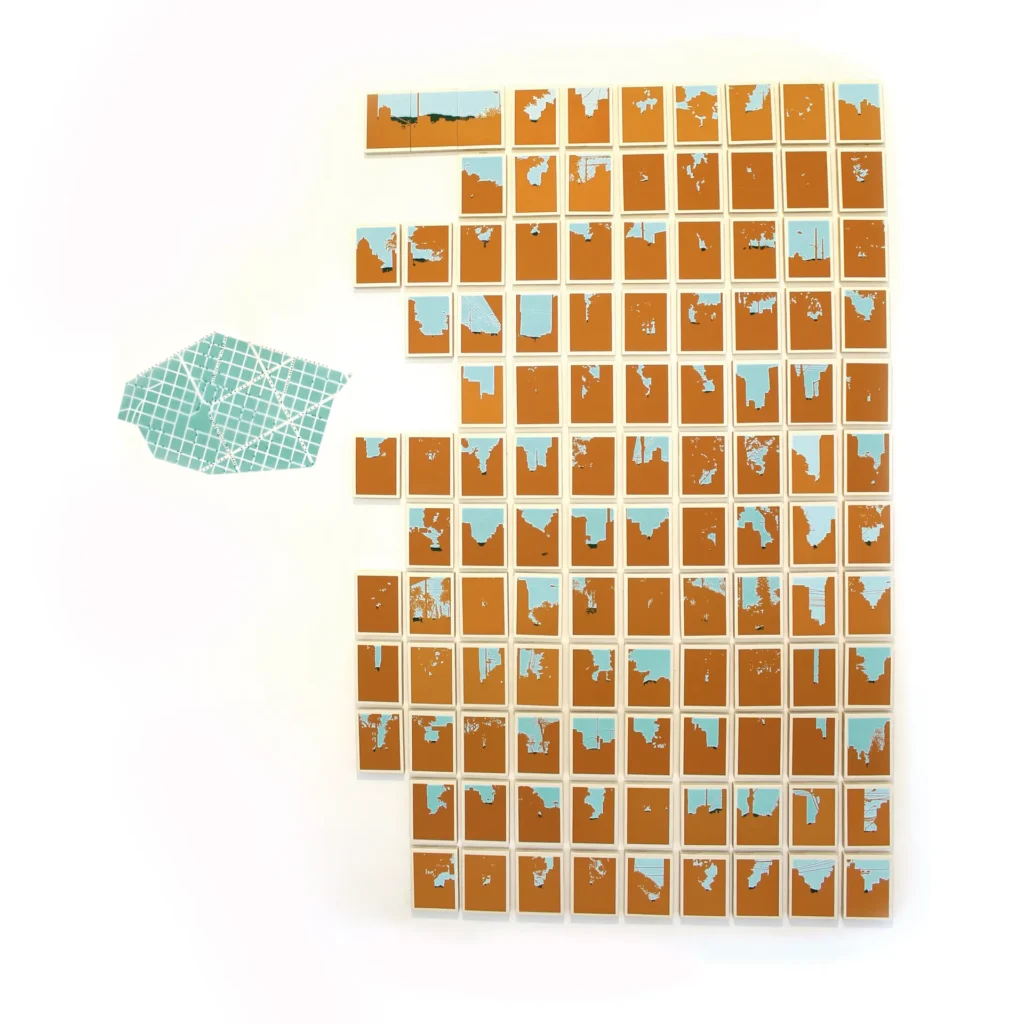
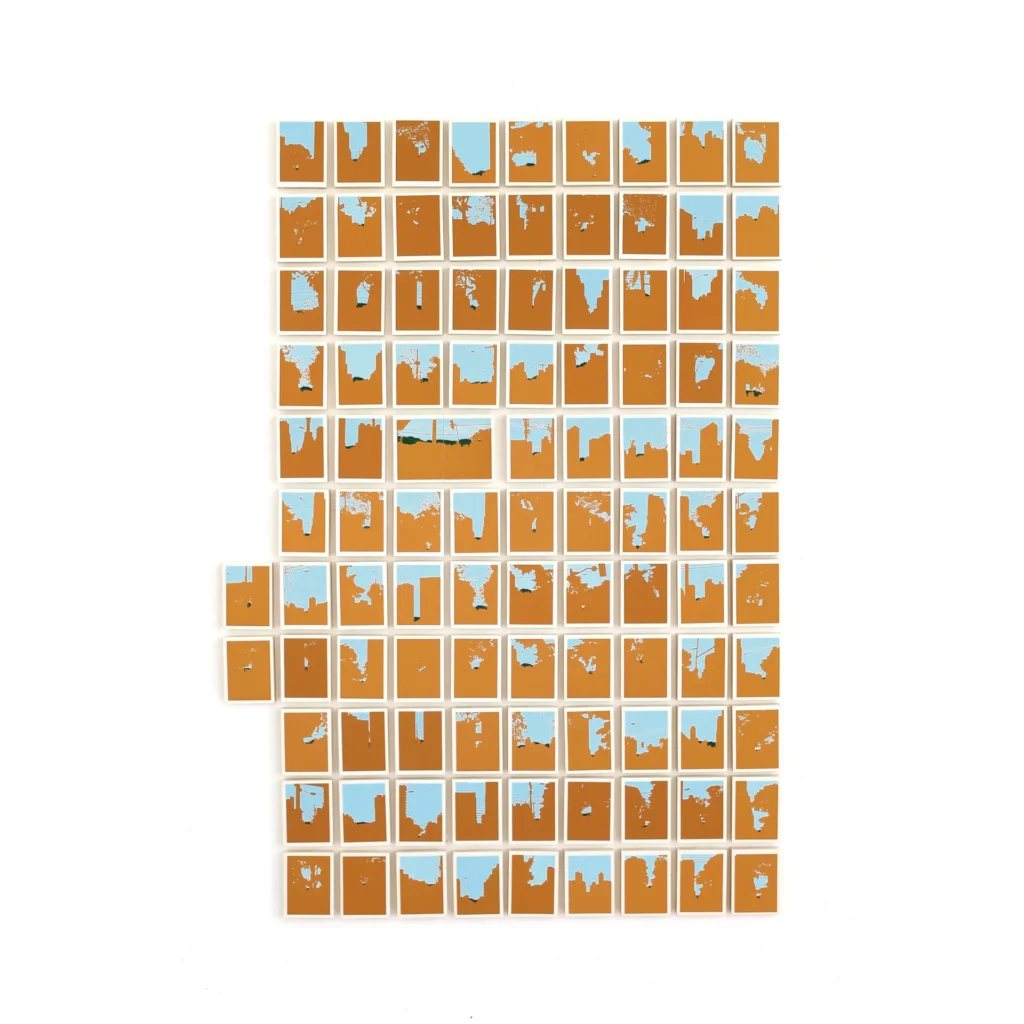
AS IT LASTS is a research developed under the gaze of the mountainous landscape of Belo Horizonte, capital of Minas Gerais – Brazil. Settling as a a starting point the historical relationship of the city with its mountains, quarries and hills, the work presents 3 lines of research related to 3 geographic belts of the city:
1- Avenida do Contorno [Contorno Avenue, the avenue which encircles the historical center], fundamental layout of the planned city;
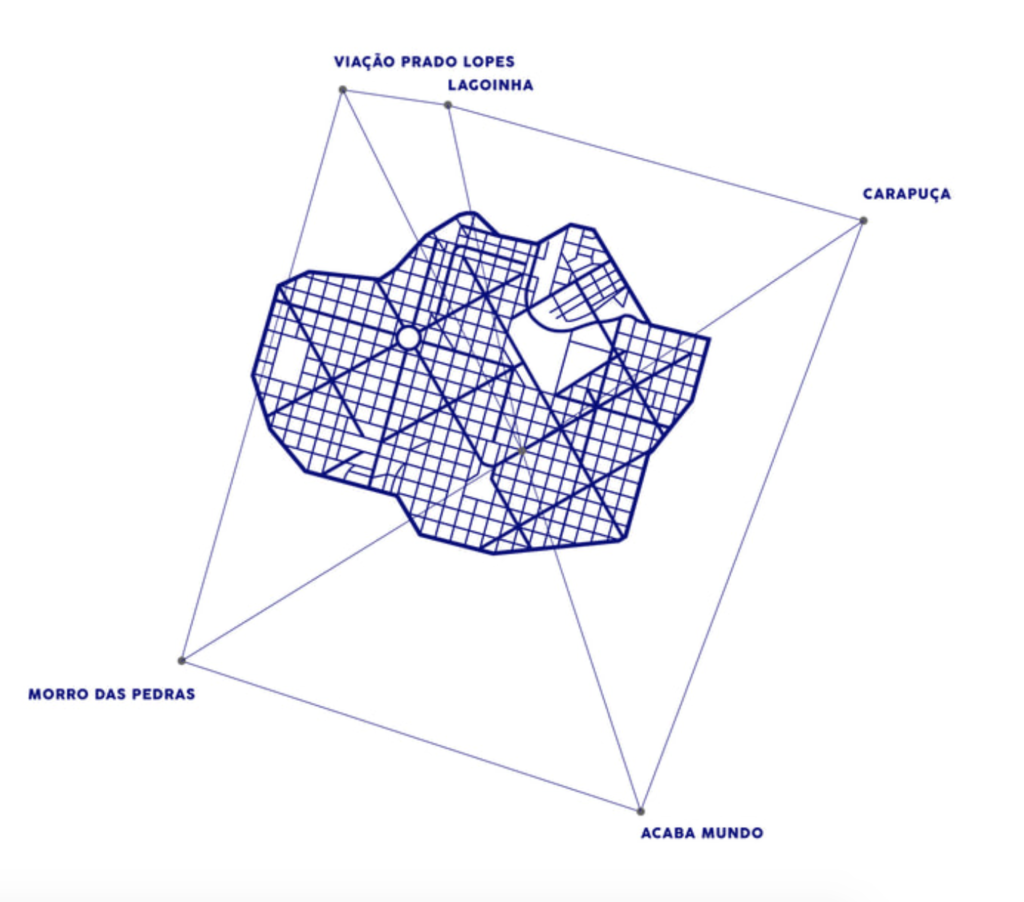
2- The original quarries, from which the raw material of the New Capital was extracted: Carapuça, in the eastern region; Acaba Mundo, south-central; Morro das Pedras, west; Viação Prado Lopes, north-west; Lagoinha, north-east;
3- The mountains that surround Belo Horizonte – constantly changing due to the expansion of the city – detaining Serra do Curral as the most imposing edge.
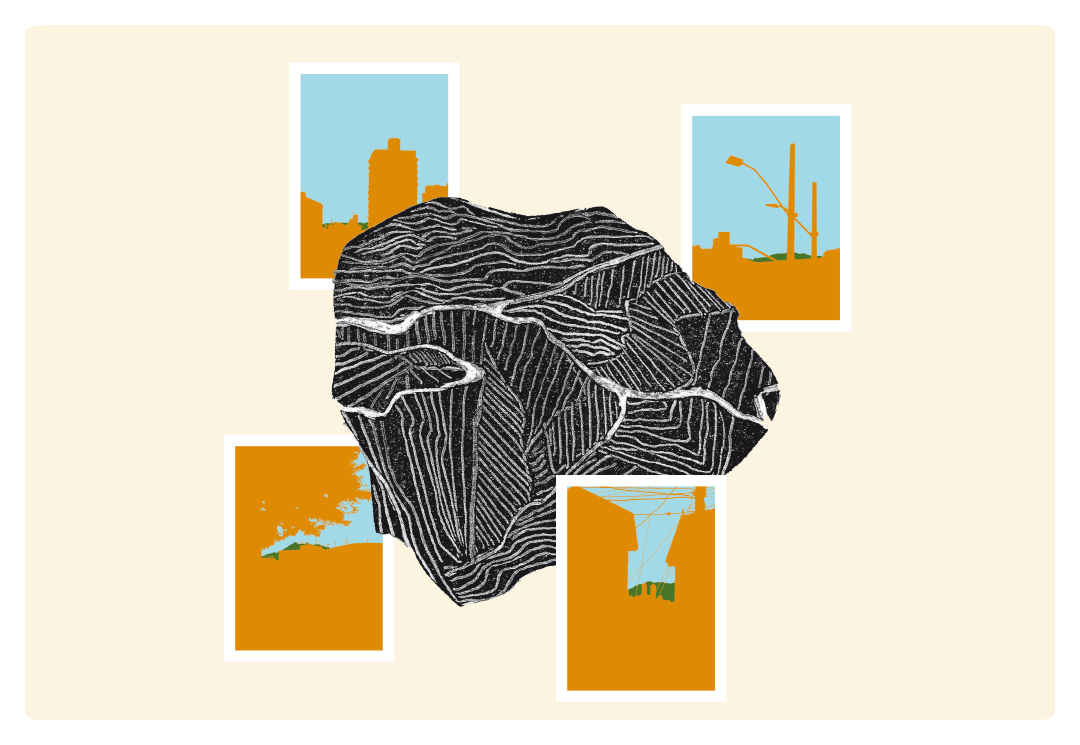
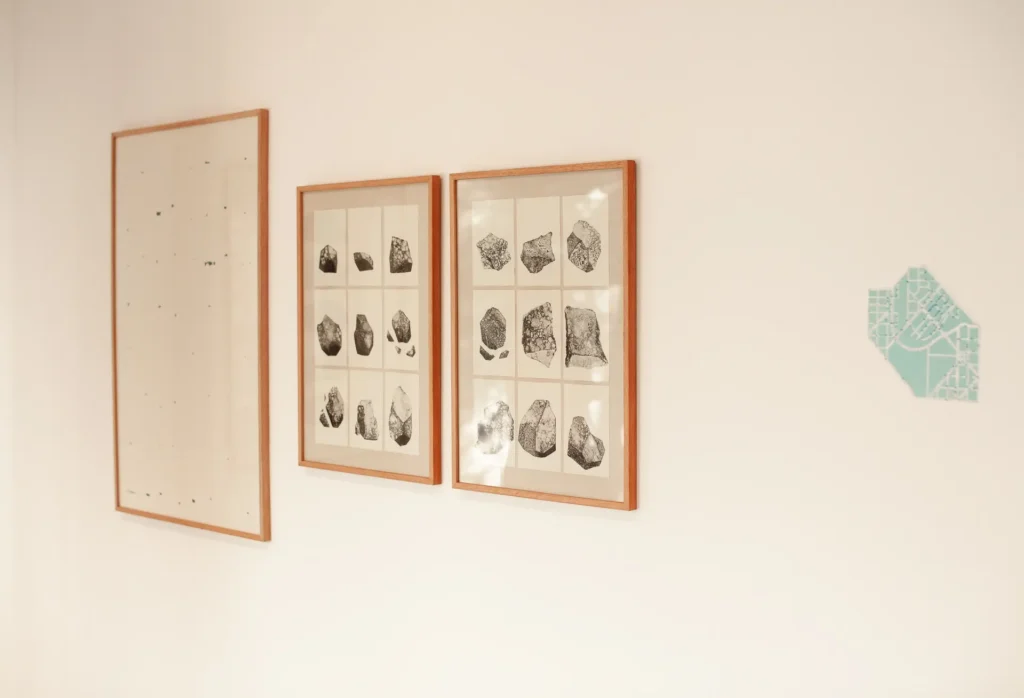
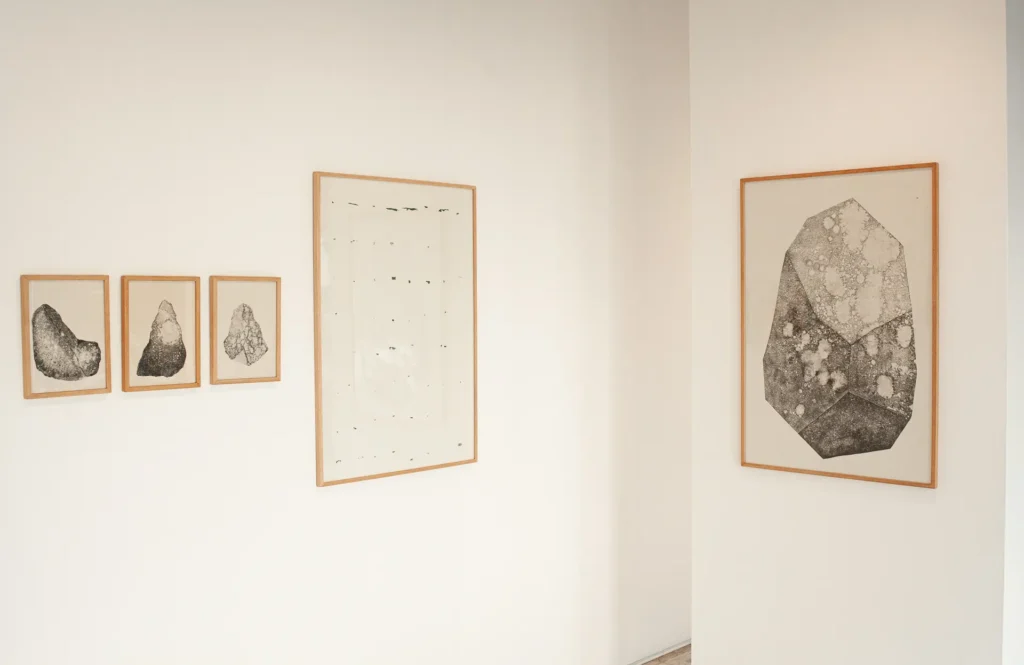
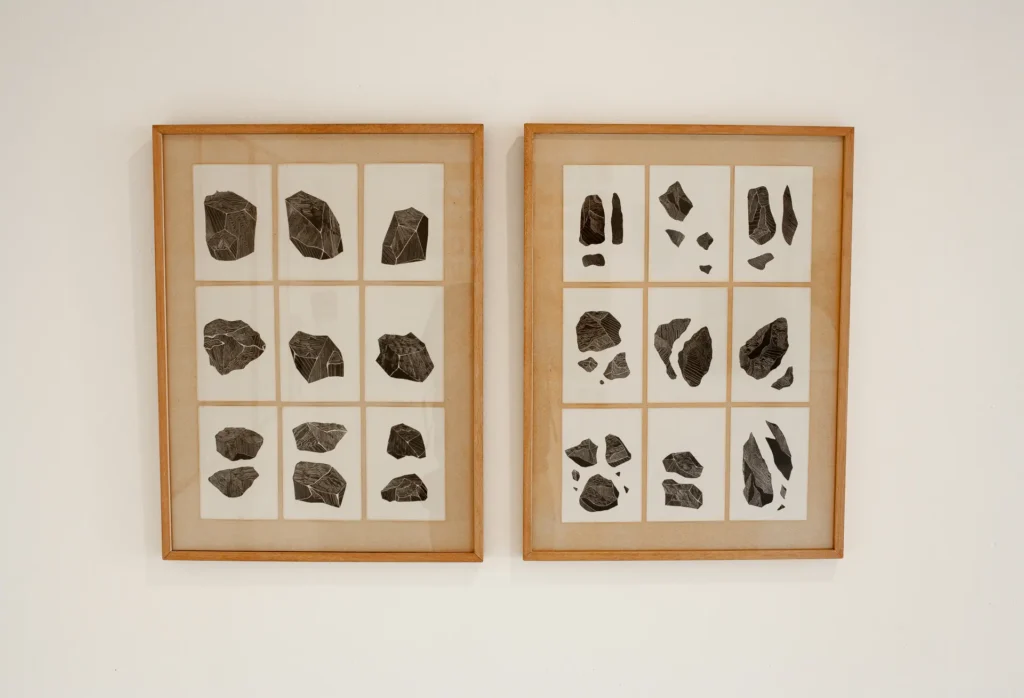
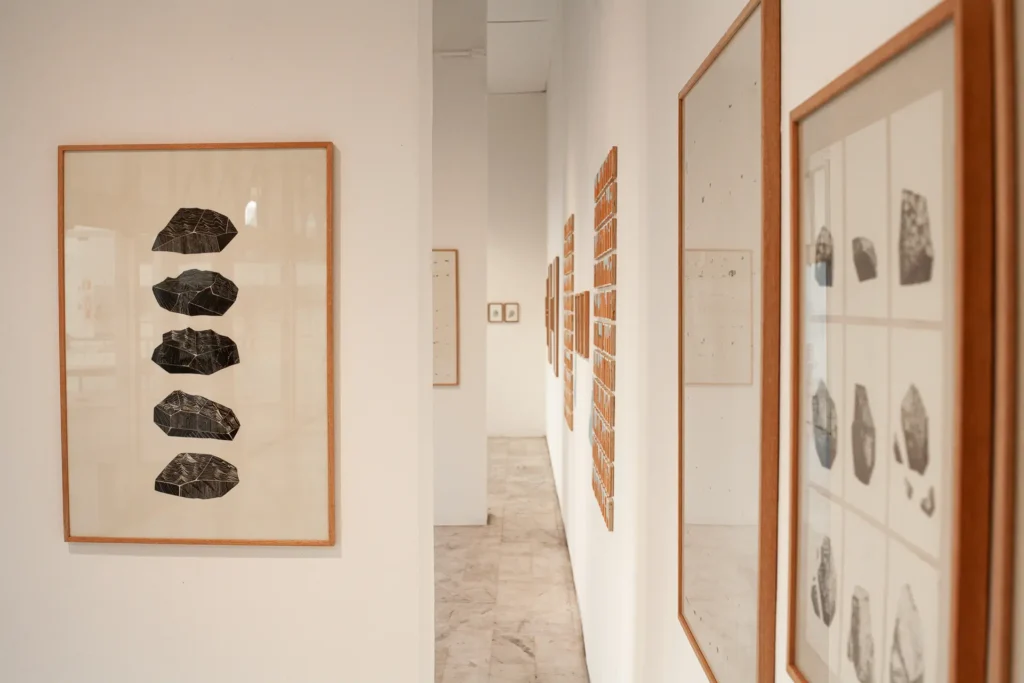
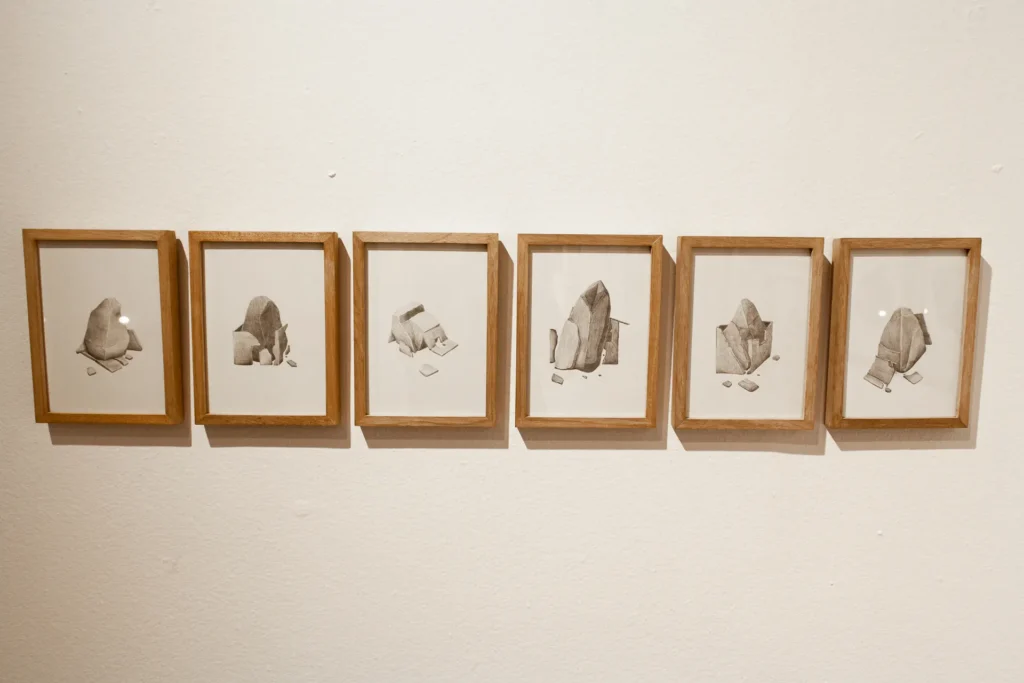
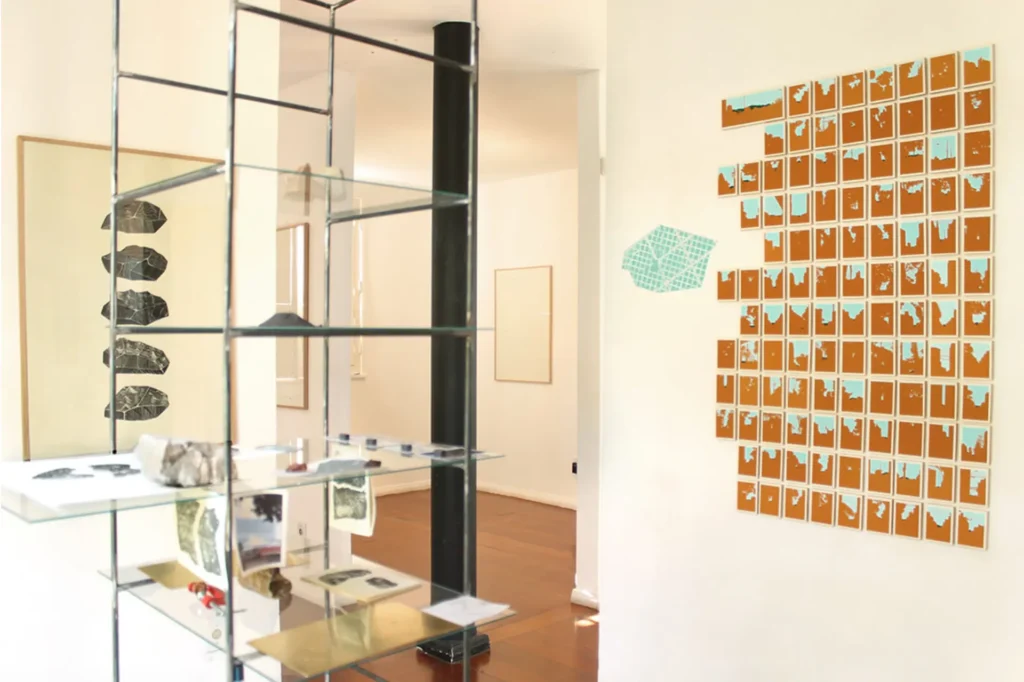
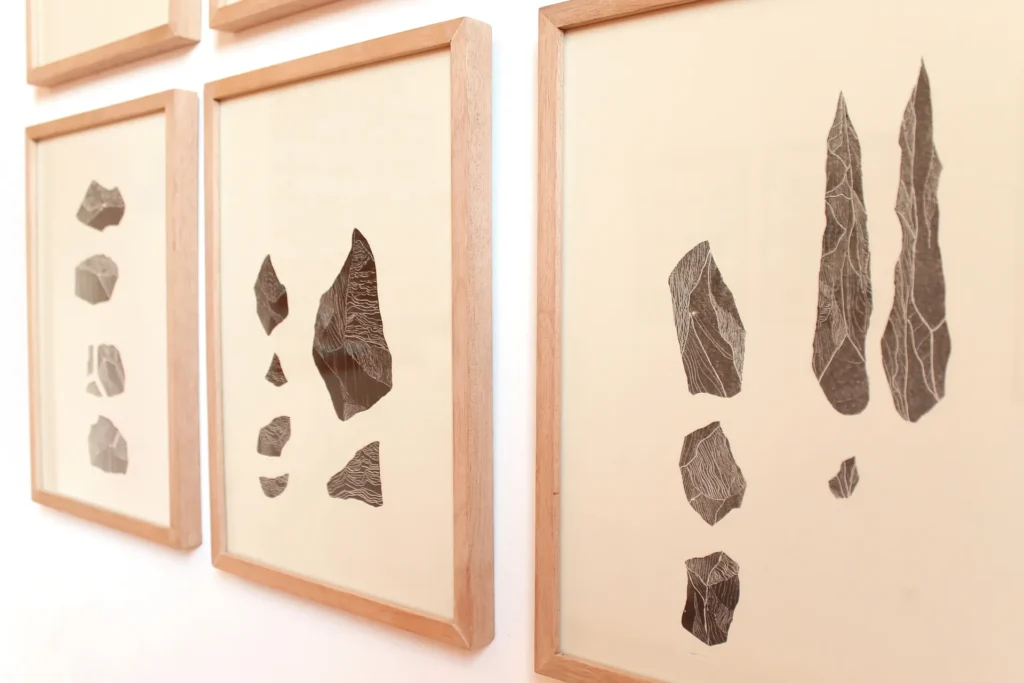
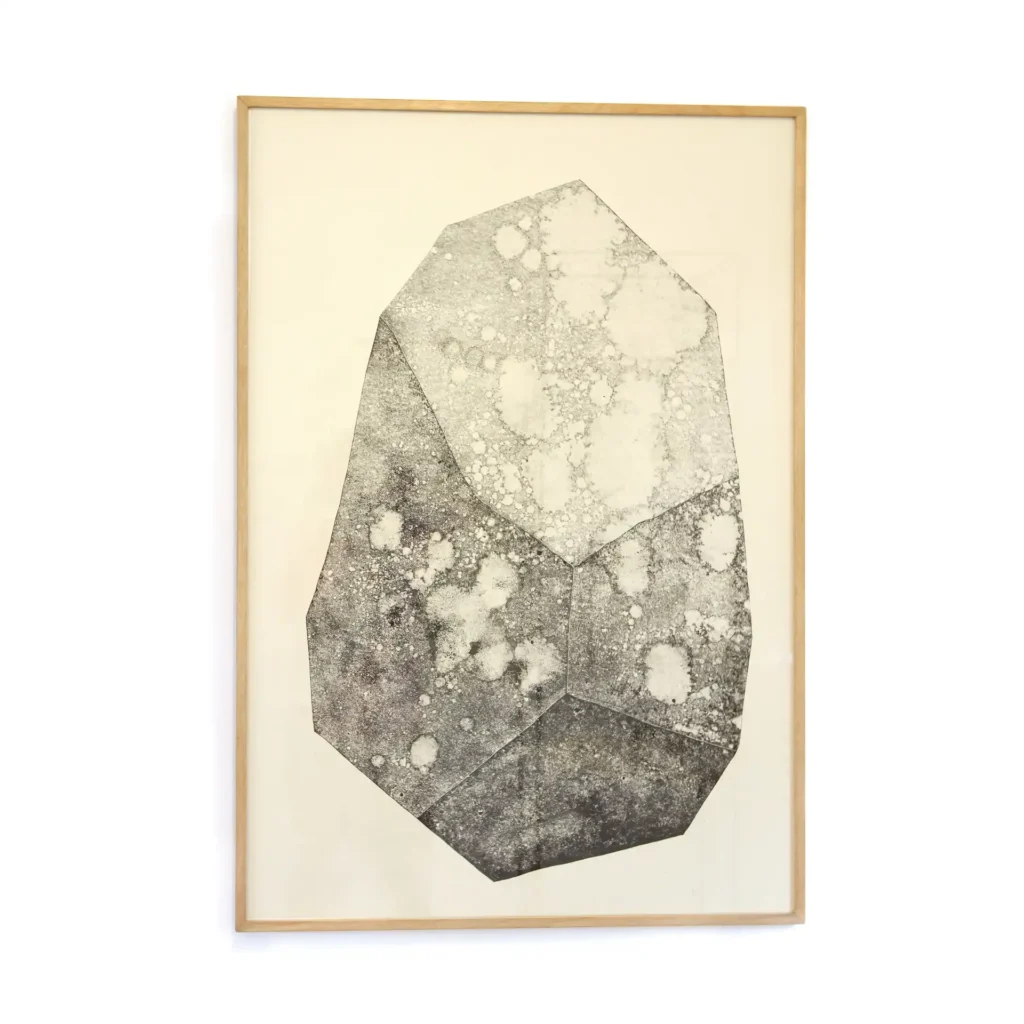
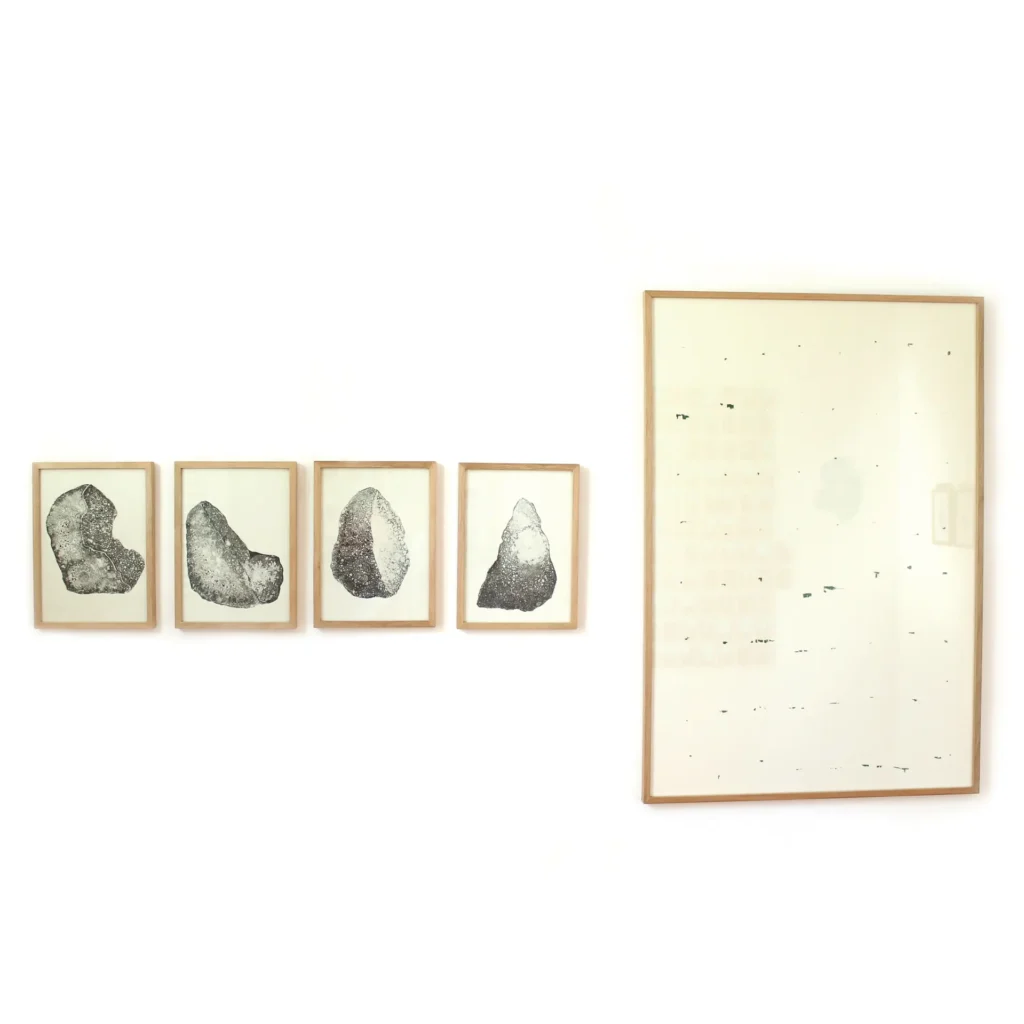
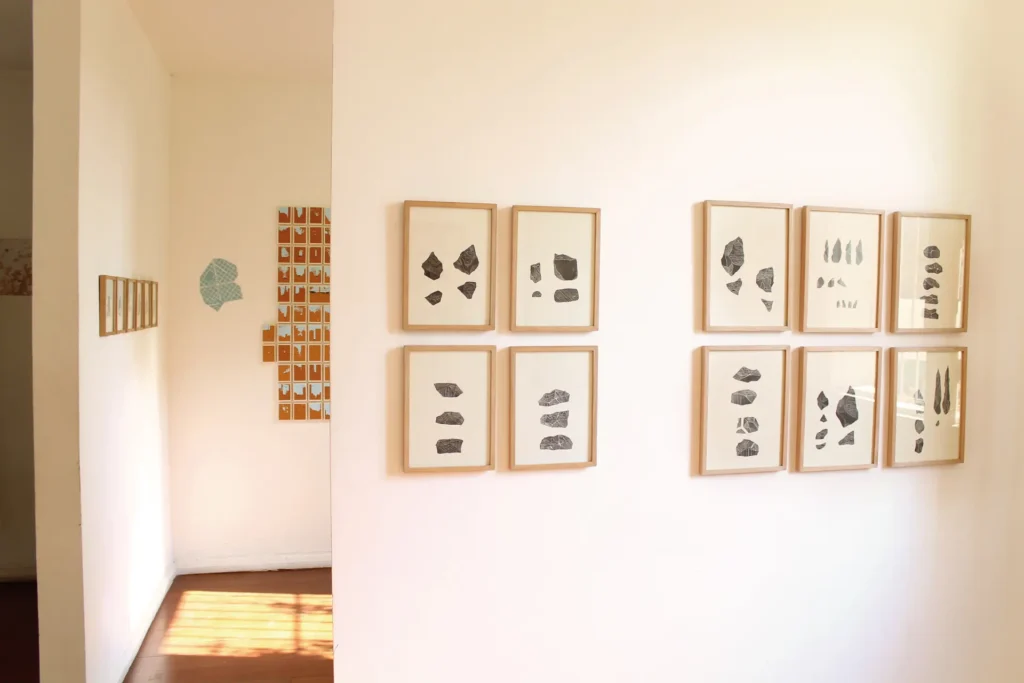
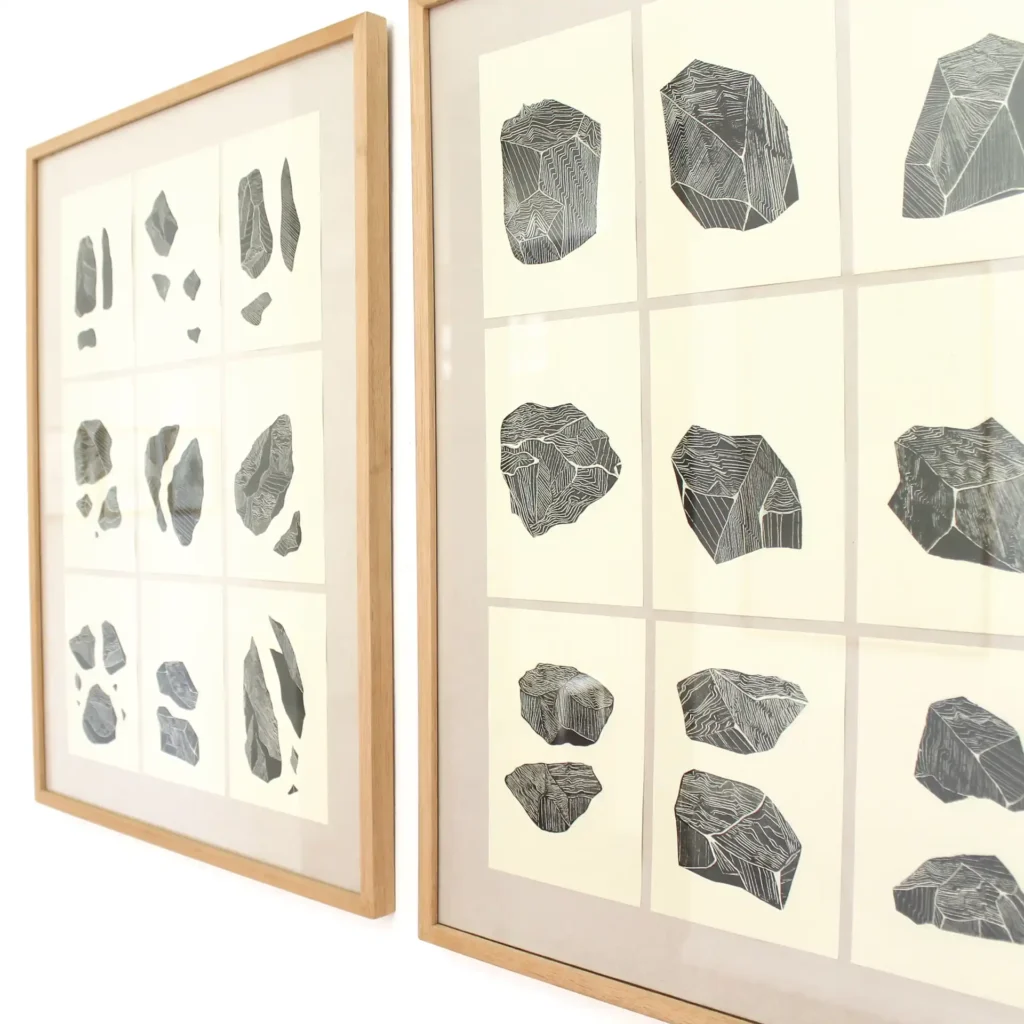
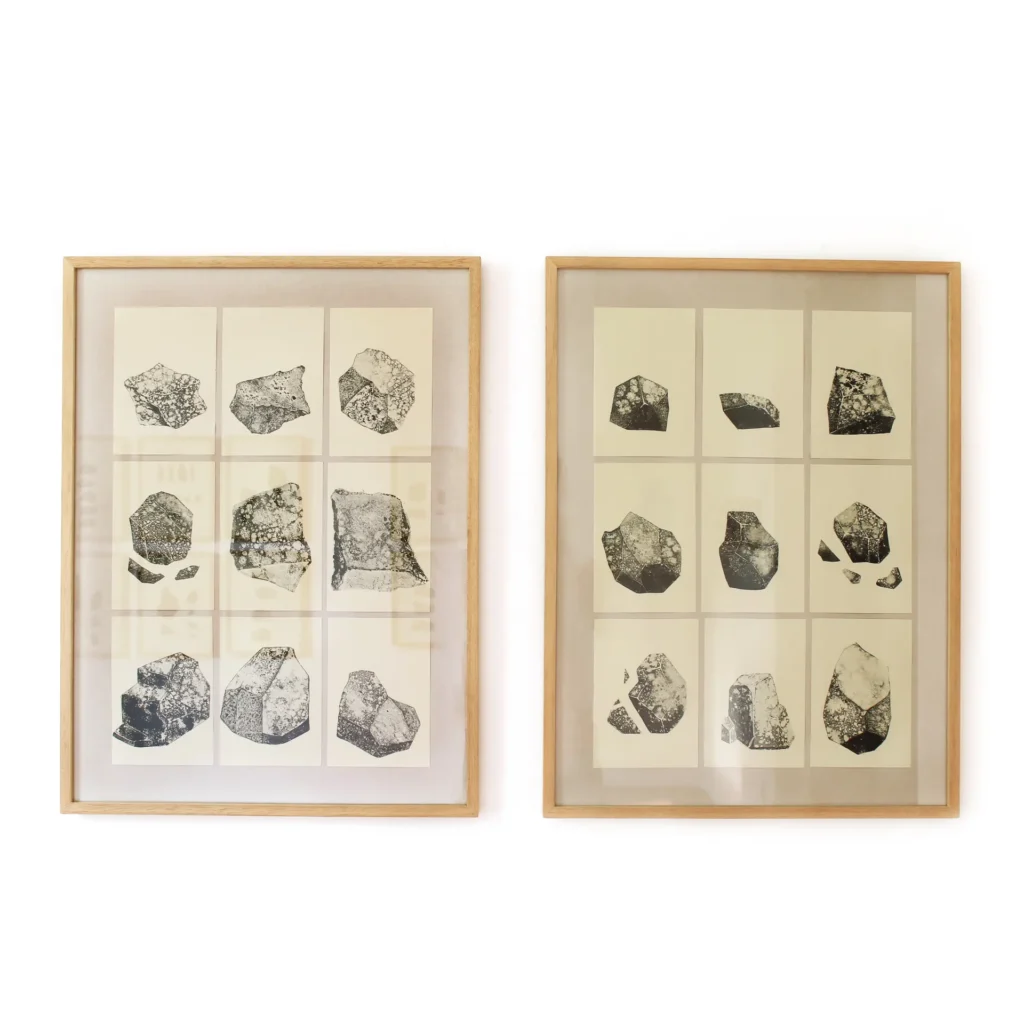
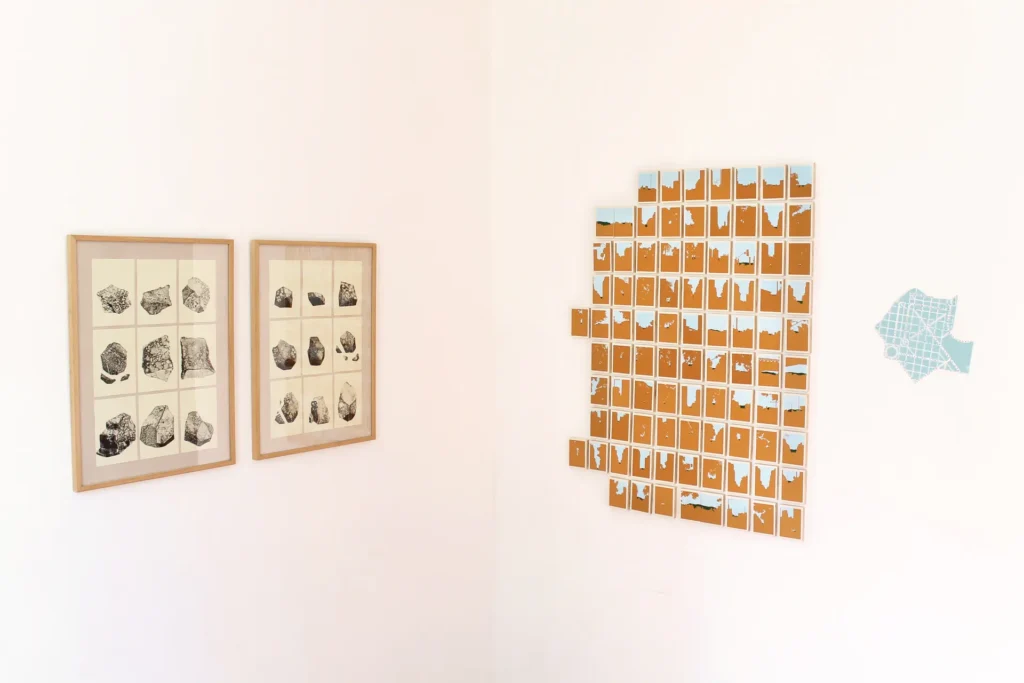
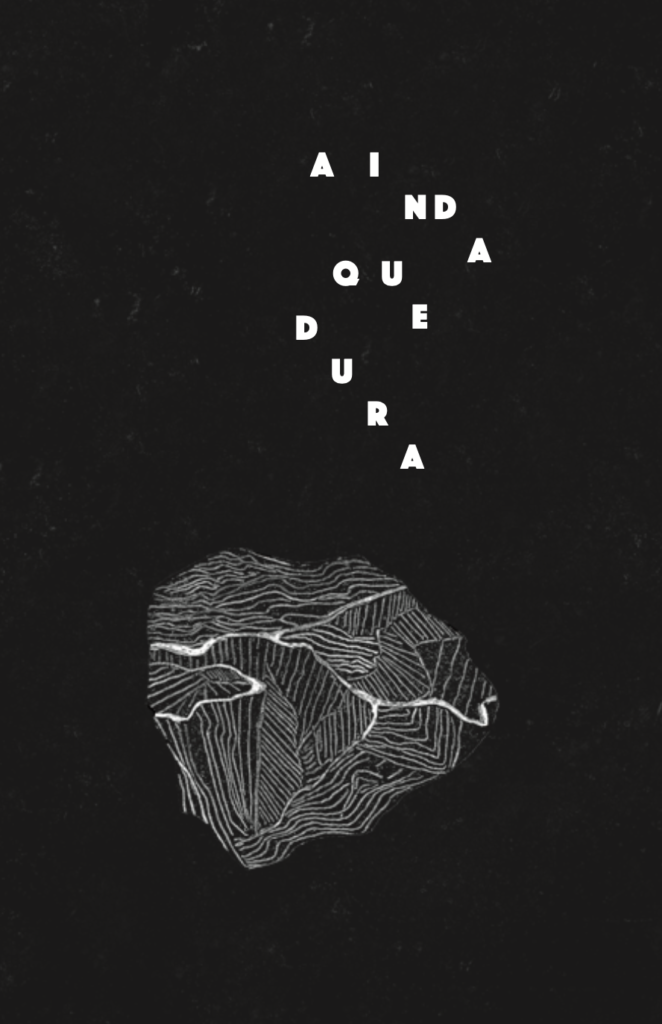
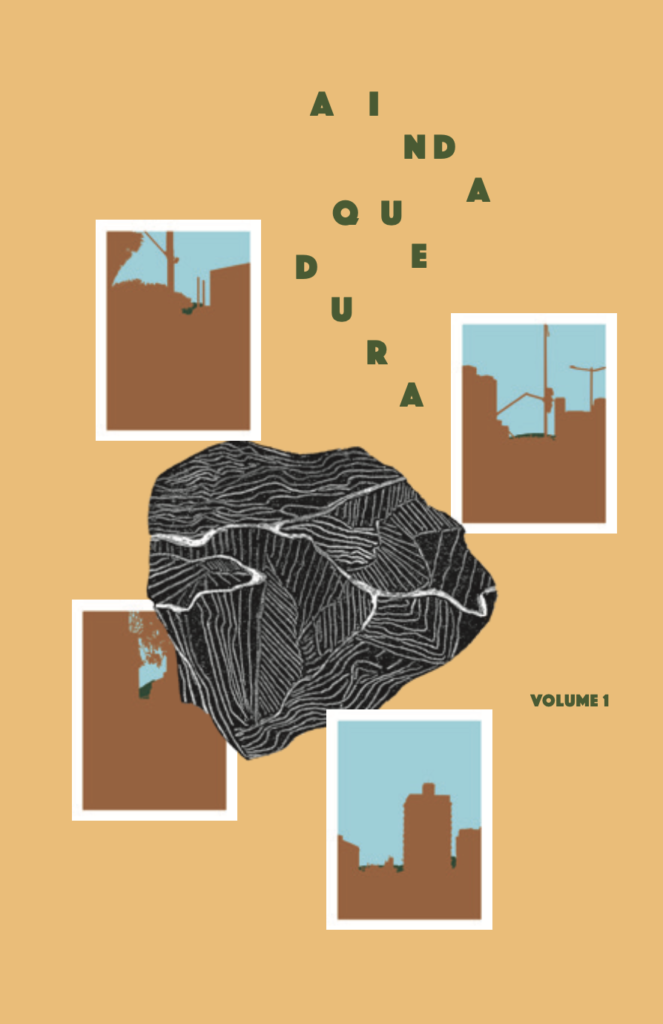
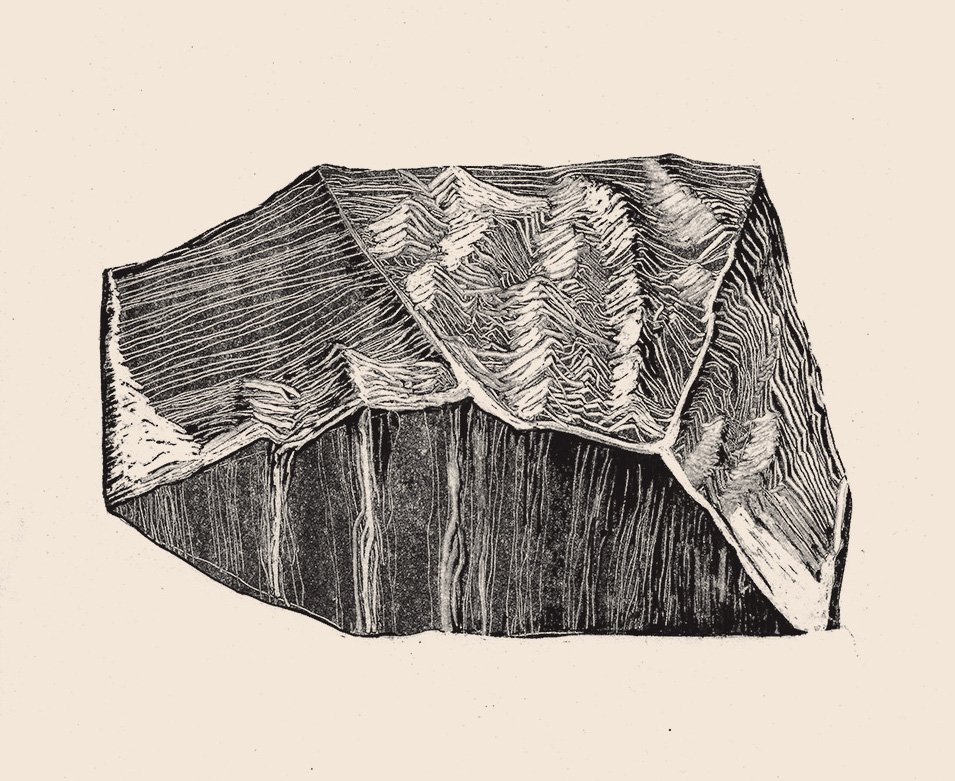
The raw material that sustains the city appears in the stones of monotypes, monochrome single-prints developed in variations and series.
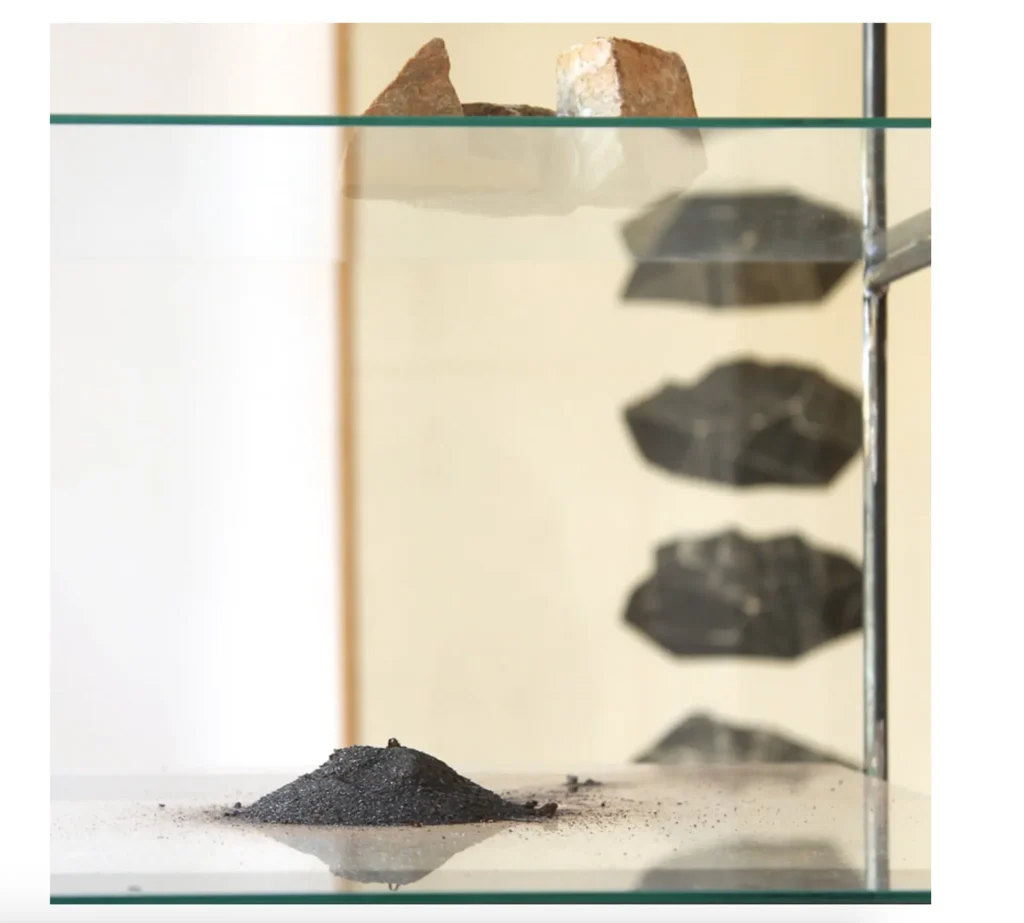
At another point, topographical markers – engraved bronze plates – are inserted near the five related quarries. Using their coordinates, the outline of their polygon is virtually traced, and then its centre is located. At this new point, a new marker is installed, indicating the capital’s first geographical centre from the perspective of the quarries.
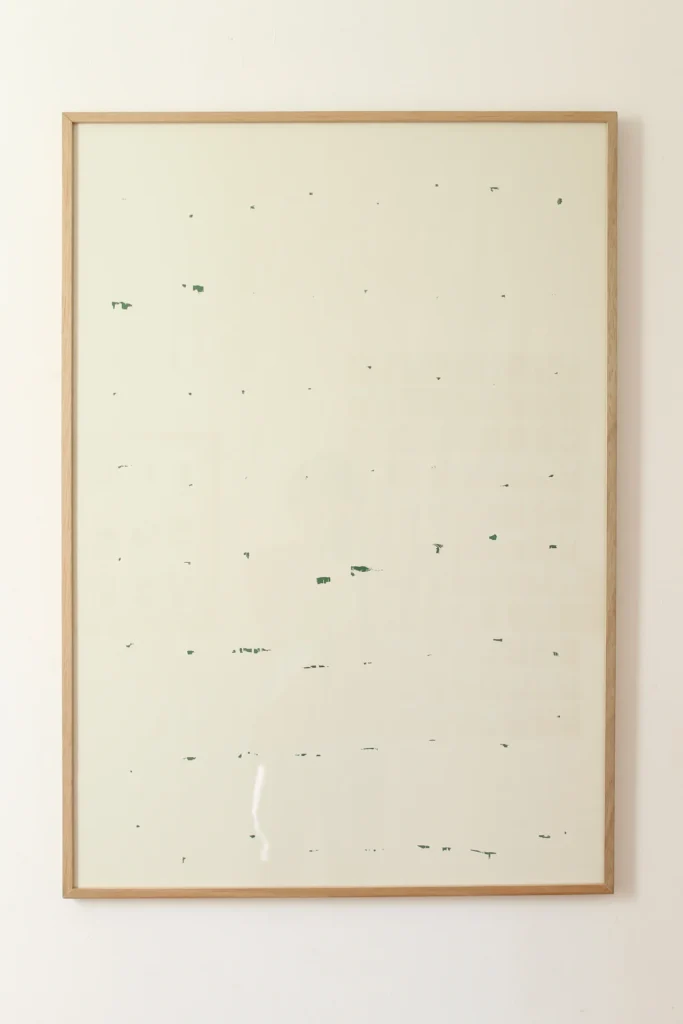
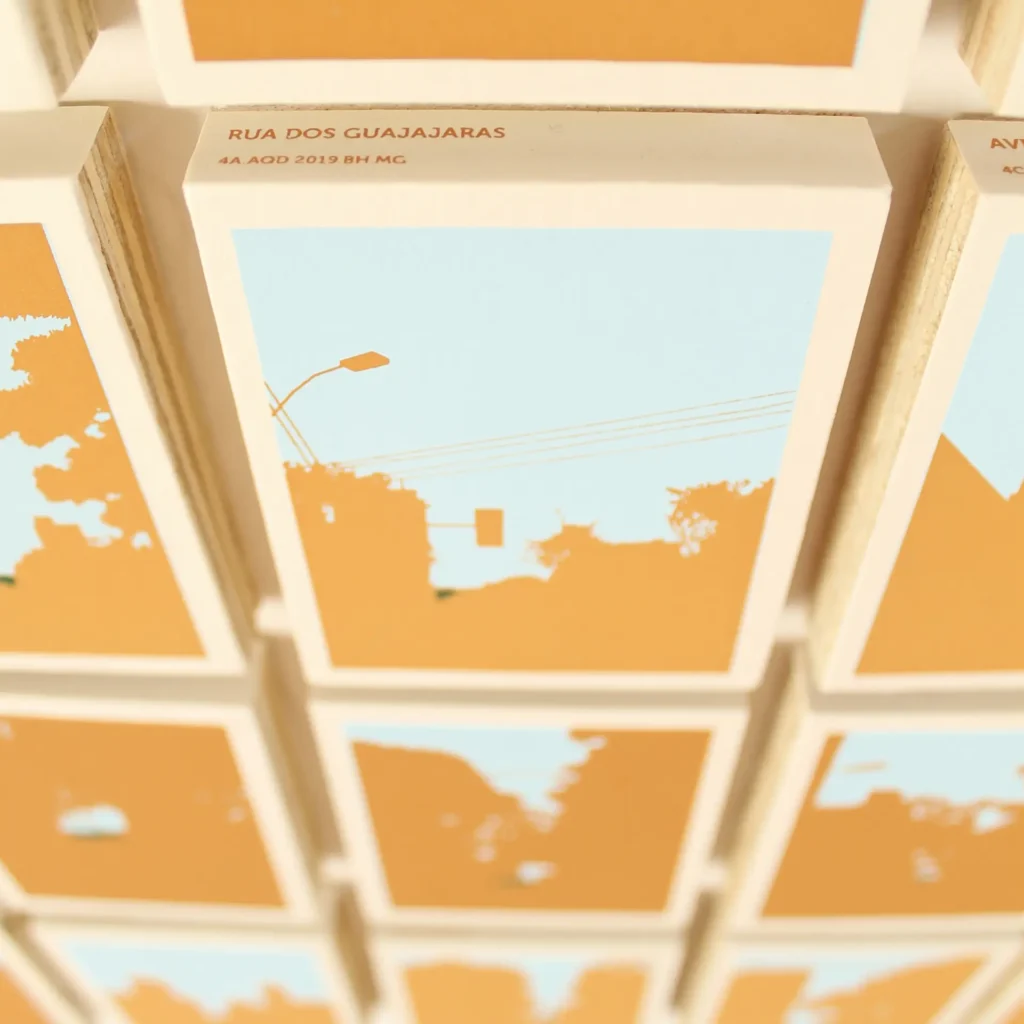
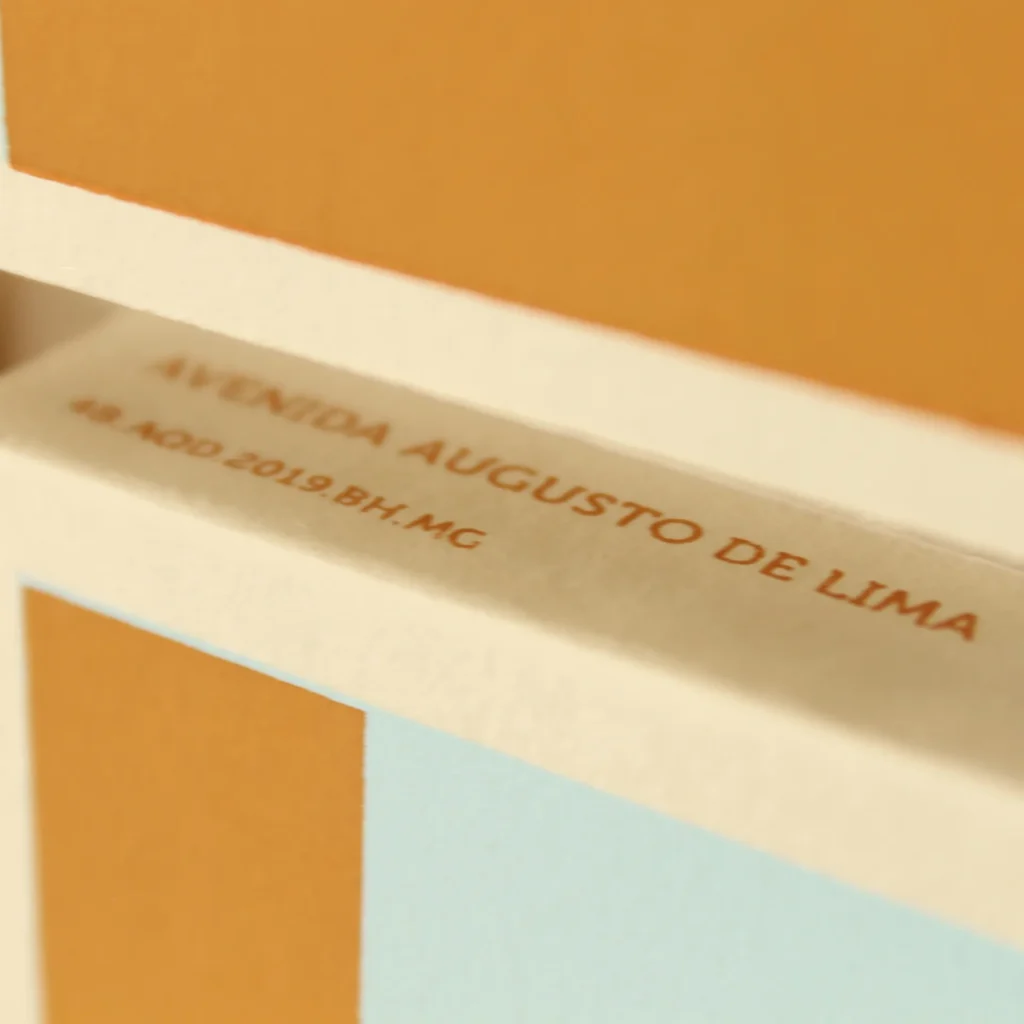
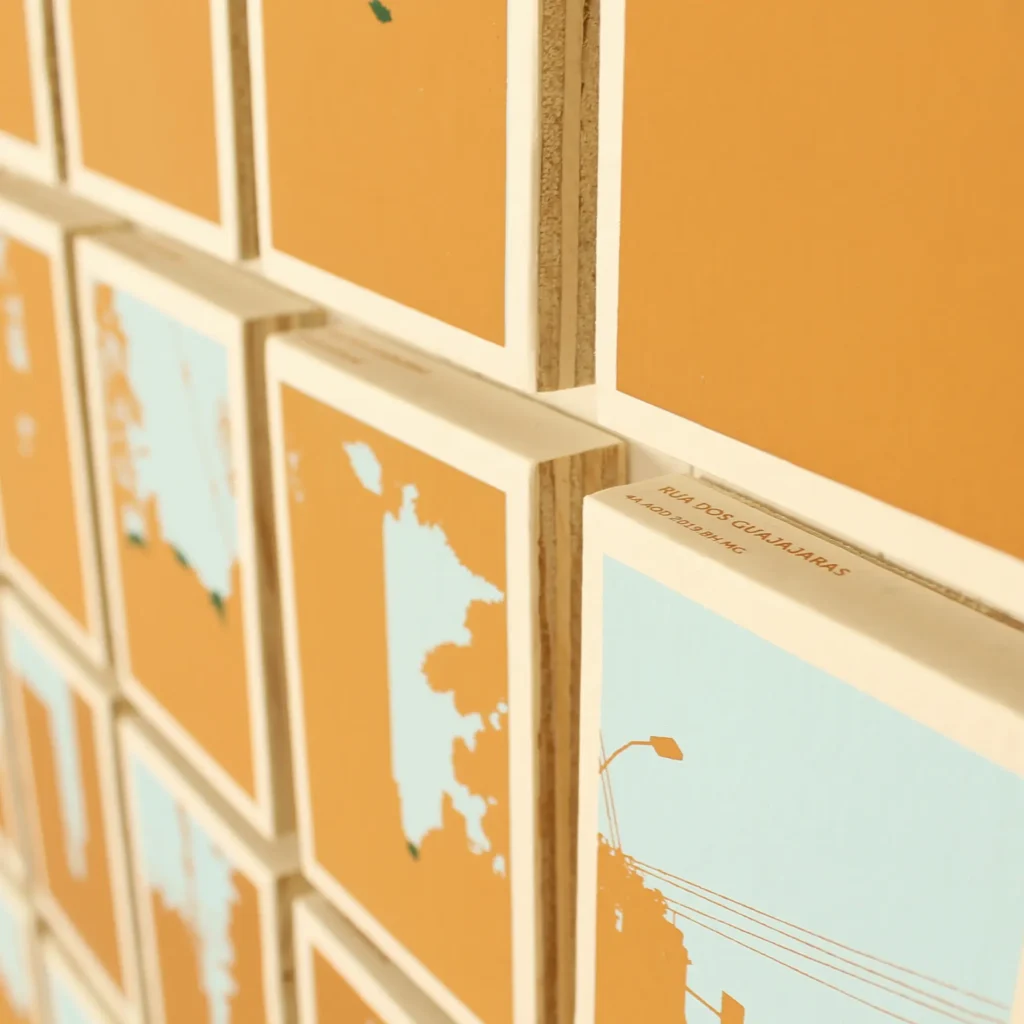
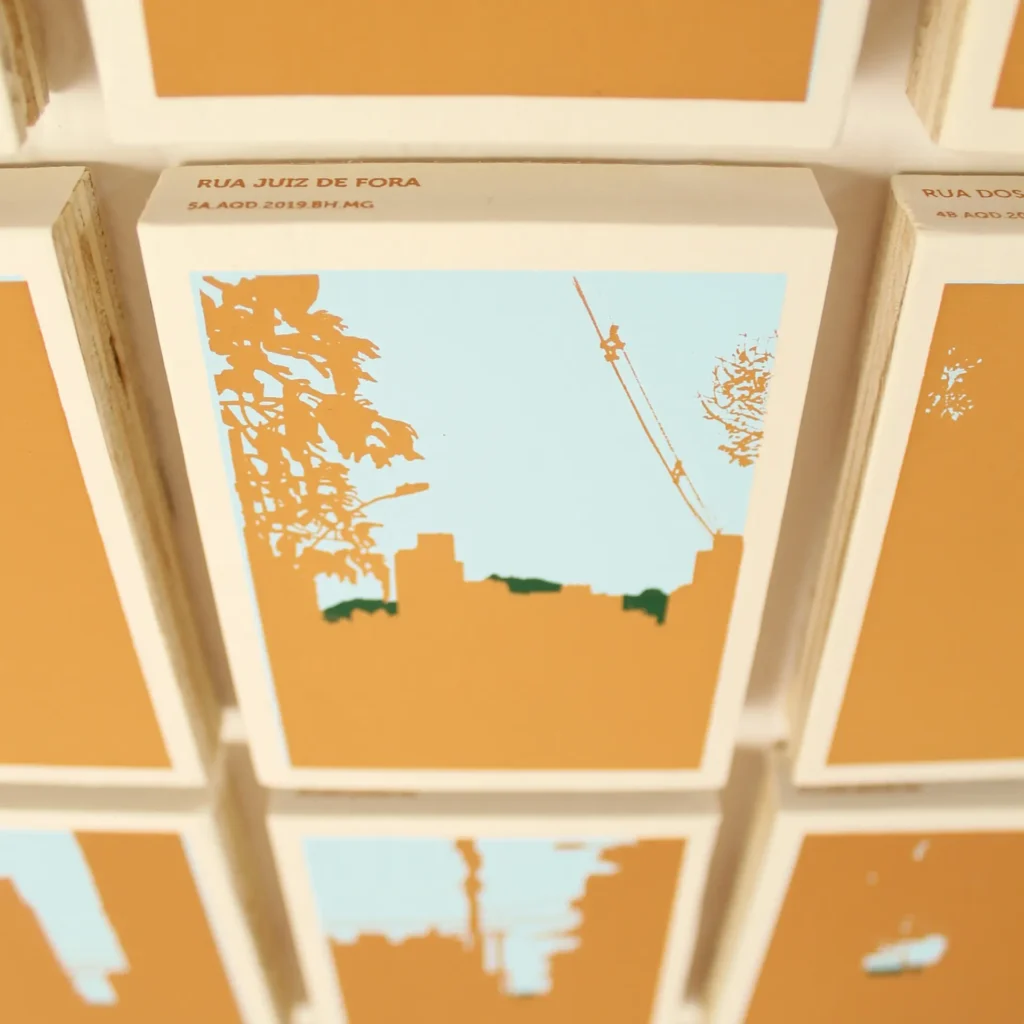
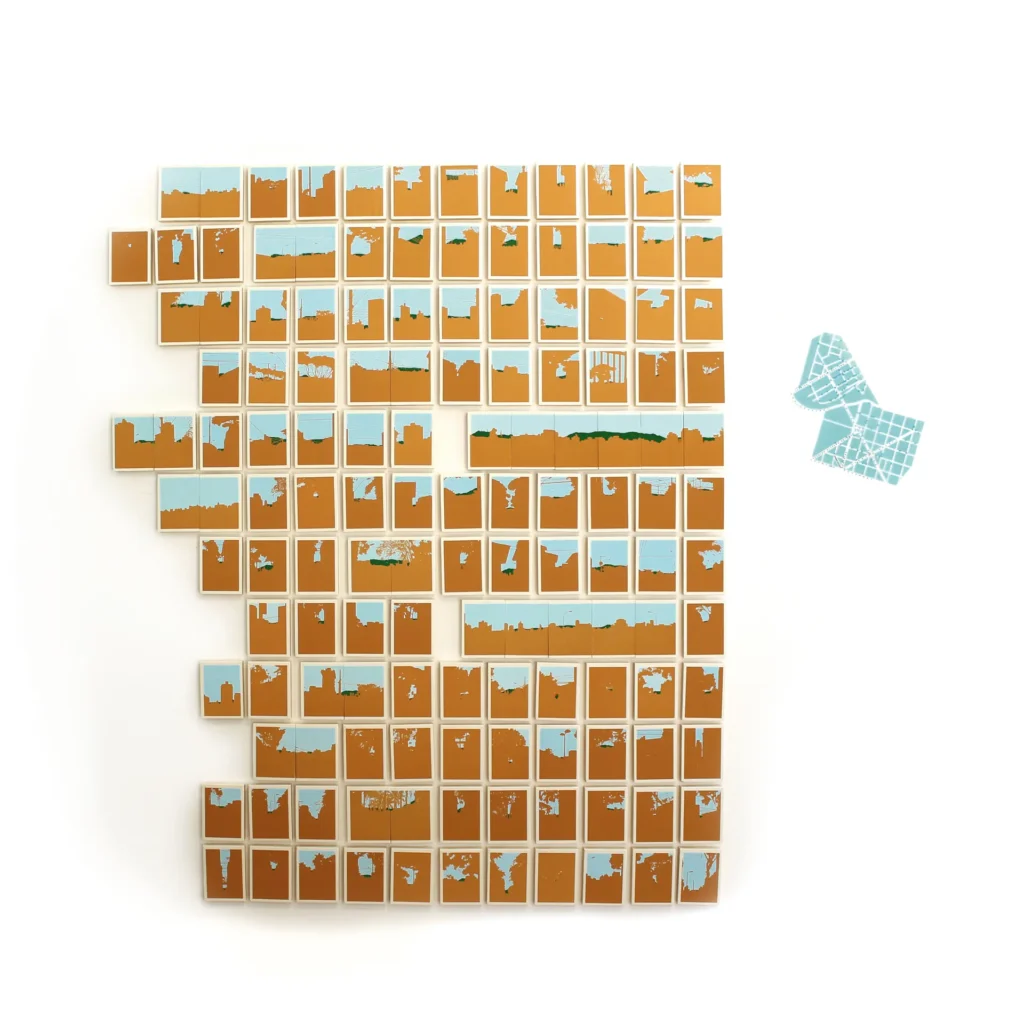
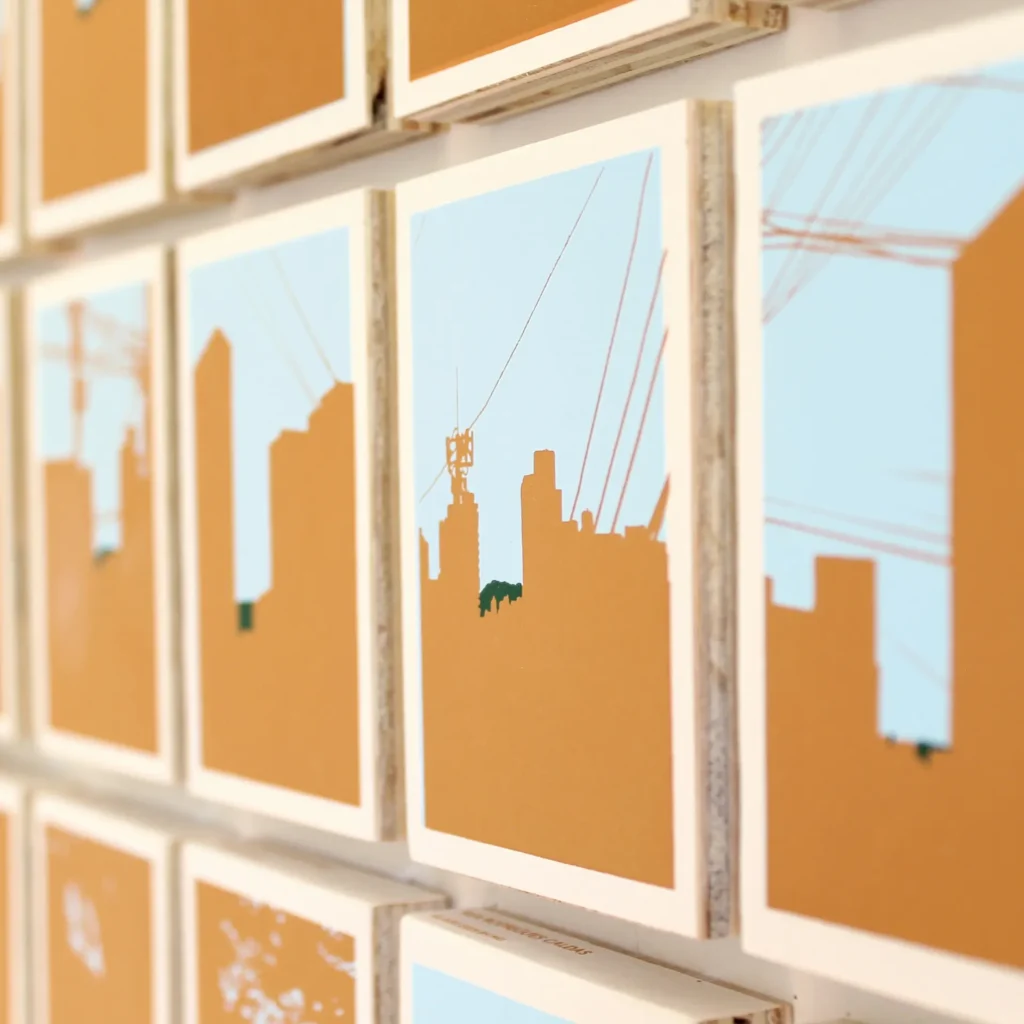
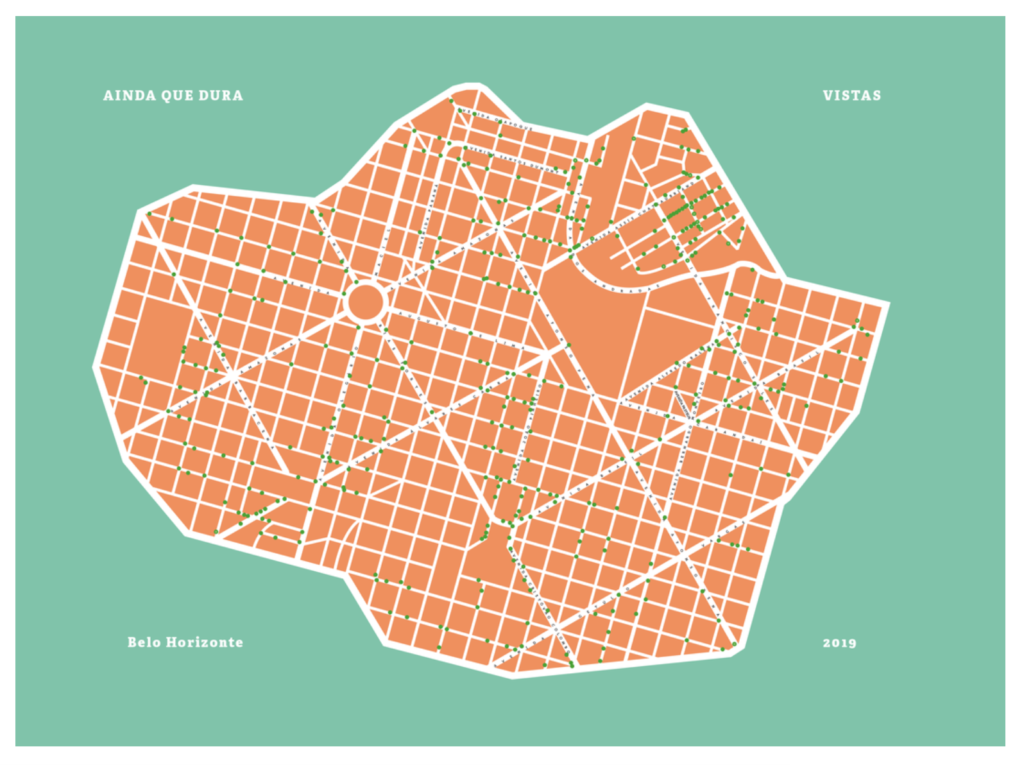
In parallel, all the streets within Avenida do Contorno are traversed and every point where the mountain ranges become visible is mapped – generally in the gaps between the city’s buildings. From this, a series of silkscreen prints of these views is produced.
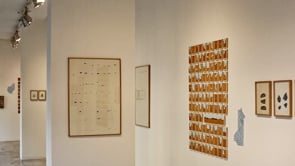
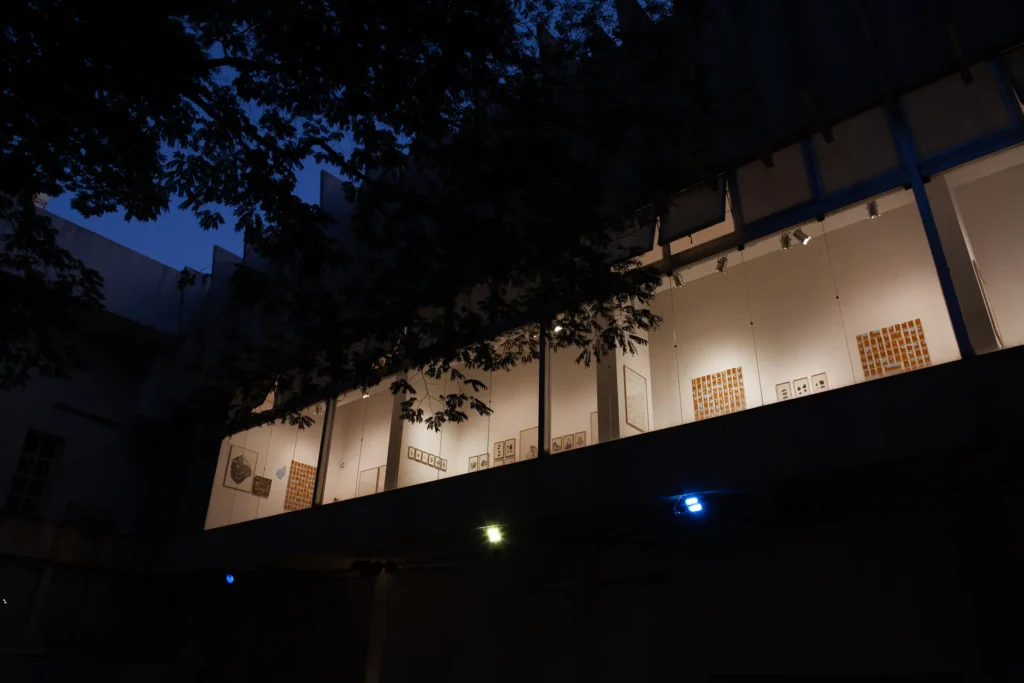
“As it Lasts” Pedro Moraleida Gallery, Palácio das Artes, 2023_ Belo Horizonte, Brazil
“As it Lasts” ESPAI 2019, Belo Horizonte/ Brazil
“Inhabiting the Invisible, Co-habiting the City”, Casa Rosada Gasmig, 2025_ Belo Horizonte/ Brazil
“Graphic Graphy” Abilio Barreto Historical Museum, 2020_ Belo Horizonte/ Brazil
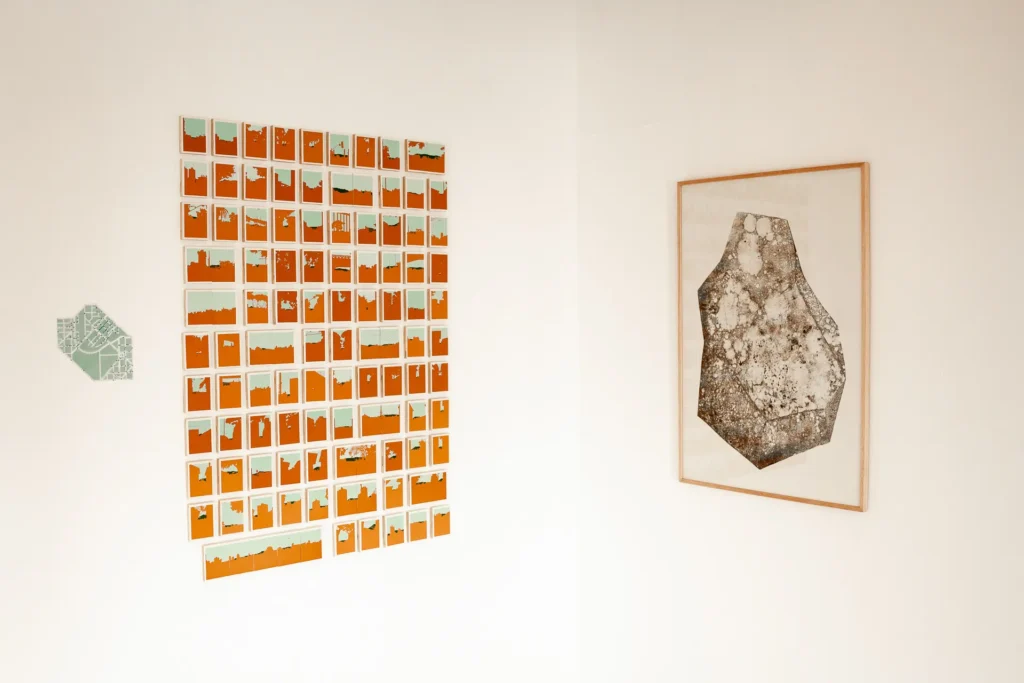
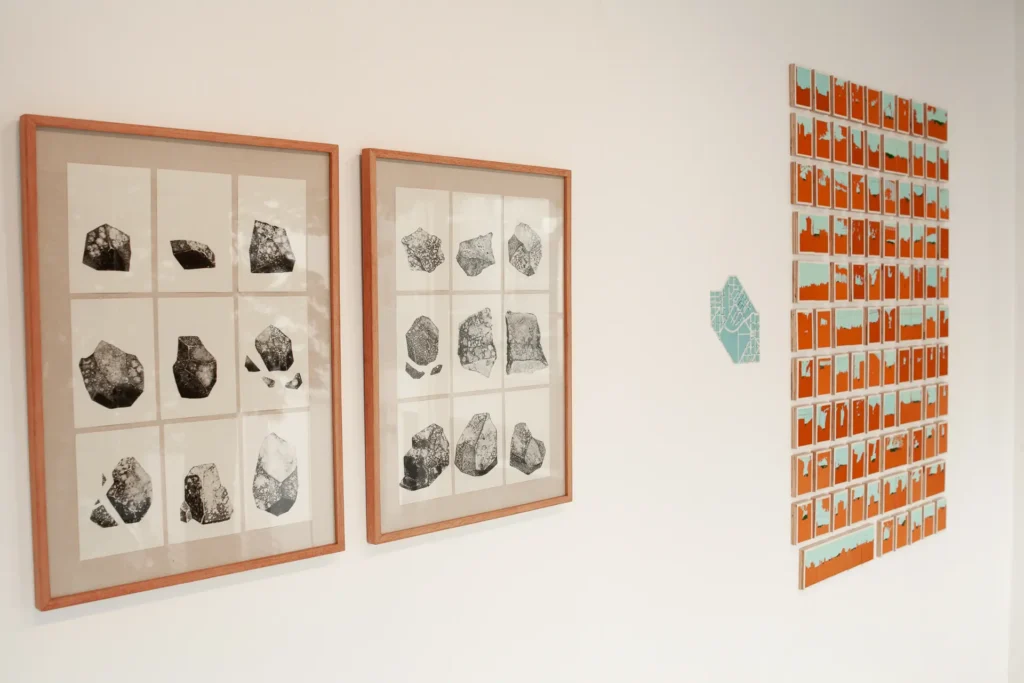
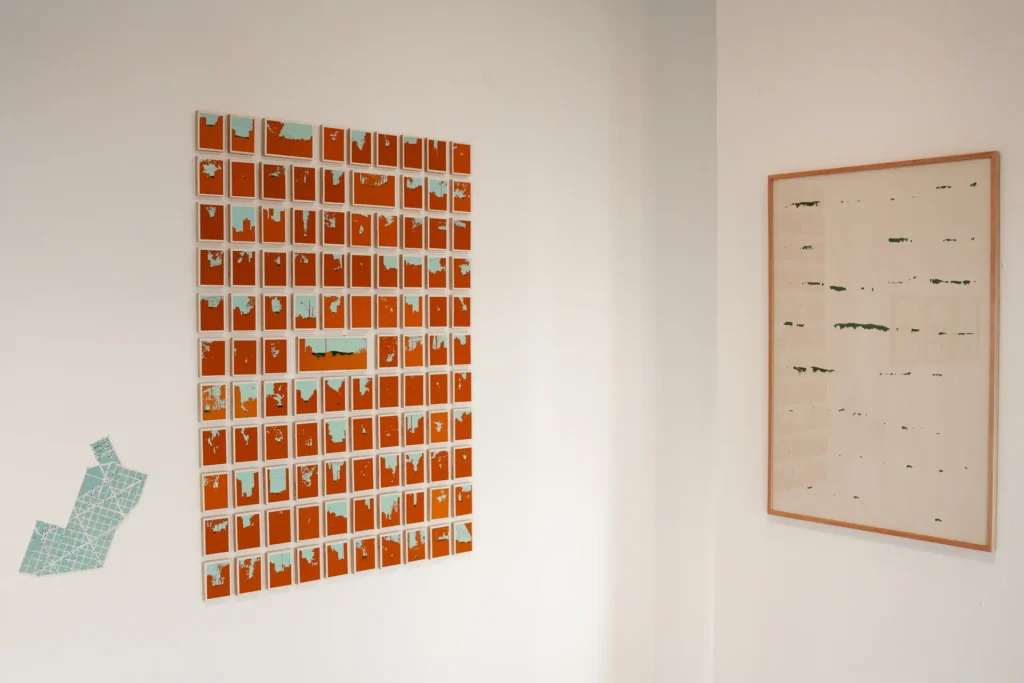
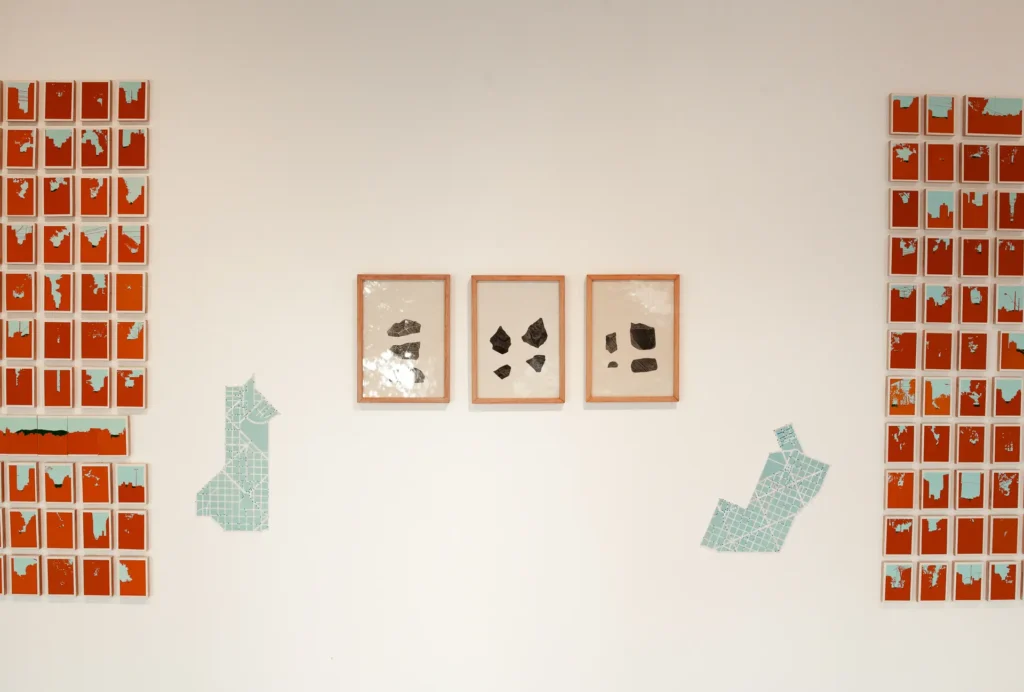


As it Lasts
Aruan Mattos
Grave the horizon
Nian Pissolati Lopes
Hiatus
Elisa Marques
Belo Horizonte, its mountains and its quarries
Alessandro Borsagli
As it Lasts
Aruan Mattos
Aruan Mattos in an interview with Laura Barbi in Jornal Letras – April 2022
The first sketch of the project was put on paper in 2017, but it is no exaggeration to say that Ainda Que Dura is a work that has been in the making for a long time. Anyone from Belo Horizonte, or anyone who lives with the city, can understand this easily. The mountain is here — the Serra do Curral can be seen from all over the city — and yet there is a tension. Everyone knows about the quarry behind the Serra, near the antennas. From Taquaril, its green silhouette is interrupted by a beige slit, like an index of what lies behind it. From Serra do Rola Moça, the hole sits beside it for anyone willing to see. And so we could continue east or west along the mountain range, north or south among the other rocks, and the landscape of absence would still echo. The removal of the mountain is not new; the feeling is not new, it is part of daily life, it is numbed.
Mineiro, the word that accompanies anyone born here, before being a demonym, is a word rooted in extraction. Or even smaller than the word itself: the suffix -eiro, so brief and yet so decisive for the logic of what we would become. No other state in the country carries such a suffix. Among the many -enses and -anos, we stand alone in this portion, as though the activity preceded the territory. And like a cruel and cunning baptism, the word fulfills its function strictly: once there is no mine, there is no activity left for the mineiro. The closest related name we find is, unsurprisingly, brasileiro. It is worth remembering that this word even predates the naming of the territory as Brazil, since brasileiros were the Portuguese traders dealing in brazilwood. In a sad linkage, mineiros and brasileiros fulfill their fate alike.
Ainda Que Dura, (that can be translated as Although Hard, or As it Lasts) is a title that reverberates from this context. Beginning with Dura,(hard) associated in Portuguese both with duration and hardness. The discomfort in reading it seems to arise either from an incompleteness or from something out of place. Left open, it intends to suggest more than one interpretation: the duration implied by the adverb, as an endless continuity, or, in some paradoxical way, the transformation of a state, pointing toward an ellipsis despite the hardness of matter. The first construction of Belo Horizonte was founded upon these terms. Five hills, designated as quarries, formed a belt around the city. At its center, a city was built with the material extracted from those hills. Today, these quarries belong to regions that in some cases still bear their names — Acaba-Mundo, Prado Lopes, Morro das Pedras — and there are also Carapuça, in the São Rafael settlement in the Pompéia neighborhood, and Lagoinha, which today belongs to the Concórdia district. Later came other quarries: some already deactivated, others still under mineral extraction. Of those first ones, only Acaba-Mundo remains active, underground, though with death exposed to the open sky. Originally, the name Acaba-Mundo (“End-of-the-World”) referred to the edge of the city. The quarry lies at the foot of the Serra do Curral, a sharply marked frontier. But can the reading still remain the same? If the mountain ends, does the world not end with it?
Today the climb to the top of Serra do Curral is official; it has a name, and the path was carved out by machine. At the entrance to the park of the same name stands a robust plaque of oxidized iron bearing an excerpt from Triste Horizonte by Carlos Drummond de Andrade. We are this civilization that creates mining, laments mining, and then erects a tribute to the extinct mountain with a fragment of lament engraved upon a fragment of extinction. Drummond, forever marked by the brutality inflicted upon Pico do Cauê, always exposed this wound. In A Maquinação do Mundo, José Miguel Wisnik recalls an advertisement by the then Companhia Vale do Rio Doce as a counter-response to the poet: an image of iron ore overlaid with the sentence, “There is a stone in the path of Brazilian development.”
We walked every street of Belo Horizonte’s first planned city grid and mapped the places from which the mountains could still be seen. A singular experience: standing among straight avenues, elongated walls, rectified rivers, sounds in mechanical cadence, while legs and body moved in organic rhythm, lactic acid building up, eyes fixed on the mountain lying in wait, amid shifting colors between ore, trees, sunlight, and projected shadows. The ambivalence of two worlds colliding. The mountain is right there — everyone knows it, everyone can see it from the entire city — and yet there is a collective certainty built into this world-making, one in which the mountain will always remain in the background. It appears in fragments, cut off from behind and cut off from the front. The phrase comes naturally, effortlessly: there is development in the path of the Minas stone. A destiny engraved in drypoint. Piercing through iron in vertical galleries, digging mines into abyssal language.
Grave the horizon
Nian Pissolati Lopes
The text is part of the publication:
Ainda que Dura Vol. 2
The line that makes the horizon announces gravity.
The constant trace, varying according to the hour of the day, is somehow what binds us to a limit (sharp because distance disguises opacity) between what is solid, liquid, gaseous or, let’s say, plasmatic, among the substances that circulate here, on this imperfect sphere that is the earth full of water, because someone once called it that and many others repeated it, who knows why. In truth, the hypothesis I hold here — admittedly a commonplace (which, in turn, is how we manage to say anything at all to one another) — is that earth is, whether one likes it or not, that which is limit — and limit because it makes one feel, think, act, perceive, and every other verb that may be raised upon a place considered stable (the imperfection of this adjective will have to be problematized later on) — though it is clear that limits are many, just as substances are many, beliefs are many, and the limit of the limit itself. All this merely to say that one cannot walk upon water, or rather, that those who can are not us, the ones who claim that sitting down, pressing the computer’s on button, opening a text editor, and writing the signs of a language so that someone else may read them is, in the end, another earth, another limit that makes us sing, walk, die, share whatever it may be.
So, to begin again, since we agree that what I write here is a piece of earth, and has a perimeter from which it becomes lawful to create a beginning, aspire to a middle, and attempt an end, I could say that the constant trace that draws and creates the horizon is the restless encounter, a contingent drawing because subsumed by all the factors that we — we who do not remain atop waters — enumerate, explain, decipher, because from here what we know best how to create are ciphers so they may be broken, torn apart, so that we may climb several meters high, supported by thousands, hundreds, or dozens of ourselves, and shout to the four winds that the law of ciphers has been discovered (its duration declining according to the next blockages and new openings), hidden who-knows-where, when in reality it is well known that it is and always will be kept within ourselves — where else could it be? — and not even all our accumulated insomnias could disguise it.
Therefore, to begin this falling text once more, because uncertain — and if there is certainty, there is falling, since, you see, few substances, at least those visible to us who believe in earth, cease to fall when beneath their weight there is air — the relativity of weight is a matter for another cipher — this unmistakable nothingness that makes itself noticed to us in such an improbable way that we choose not to give it importance. Yet it is touch that allows us to experience air in motion, this sense so distant from the cipher, and perhaps that is why music, this greater cipher because it is not merely cipher, makes use of it to spread itself in every direction and surpass so-called physical barriers: the wall, the house wall, the room wall, the wardrobe, the pillow, entering through the ear on a Saturday morning, crossing the eardrum and traversing cavities, membranes, cells, and liquids, even if you are kilometers away from any device or human or animal or machine or thing that emits noise — though this is obviously an exaggeration, because silence is a glimpsed cipher (subtracting from this equation the few dozen (?) humans who have been outside this imperfect ball some of us call earth, though the ball is almost entirely water, just as we ourselves are water — perhaps silence exists there, in that nothing pronounced to us as the intransigent vacuum). And it is also music that, moving through the air, when low-pitched, touches the skin and not only the eardrums, making it vibrate; therefore it is sound, one of whose extremities is the cipher, that reveals itself to be much larger and produces tactile sensations so close to a shove that they do not cease to be shoves merely because they are subtle. And it is likewise music that, upon encountering water — this outpost halfway between earth and air — suggests centrifugal waves in a plastic and symmetrical spectacle that dissipates, still harmonious, until it ceases to exist for us, we who understand electricity, logarithms, and the Higgs boson.
And as was to be expected, since we possess the art of ciphering the decipherable so as later to decompose it, I propose beginning the text once again, because, as could also have been foreseen, this extract of words attempts to become a feather, that is, it wishes to flee the only certainty it could have — and in truth does have, which ends up transforming it into a great whim, just as every cipher we invent is a whim, including the only, the last, the first, the life-death — which is nothing other than the end, whether satisfying or not, whether it encloses something or not (and obviously the answer is no), as though, hovering over nothingness, it could gain time (a cipher created to bore us), taking as roads the air currents that may eventually be created and, as such, making detours and inventing routes that follow untranslatable repeating decimals (though never promising enough to escape metalanguage), at least for most of us, those who believe in ciphers, but only up to a point, long before they become the world itself, as they are for those who play with the tip of a pencil or with the luminous points of the infinite binary system of their computers, reducing and magnifying exponentially the stars and what lies outside and inside, the moment they turn them into illustrations of their numbers. And I say their because very few could follow such paths, just as scarce are those who possess such absolute certainty without justifying it as faith.
And to contradict a foreseeable logic of the text, let us say we are in the middle of an argument even though we have not yet left our place — which is grave, because among the magics that we, not only those who call ourselves human, but a significant percentage of the substances on this imperfect ball that is earth — not to mention the earth itself and why not everything we have ever managed to name as existing and beyond it — therefore no longer merely a large part but everything, everything is energy, which means change, which makes the static synonymous with nonexistence. Therefore we, who are here at this instant, in every conceivable extension within immensity, do not experience stability even remotely, hence the need to create it, because it belongs to that category of aspirations in which we recently placed silence. And to propose an anticipated twist, I could emphasize that while one aspiration is negative because in the final instance it abstains from affections, the other is positive because it is above all connection (not restriction), existing even within music itself and throughout the chains of notes that pull other notes, in constructions raised exclusively from what is believed to be fullness and emptiness.
And since deprived of silence and stability, this text can only do one thing, which is fall upon the earth. And falling, you see, implies the consumption of energy and therefore exchange is beginning-middle-end, possibility of existence, because it would suffice for some infinitesimal point, any homeopathic substance whatsoever, to refuse it in order for stasis to materialize. And from what our tiny heads can conceive, that would be equivalent to affirming the impossible, which allows us to guarantee that existence is transformation, and that commitment is the reverse side of the static.
And to walk upon the terrain of the middle, this earth that is mine by right because from it I created a concatenation of signs, though unconcerned with origins — the right, therefore, to rummage through it, nothing more — believing that there exists a calculable amount of time for a computer to arrange all the words, mannerisms (and intentions) of a language, in this case our good old Portuguese (with foreignisms here and there), and create a text identical to this one, and perhaps a lesser greed but still a useful one is to think that humanity does not possess sufficient time for another human being to sit down and write a text exactly like this one that emerges from this electricity (which is consumption of energy) taking place in the dark chamber (which is my head), causing my fingers to write, write, and my eyes to read and discover something that not even I myself knew. But then again, if it is not I, who else could it be? Thus the correct question is not who, but what. And the answer my own head can give (based on what other heads have given, in an infinite trajectory, like the domino piece falling backward through time, triggering an indefinable misdirection and ending up who-knows-where, because to this day we have not been able to explain it) is that it is electricity, it is energy exploding and becoming cipher walking downward.
Electrical-binary-cipher constructing itself on its own, in the sense that property is one of those inventions to which no one may cling for too long or plunge too deeply because it is restricted to the question of scale, and all it takes is a shabby magnifying glass to show that mixtures, differences, bonds, and — to repeat a conclusion — commitments make property a false issue.
And since paths have concatenated themselves that refuse explanation, it becomes ordinarily possible to deny what was affirmed a moment ago, admitting that the only certainty of writing, from which it not only does not flee but seeks above all else, is the end, the encounter with the ground (and therefore every possibility and curve and back-and-forth are merely the shortest route to arrive there).
Thus, finally, we approach the central point of this imperfect circle that is the text: gravity.
One body attracts another and makes existence exist. We are still permeating the argument that earlier consumed itself in explaining energy. But grave is that which has weight and, as such, goes toward everything the air does not sustain. Or let us say, sustains within spans of time that do not concern us, because reality is yet another matter of scale. Things are seen and made to happen in vastly variable magnitudes.
Thus I finally arrive at the beginning and say that the horizon, this certain line that overtakes our sight and makes us perceive an encounter, entirely inconstant because its sharpness is limited to spans of time that are insignificant to us humans, being of the order of seconds or minutes, is the indication that encounter is possible, that it is what makes earth be earth. It is the line that makes evident that, for something to fall, it was necessary for us to create the sky, which who-knows-why has not yet collapsed upon our heads, and that finally all this mass of air, invisible (some days more, others less), surrounded by another mass of gas, is what in the end allows the leaf detached from the tree to reach the ground. And why not say:
grave is the horizon,
that at last makes the limit.
And why not repeat:
grave is the horizon,
that still makes the limit.
And why not allow oneself to be carried away by the whims of language:
grave horizon.
And to suspend this torrent of words, this writing of the ground, one must admit that blue and its variations assume an improbable importance beyond color theory, because it is blue — or more precisely its duration — that allows the glimpse of the limit and the possible and deviating lines and, therefore, the background, discovery of the rainbow’s arc, is form, and from there to know that blue is earth, that air is earth, that water denies earth so that it may exist, and that falling is the possibility of encounter, which is energy and justifies the point that exists only to become something else afterward.
Hiatus
Elisa Marques
The text is part of the publication:
Ainda que Dura Vol. 1
Every day I cross the Arrudas River.
From atop the viaduct, I see the waters below.
The color of the waters changes with the light.
I cross the viaduct twice a day and from above I also see Andradas Avenue; its flow of cars, in one direction and the other. The river waters always flow in the same direction.
The number of cars on the avenue depends on the hour of the day and the day of the week.
Lunchtime, rush hour, Monday, Sunday, holidays.
The waters and the people are in motion, the Arrudas and the Andradas.
We give names and we give forms to these flows.
We define limits, we draw lines and we give body.
Every day the city passes through me.
Amid the sounds vibrating in my chest, the heat of the asphalt beneath my feet,
the cold railing in my hand, colors and lights in my eyes, I am-am on the viaduct.
The river waters never have the same meaning.
One afternoon a heavy rain fell, the river rose very quickly along the concrete walls
until an immense orange wave took over the full width of Andradas.
The viaduct was covered in water, I let go of the railing and drifted down with the current.
I spun through that valley while the contours dissolved;
I could no longer distinguish the rooftops of houses, the crowns of trees, the antennas atop buildings.
On the horizon remained only the line of the Serra do Curral.
The rain eased and for a long time I wandered floating slowly until I reached the crest of the mountain.
From up there I saw that on the other side there is nothing, complete emptiness.
The mountain is a thin shell containing the city.
Everything that had once been on the other side was now inside the city.
The city is made of mountain.
But after that rain, the city became an ocean
of mineral water.
hard water
hard stone
hard people
A few days passed and the water slowly receded.
And the city that little by little emerged revealed itself as a single surface,
as though fused into one continuous skin, what once had been floors, façades, neighborhood boundaries, and the mountain-frame itself.
But none of it remained static; the people, the waters, the cars continued through their movements to constantly transform what we perceive, what we are, where and when we are. The forms, the backgrounds, the contents and the containers, the lanes and the edges. The stability of a point became impossible. In that incredible vertigo, everything could be invented and nothing ever was.
Until one day the water drained away completely. And the dry city slowly began cracking beneath the sun. Crevices then started to appear and through them other things could once again be glimpsed: oppositions, contrasts.
And then once again the viaduct separated itself from the river and with it distance came back into existence,
which every day I cross.
—
Elisa Marques is an architect and urban planner. A researcher of urban waters, she is pursuing a master’s degree at the School of Architecture of UFMG.
Belo Horizonte, its mountains and its quarries
Alessandro Borsagli
The text is part of the publication
Ainda que Dura Vol. 1
The Serra do Curral del Rey forms part of an important mountain complex stretching for approximately 93 km in the east–west direction and belonging to the Quadrilátero Ferrífero (Iron Quadrangle), more precisely to its northern portion. A geographical landmark not only for Belo Horizonte but also for its metropolitan region, the Serra do Curral is a monocline forming part of a small chain of ranges extending from the region of Carmo do Cajuru to the vicinity of the city of Caeté, west of the Serra do Espinhaço.
The Serra do Curral bears witness to the relief of a region notable for its various orogenies throughout the planet’s evolution. Everything indicates that the range once possessed elevations exceeding 4,000 meters, whereas today it reaches altitudes of 1,520 meters (Pico José Vieira). In other words, what is seen today is the result of a process of differential erosion, in which areas more susceptible to erosion were lowered more intensely than areas more resistant to weathering.
The ranges composing the northern portion of the quadrilateral bear several regional names. Thus, from west to east, one finds: Serra de Itatiaiuçu and Igarapé, Serra Azul, Serra dos Três Irmãos, Serra da Jangada, Serra do Rola Moça, Serra do José Vieira, Serra da Mutuca, Serra da Água Quente, Serra do Curral del Rey, Serra do Taquaril, and Serra da Piedade. These ranges are crossed by two rivers: the Paraopeba River, just below the city of Brumadinho, in the gorge known as Fecho do Funil; and the Rio das Velhas, near Sabará, where its waters encounter the two portions of the massif, momentarily disconnected by the river’s passage toward the Gerais.
Known and exploited since the eighteenth century, the Serra das Congonhas — the original name of the Serra do Curral — was considered the geographical landmark of the settlements of Congonhas de Sabará and Curral del Rey, villages founded at its feet during the early eighteenth century. Since colonial times, the range served as a point of reference for those arriving from the hinterland routes toward the settlement and toward other villages and towns established nearby. The range was not a frequent target of miners spread throughout the Minas region during the gold century, save for some exceptions, such as the gold-mining concessions in Serra da Mutuca, from which several little-studied vestiges remain, and the small-scale exploitation in Serra do Taquaril during the second half of the nineteenth century. Today, several iron mines remain active in the Serra do Curral Complex, mostly in the municipalities of Brumadinho, Itatiaiuçu, and Igarapé, alongside gold mines in Nova Lima, Sabará, and Caeté.
The Serra do Curral is composed primarily of itabirites and hematite, generally located in the highest parts, forming and protecting the ridge because of their greater resistance to weathering. In the lower portions of the range, dolomites and dolomitic phyllites predominate — rocks more susceptible to weathering and responsible for the formation of the terraces in the Lagoa Seca region, on the border between Belo Horizonte and Nova Lima.
The massif also defines the entire southern portion of the Arrudas Stream sub-basin, functioning as a watershed divide between it and the Cristais Stream, both tributaries of the Rio das Velhas. Opposite the Serra do Curral stands the Serra da Contagem, which shapes the northern portion of the Arrudas valley. Both are of great importance to the history of the Minas Gerais capital, since the city was envisioned, conceived, and built in the site located between the two ranges, at the meeting point of the hot winds from the São Francisco Valley and the cold winds of the Iron Quadrangle.
Within this context, amid the urban utopias and geometric rationalism of the Construction Commission of the New Capital (CCNC), installed in the settlement of Belo Horizonte in 1894 after the site was chosen to host the new administrative center of the state, the ranges were regarded not only as guardians of water resources and coolness — for which the colonial settlement was widely known — but also of granite, marble, and soapstone, materials considered indispensable for materializing the political plans behind the construction of a modern, hygienic, and eclectic capital. Thus, the majestic range contained nearly everything the CCNC required to carry forward the construction of the new capital of Minas Gerais.
At the edges of the delimited perimeter and in its surroundings were various quarries that supplied the materials necessary for constructing buildings, paving streets and avenues, channeling waterways, and building water and sewage galleries. Within the perimeter of the new capital, the geographical position of each quarry evoked the ancient towers of fortified European cities, since, located at strategic points where the horizon was vast and the landscape beautiful, they served as landmarks for delimiting the perimeter and preparing the geodetic and topographic maps of the studied site.
Amid all this, when Aarão Reis presented the Plan in 1895, it became clear that the project gave particular importance to the perspective of the Serra do Curral, which would necessarily be visible from every point in the planned city nestled between the range and the Arrudas valley. The suburban zone, meanwhile, sought relative harmony between its street layout and the contour lines of the mountains bordering the escarpment. Morro do Cruzeiro, the endpoint of Afonso Pena Avenue, stood as the border between the natural and the rational, intended to house the new temple dedicated to Nossa Senhora da Boa Viagem, at the summit of the city and the foot of the mountains. The cross once located there — a pilgrimage site for the residents of Curral del Rey unable to ascend the peak itself — marked the beginning of the range, which extended far beyond the monoclinal wall.
Between 1895 and 1897, five quarries supplied materials for the construction of buildings and urban infrastructure, two of them located in Serra da Contagem:
Pedreira da Viação or Prado Lopes: acquired by Banco Viação do Brasil shortly before the settlement was chosen as the new capital. Located near Lagoinha, close to downtown Belo Horizonte. Its surroundings now contain one of the city’s oldest informal settlements, Aglomerado Prado Lopes.
Pedreira da Lagoinha: located opposite the Prado Lopes quarry, currently partially occupied by the Concórdia neighborhood.
Pedreira da Carapuça: situated in the eastern region of the capital, along the old road connecting Belo Horizonte to Nova Lima and Sabará.
Morro das Pedras: located on the slope of the Piteiras Stream, behind Hospital Madre Teresa. According to Mayor Christiano Machado (1926), it was the municipality’s most profitable quarry due to the exceptional quality of its stones for curbstones and paving blocks.
Pedreira do Acaba Mundo: supplied much of the marble used in embellishing public and private buildings in the capital. Beginning in the 1950s, dolomite extraction for steelmaking began there and continues underground to this day.
After the capital’s inauguration on December 12, 1897, the Serra do Curral remained largely untouched during the early decades of the twentieth century, aside from operations at Acaba Mundo quarry, water capture systems, electrical infrastructure, and roads crossing the range.
The intense urban growth beginning in the 1920s compromised the city’s water supply, especially in the suburban zones housing roughly seventy percent of Belo Horizonte’s population. Seeking solutions, the state government initiated extensive public works. Water supply became a priority, and the Serra do Curral Complex was crucial to improving the provision of water, already supplying the city through several streams since 1897.
The 1930s brought sweeping economic and social transformations after the Revolution of 1930, alongside the Mining Code (Decree no. 24.642), which established guidelines for mineral exploitation in Brazil. This marked the starting point for large-scale mining of iron ore in the Iron Quadrangle.
As Belo Horizonte expanded, quarry extraction within the city perimeter gradually ceased, while mining interests shifted toward areas around the Serra do Curral itself. Geological surveys and exploratory tunnels began appearing along the range, especially near water catchment areas.
In 1951, Mineração Lagoa Seca began operating on the exhausted lands of the Acaba Mundo quarry, extracting dolomite for the steel industry. During the same decade, the mountain complex was crossed by major federal highways linking Belo Horizonte to Rio de Janeiro and São Paulo, inaugurating rapid urban expansion toward the iron-rich mountains surrounding the capital.
At the same time, Lagoa Seca — once the only natural lagoon within the planned perimeter of the capital — disappeared due to urbanization and road construction. By the late 1950s, the American company Hanna Mining acquired control over major iron reserves in the region, leading to the creation of Mineração Curral del Rey Ltda. This prompted the state government to request federal heritage protection for the Serra do Curral.
Recognizing the range’s scenic, cultural, historical, hydrological, and urban significance, the federal heritage agency (DPHAN, now IPHAN
) listed part of the massif as protected heritage in 1960. However, only the face visible from Belo Horizonte was protected, allowing mining to proceed on the northern slopes.
The exceptionally rich iron deposits — containing approximately 70% iron — soon came to be viewed as an economic solution for the city’s financial difficulties. In 1961, the municipality created Ferro de Belo Horizonte (Ferrobel) to exploit the Serra’s mineral resources, arguing that mining profits would promote industrialization.
The 1960s and 1970s marked a turning point. Amid political turmoil, legal disputes, and the military dictatorship, mining intensified dramatically. The creation of Minerações Brasileiras Reunidas S/A (MBR) enabled the installation of the Águas Claras mine, which began operations in 1974. Its activities rapidly mutilated the ridgeline of the Serra do Curral.
Public opinion in Belo Horizonte reacted strongly against the destruction. Journalists, environmentalists, and citizens denounced the disappearance of the mountain’s iconic silhouette and the environmental devastation caused by mining.
At the same time, the closure of the Mangabeiras mine in 1979 led to the creation of Parque das Mangabeiras, inaugurated in 1982 as both environmental compensation and an urban park intended to preserve the mountain landscape.
Environmental awareness strengthened during the 1980s and 1990s. New protected areas were established, including Parque Estadual da Baleia and municipal heritage protection for the Serra do Curral itself. Nonetheless, real estate speculation, vertical development, and continued mining pressures persisted, especially from neighboring Nova Lima.
The last shipment of iron ore from the Águas Claras mine departed in 2003, leaving behind pits, tailings, and unstable terrain — the legacy of decades of extractive exploitation.
Final Considerations
Important and imposing, the Serra do Curral and its entire complex — guardians of the mineral wealth of the Iron Quadrangle and of some of the world’s finest iron reserves — rested for millions of years free from anthropogenic action, which in a relatively short period partially altered its persistent beauty. Damage that natural geological evolution would have taken thousands of years to produce occurred instead through aggressive human intervention.
Its scenic beauty and symbolic, environmental, and historical importance led the Construction Commission to frame the urban space around the massif, making it both the limit of the planned city and the source of the stones and minerals that built and adorned the new capital of Minas Gerais.
What the planners once understood and carefully incorporated into the cityscape was gradually lost amid accelerated urban growth and shifting political and economic forces. The extraordinarily valuable iron deposits became objects of global desire, and just as Minas Gerais gold had once fueled the Industrial Revolution in imperial England, the iron of the Quadrilátero Ferrífero fed twentieth-century industrial and military ambitions, directly transforming the profile of the Serra do Curral.
Until the late 1970s, most municipal and state administrations treated nature primarily as a reservoir of resources for development. The distancing of humanity from the environment to which it belongs contributed to the distorted perspective still prevalent today, in which urban expansion generates enormous profits for a few while producing environmental and social problems for many.
The later recognition of federal and municipal protections ensured the preservation of much of the massif’s profile and slopes, essential to the water supply of the surrounding cities for more than a century. Yet the area remains fragile, threatened by real estate speculation, mining, and environmental degradation. The protective perimeter established by IPHAN in 2016 stands as an act of resistance against unchecked urban expansion.
Resisting degradation and repeated aggressions from a metropolis that severed itself from its natural elements, the Serra do Curral del Rey — guardian of the beautiful horizon, living memory of existence, and sentinel over the restless life of the inhabitants of Curral — remains the living identity of a city in eternal construction.
—
Alessandro Borsagli holds a master’s degree in Geography from the Pontifical Catholic University of Minas Gerais and is the author of several books on the historical geography of Belo Horizonte.
REFERENCES
ARRUDA, Rogério Pereira de; WESTIN, Vera Lígia Costa. The mountains and the city. Belo Horizonte: Municipal Department of Culture, 1998.
BARBOSA, Waldemar de Almeida. Historical-geographical dictionary of Minas Gerais. Belo Horizonte: SATERB, 1971.
BARRETO, Abílio. Belo Horizonte, historical and descriptive memoir; medieval history. Vol. 2. Belo Horizonte: FJP/Centre for Historical and Cultural Studies, 1996.
BATISTA, Cláudia Paiva. Transformations and Continuities in the Landscape of the Serra do Curral. Master’s thesis. Federal University of Minas Gerais, Department of Geography, Belo Horizonte, 2004.
BELO HORIZONTE. Collection of Mayors’ Reports 1899–2000. Public Archives of the City of Belo Horizonte.
BORSAGLI, Alessandro. Belo Horizonte in Pieces: Fragments of a City Under Eternal Construction. Belo Horizonte: Clube de Autores, 2016.
______. Invisible Rivers of the Minas Metropolis. Belo Horizonte, Clube de Autores, 2016.
______. In the shadow of Curral del Rey: contributions to the history of Belo Horizonte. Belo Horizonte, Clube de Autores, 2017.
BRAZIL. IPHAN. Livro do Tombo vol. 28, 1960.
BURTON, Richard Francis. Journey from Rio de Janeiro to Morro Velho. Belo Horizonte: Itatiaia, São Paulo: Edusp, 1976.
FERRAZ, S. C. “Triste Horizonte”: Movements in defence of the Serra do Curral – Belo Horizonte, 1970s. Monograph (Bachelor’s Degree in History) – Federal University of Minas Gerais, Faculty of Philosophy and Human Sciences, Belo Horizonte, 2008.
JOÃO PINHEIRO FOUNDATION/Centre for Historical and Cultural Studies. Panorama of Belo Horizonte; Historical Atlas, Belo Horizonte, 1997.
GALEANO, Eduardo. Open Veins of Latin America. 39th ed. Rio de Janeiro: Paz e Terra, 2000.
MATA MACHADO, Bernardo Novais. The Hanna/MBR Case: Chronology of an Investigation. Provided by the author, 2003.
MINAS GERAIS. Commission for the Study of Sites Proposed for the New Capital. Report presented to His Excellency Dr Affonso Penna, President of the State, by civil engineer Aarão Reis. Rio de Janeiro: Imprensa Nacional, 1893b.
PENNA, Octávio. Chronological Notes on Belo Horizonte. Belo Horizonte: João Pinheiro Foundation, 1997.
PEREIRA, Osny. Duarte. Iron and Independence. Rio de Janeiro: Editora Civilização Brasileira, 1967.
PLAMBEL. Metropolitan programme for urban parks: Mangabeiras Park, preliminary report. Belo Horizonte: Plambel, 1979.
As it Lasts_ Monotypes
As it Lasts_ Views
As its Lasts_ Topographic markers