Flavia Regaldo
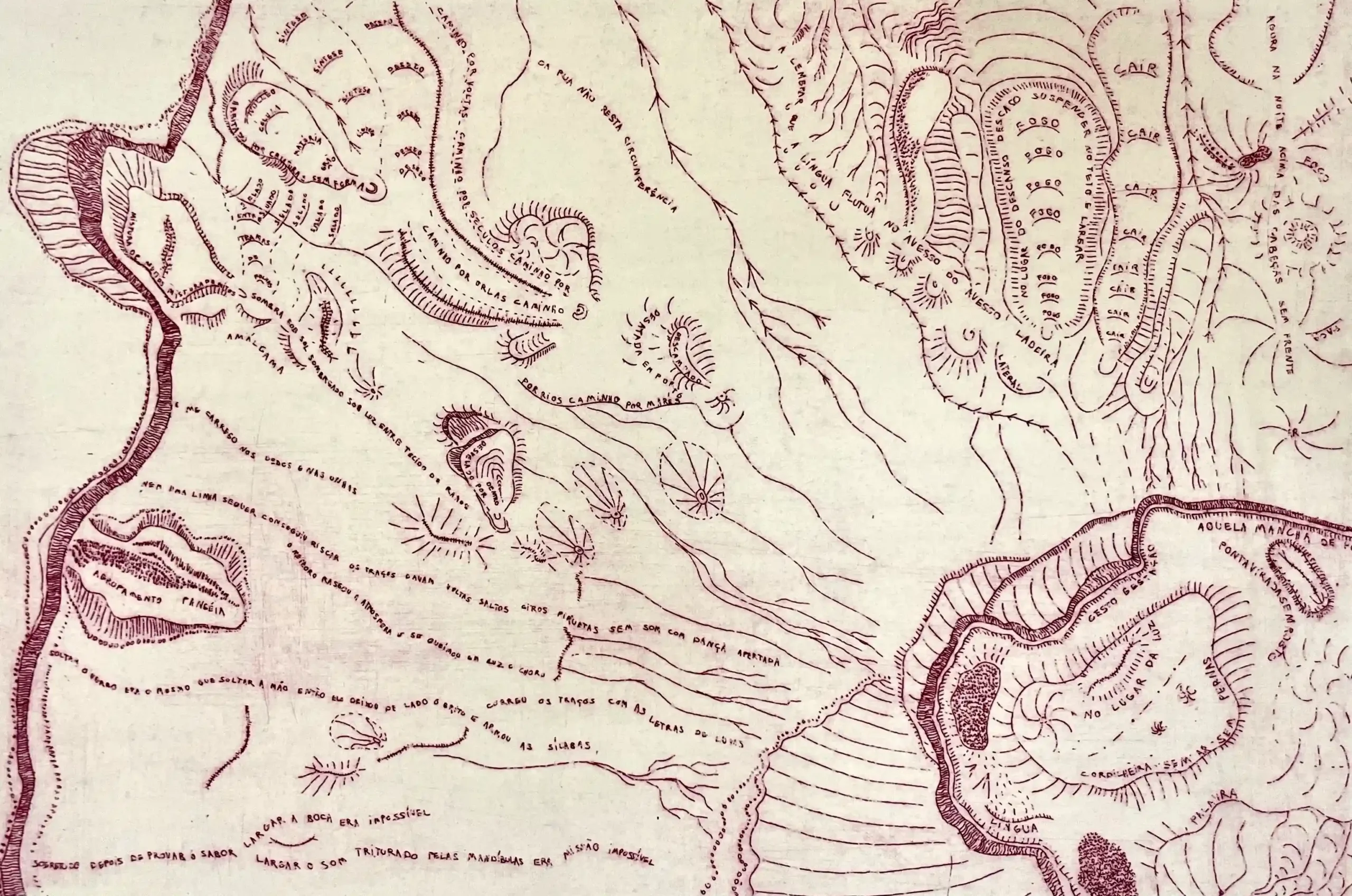
Morphologics is a project that reimagines traditional geomorphological maps through contemporary printmaking, creating fantastical cartographies that challenge extractivist and rational systems of knowledge. Drawing on archival research, local myths, and decolonial perspectives, the work critiques scientific representations of nature and proposes a post-anthropocentric geography rooted in interdependence, affection, and multiplicity. By transforming landscape into a living, myth-infused archive and dissolving rigid borders into fluid, molecular networks, the project invites a poetic, emotional relationship with territory. Drawing becomes a metaphor for rethinking boundaries and reconnecting with nature in more intimate and imaginative ways.
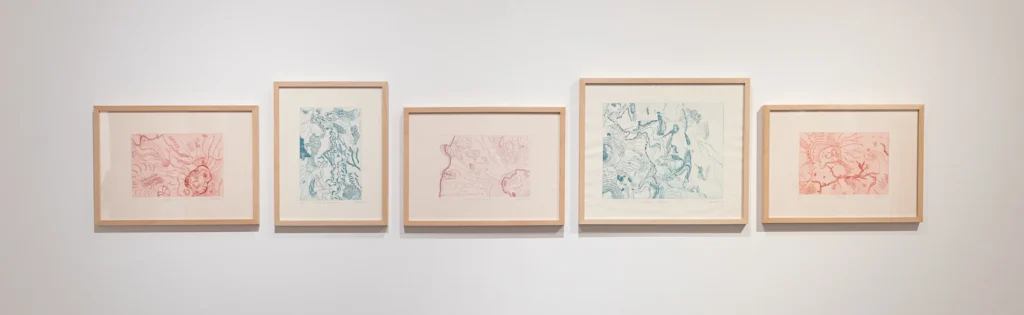
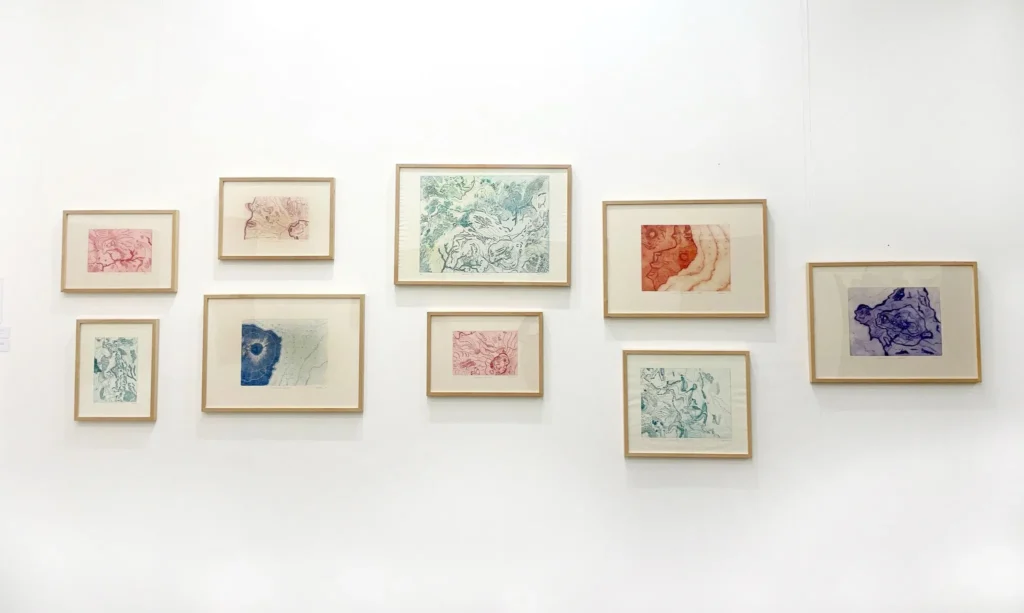
A series of ten metal etchings.
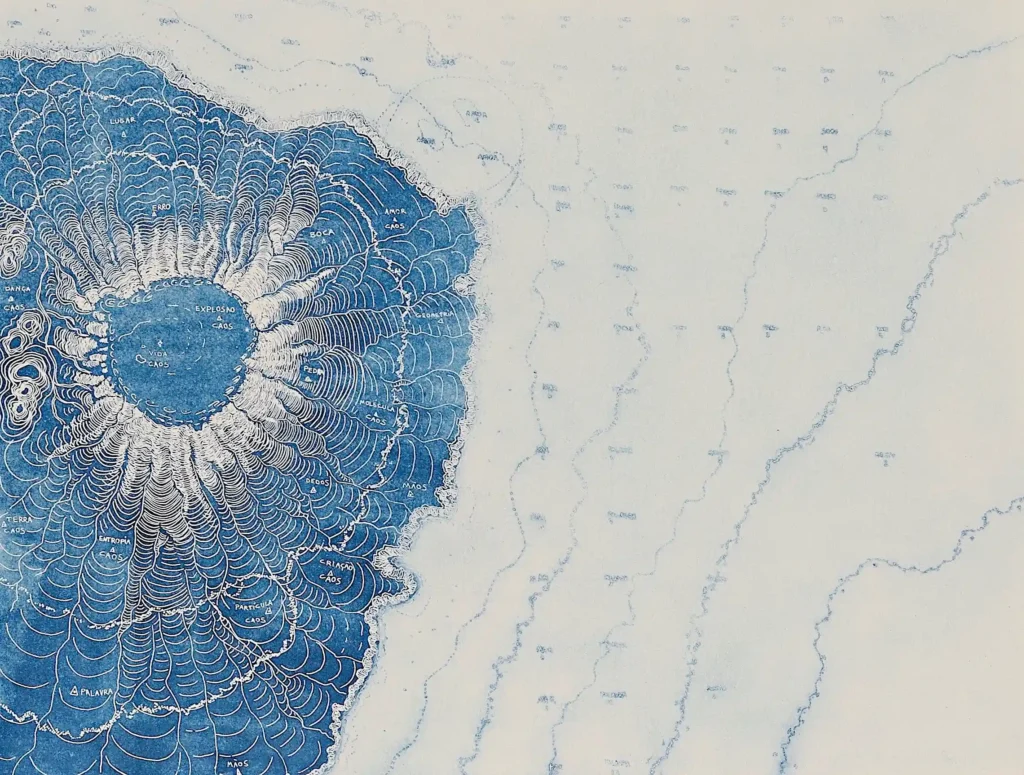
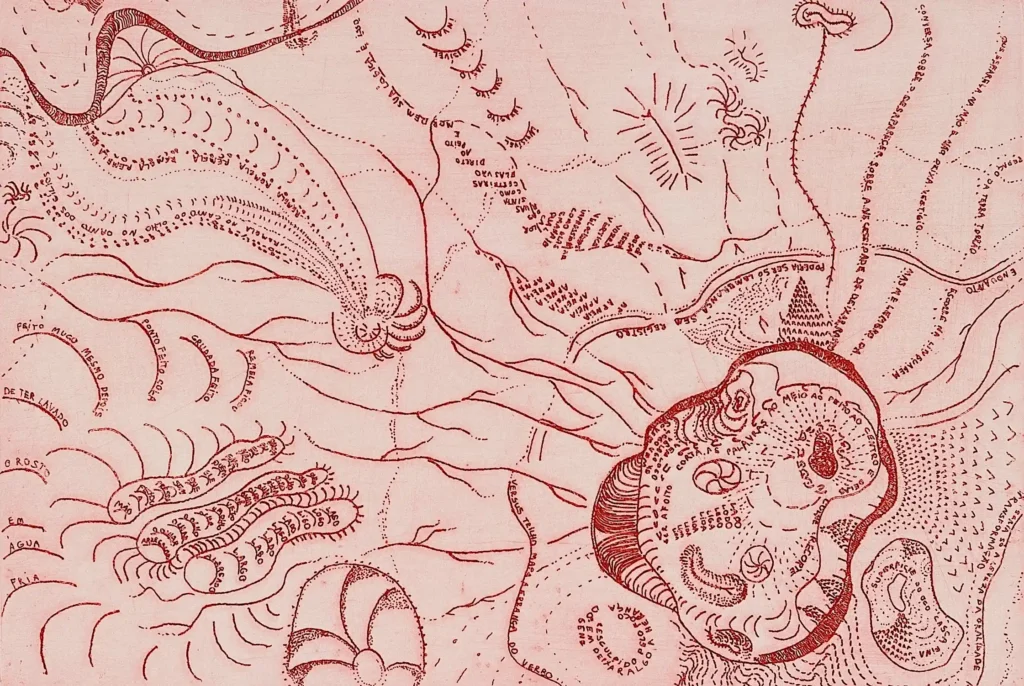
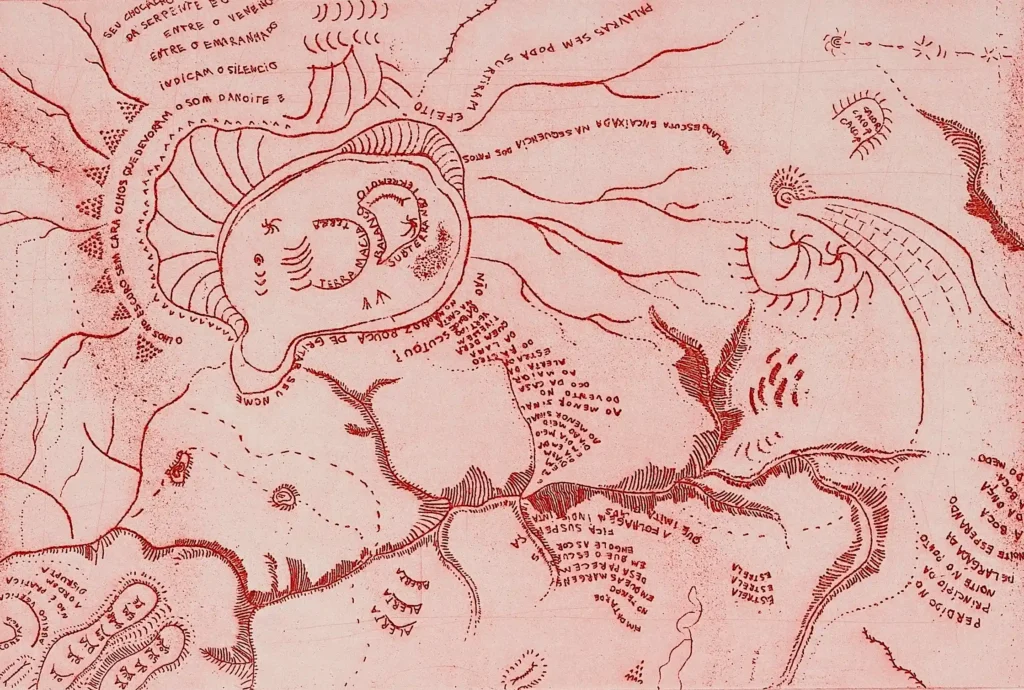
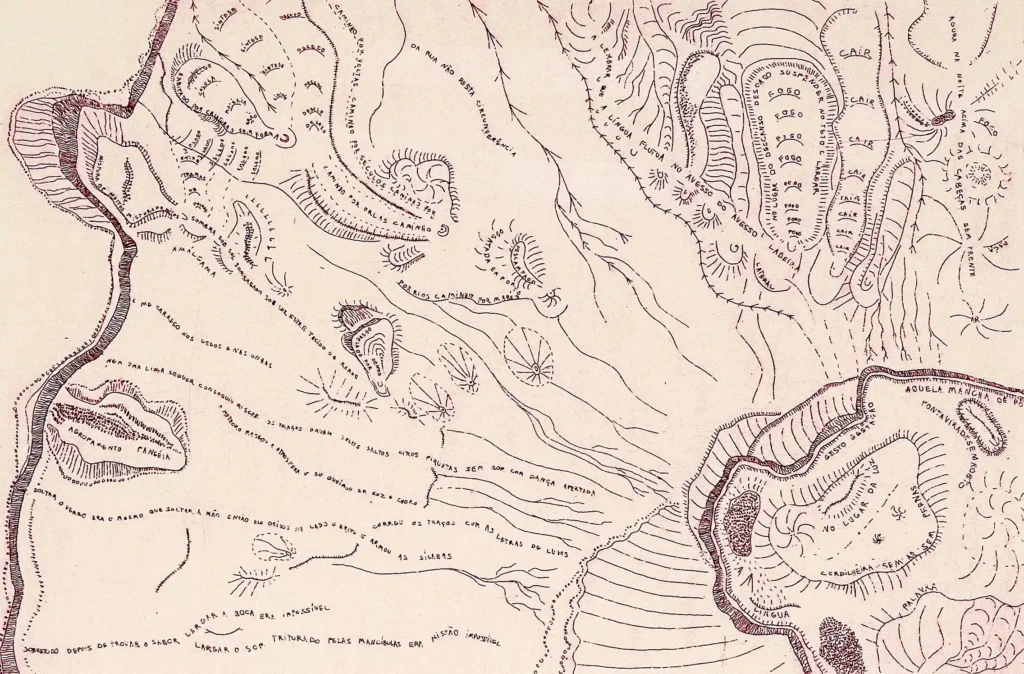
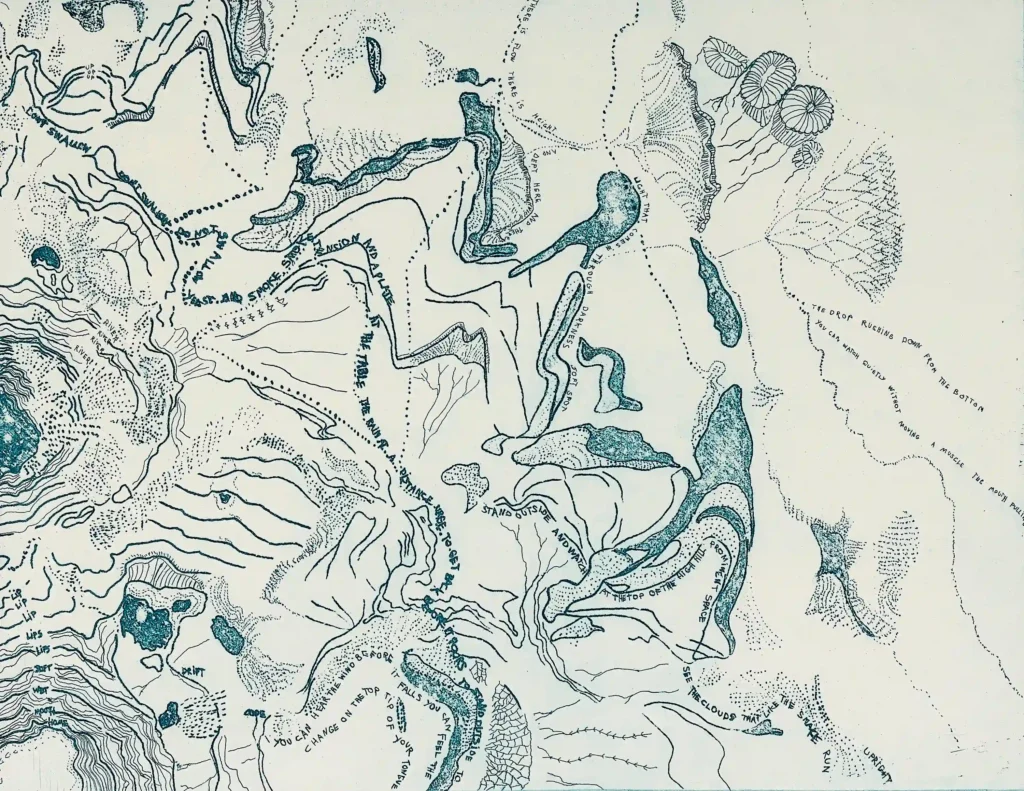
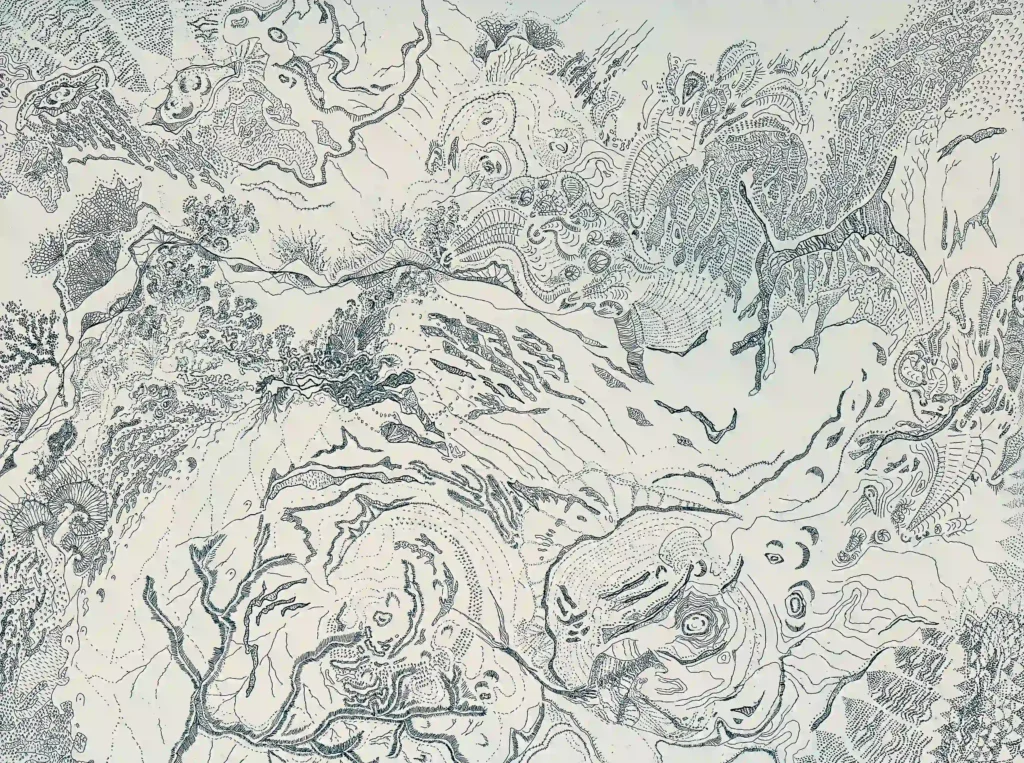
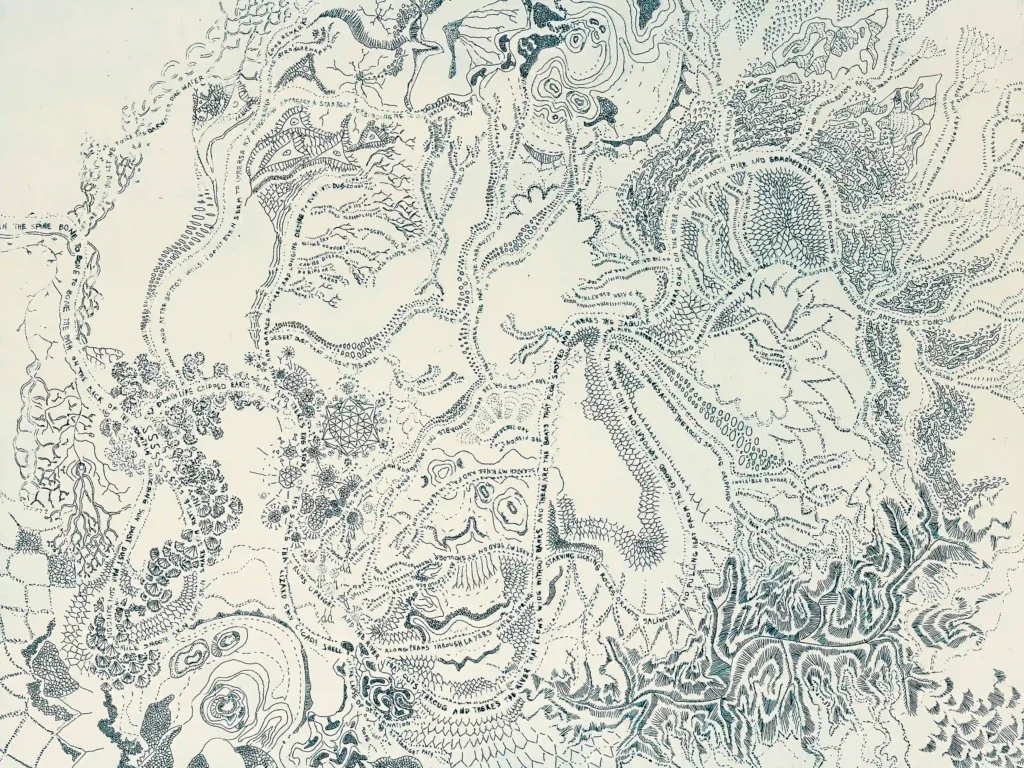
- Morphologic I, Life Chaos_ etching_ edition of 6_ 50×70 cm
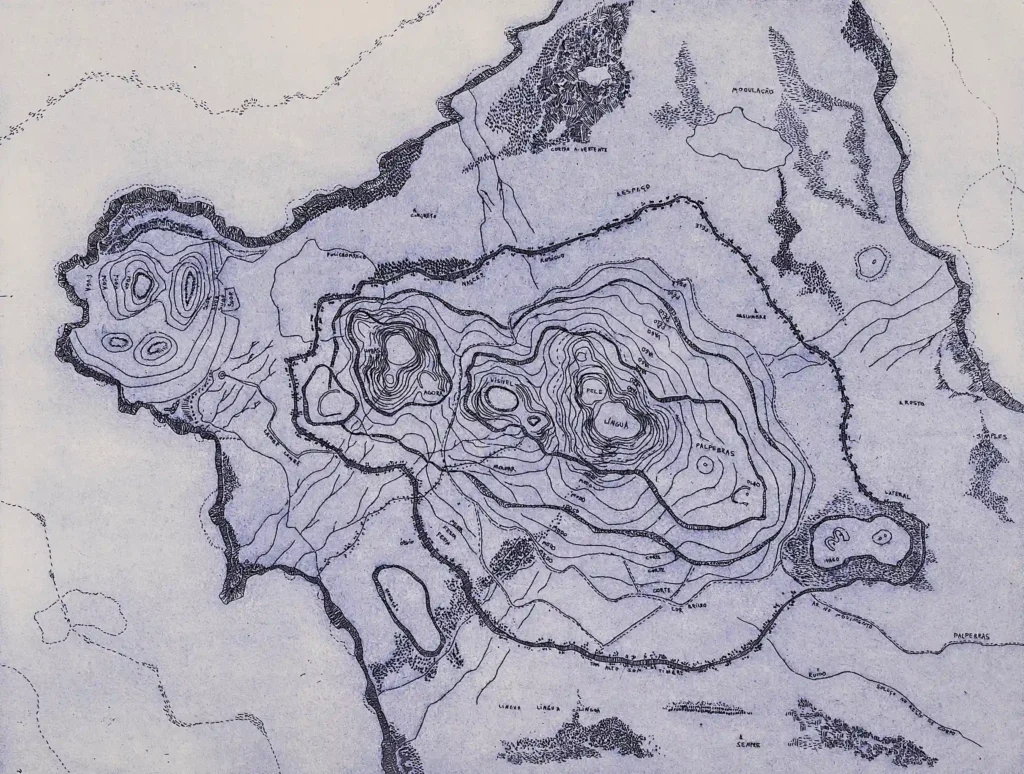
- Morphologic III, Skin Tongue_ etching_ edition of 10_ 50×70 cm
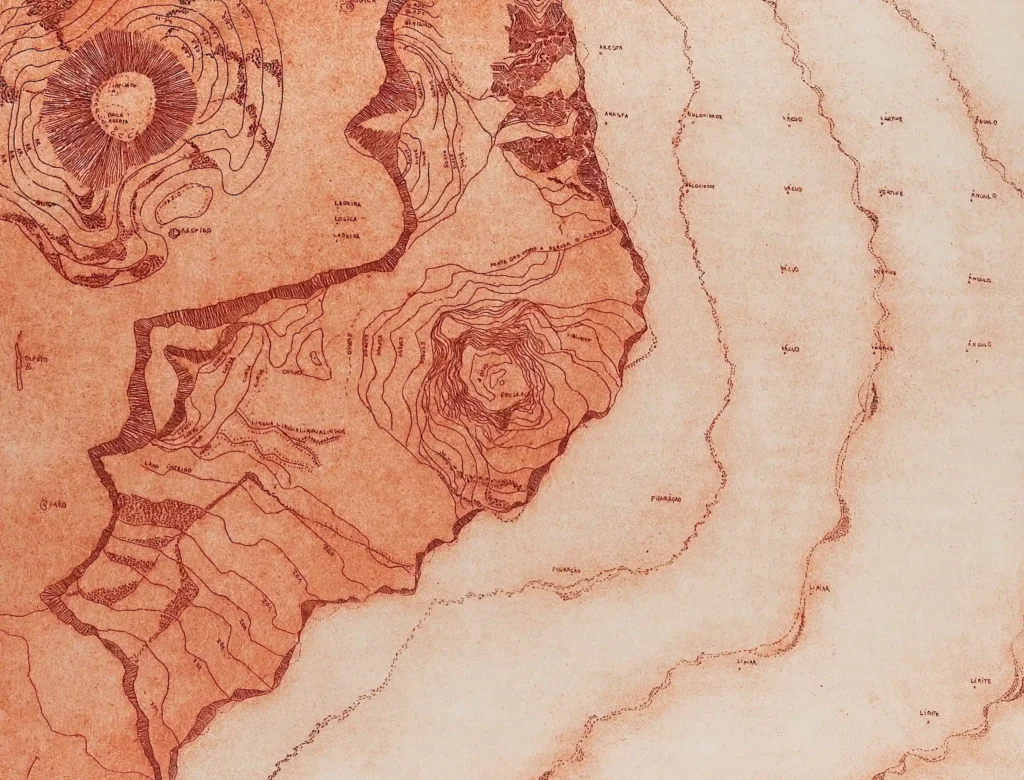
- Morphologic II, Sloping Mouth_ etching_ edition of 10_ 50×70 cm
- Morphologic V, No Record_ etching_ edition of 9_ 35×50 cm
- Morphologic VI, Open Alert_ etching_ edition of 9_ 35×50 cm
- Morphologic IV, In the Place of Light_ etching_ edition of 9_ 35×50 cm
- Morphologic VIII, Rain at a Distance_ etching_ edition of 9_ 44×53 cm
- Morphologic IX, Cicada Skin_ etching_ edition of 10_ 53×78 cm
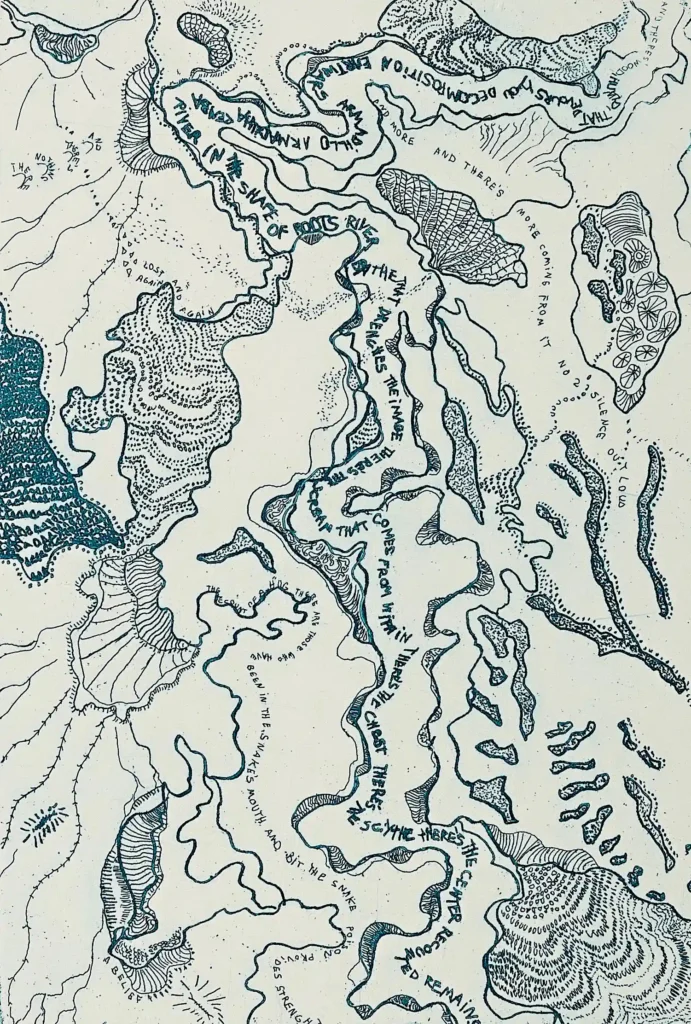
- Morphologic X, Snake that Runs Upright_ etching_ edition of 10_ 53×78 cm
- Morphologic VII, Silence out Loud_ etching_ edition of 9_ 43×34 cm
"On the Proportion of Forms", Coletivo Amarelo Gallery 2025 _ Lisbon / Portugal
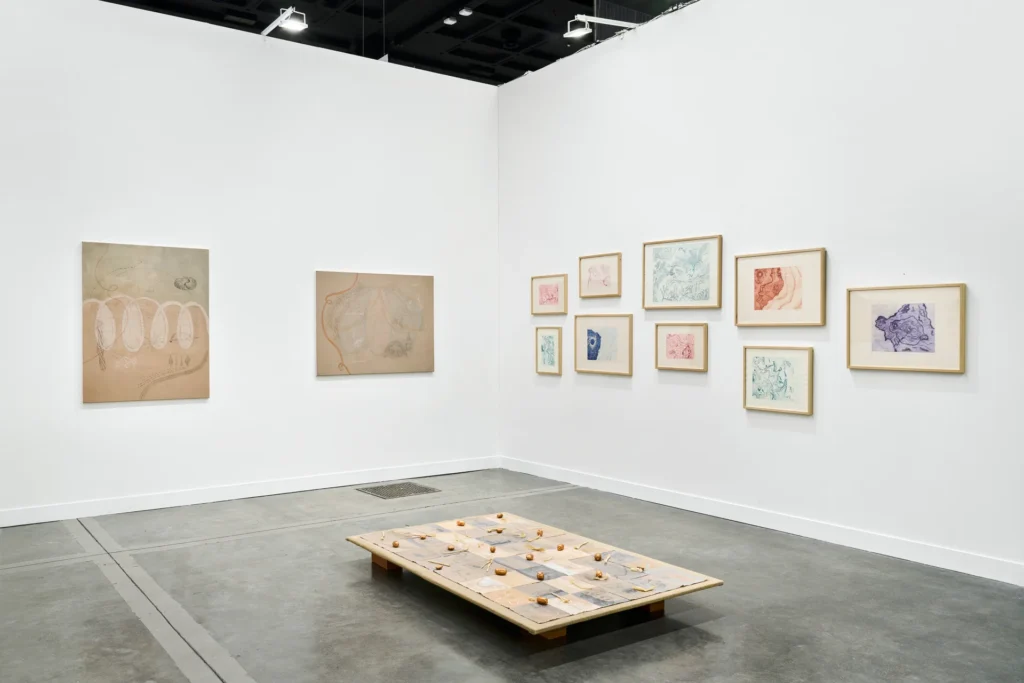
"Embodied histories, intertwining paths", Miart 2025 _ Milan / Italy
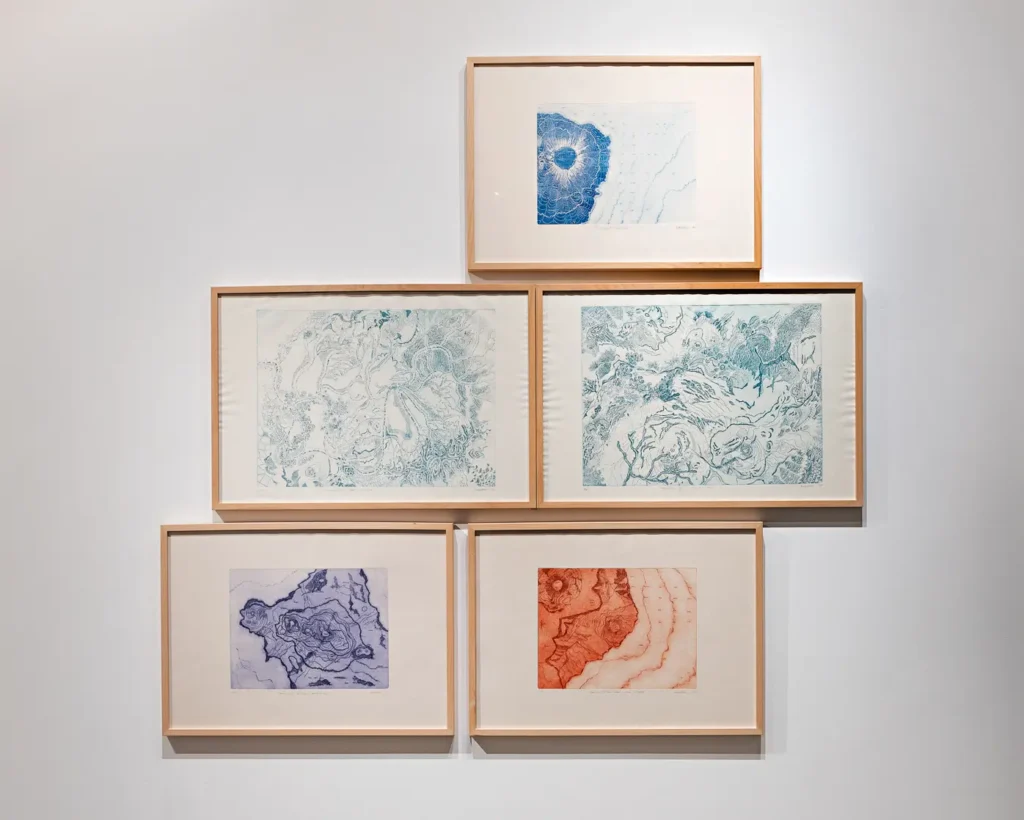
On the Proportions of Forms_ Umbigo Magazine
João Pedro Soares
Exhibition: On the Proportions of Forms
Giulia Lamoni and Margarida Brito Alves
On the Proportions of Forms_ Umbigo Magazine
João Pedro Soares
Perhaps it all begins on a mountain, in the awakening of the earth raised on high peaks, in ancestral sedimentations of wonder and mystery.
From there, on the descent of the steep escarpments, life happens, shelters in the crevices, reproduces on the slopes, feeds in the caves. Perhaps that is also why, when a mountain disappears, a part of us ceases to exist, and something is interrupted in the multi-species dialogue in which we are embedded. The void suddenly overwhelms a landscape where, despite the efforts of new vegetation, there is always that space to be filled. A scar.
Flavia Regaldo's printmaking work stems precisely from these assumptions, from a perspective grounded in the rocky field ecosystem of Minas Gerais and the incessant extractive processes in this territory: if in distant, colonial times this place was occupied by rampant gold and diamond mining, now the same acts of ecological violence are perpetuated in what is currently iron ore extraction. Mountains disappear overnight.
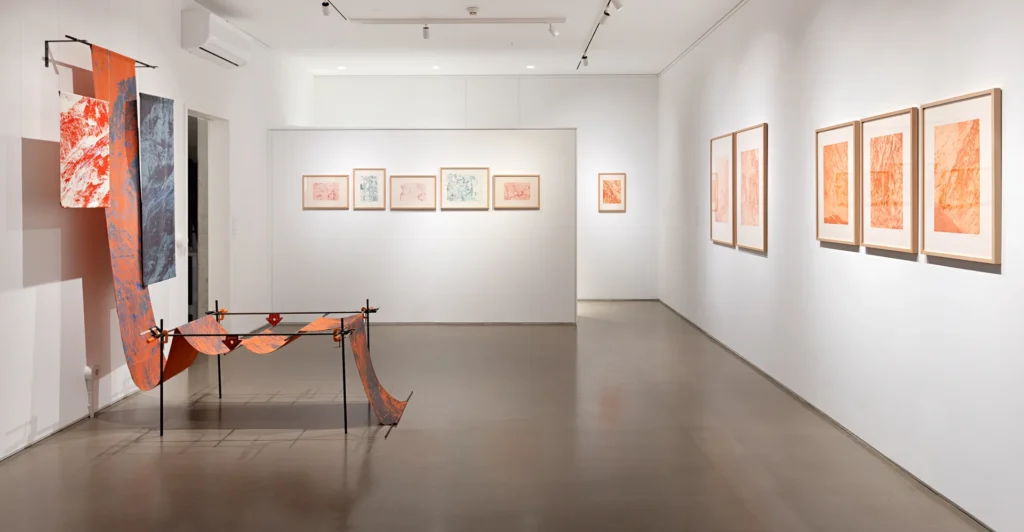
Given this state of affairs, Regaldo presents the exhibition On the proportion of Forms at the Coletivo Amarelo gallery, curated by Giulia Lamoni and Margarida Brito Alves. It is a dive into the artist's latest investigations, who, despite her multidisciplinary trajectory (including visual art, drawing, and installation), has been specializing in printmaking. This creative movement resulted in the series Deslize and Morfológicas, both begun in 2024, which contemplate similar concerns regarding the human relationship with mineral matter, comprising the majority of the exhibition. Also included are two installations, Oscilação (2025) and Íngreme (2025). The first consists of a silkscreen print on fabric mounted on an iron structure, and the second is formed by engraved copper plates suspended from a metal frame.
In turn, the Deslize series deals with the issue of glacial melting and emerged from a residency in Spain to reflect on this phenomenon in the Spanish Pyrenees, especially in the Aneto and Maladeta peaks. In a set of six metal and aquatint engravings, in reddish tones of astonishing clarity, the rugged reliefs of these peaks are observed, and a search is made to capture the movements of the mountain range, establishing a contemplative relationship with geological time, in a play of scales between humanity and minerality that incites awareness of the different – but also coinciding – ways of looking at the space and time we inhabit together with the mountains.
The Morfológicas series, in turn, comprises a series of ten engravings – also in metal and aquatint – and draws from Regaldo's broader collection of archives and maps to reflect on issues that seem to affect what could be considered a “geological affectivity.” That is, if at first we observe a cartographic inclination, an aerial observation of the territory, where the use of geomorphological maps leads to detailed attention to contours, unevenness, and elevations, making us intimately scrutinize the mountainous forms and proportions; in a second moment, Morfológicas begins to delve into the ground, in a stunning grounding, where the engraving becomes microscopy, where what previously seemed to be a map ends up becoming a microorganism.
Summoned words also appear in what the artist considers unconscious writing: "Caminho por voltas, caminho por séculos, caminho por orlas, caminho…" ["I walk through turns, I walk through centuries, I walk along edges, I walk…"] where it becomes impossible not to think of the famous assertion by the conservationist and environmental philosopher Aldo Leopold: "Think like a mountain." And in this, we not only think like it, but we also become it, which is what Flavia Regaldo's refined artistic and investigative work finally manages to evoke: a reflection of proximity on mountains, time, and affections.
On display at the Coletivo Amarelo gallery in Marvila until January 24, 2026, this is an opportunity to discover a stimulating work about the relationships we establish with the natural world. Admission is free.
BIOGRAPHY
João Pedro Soares (Almada, 1995) is a filmmaker, researcher and writer. He holds a degree in Arts and Humanities from the University of Lisbon and a master’s degree in Screenwriting and Directing from ESTC. His work spans film, photography and writing, focusing on human-nature relations, ecology, regenerative futures and the intersection between art and agriculture. He is a PhD candidate in Artistic Studies at NOVA FCSH, researching ecology in contemporary Portuguese documentary cinema. He directed the award-winning short films “Portrait of a Man as an Island” (Fnac New Talents Award 2021) and “The Relentless Conquest of Darkness”, both of which have been screened at major festivals. He has published essays, short stories and poetry.
Exhibition: On the Proportions of Forms
Giulia Lamoni and Margarida Brito Alves
“Stones, like us, stand at the intersection of countless lines crossing one another and receding to infinity, at the centre of a field of forces too unpredictable to be measured; and we awkwardly call the result chance, hazard, or fate.”
Marguerite Yourcenar, “Introduction” in Roger Caillois, The Writing of Stones, Charlottesville, University of Virginia Press, 1985, p. xix.
Particularly attentive to mineral life and to its cycles, movements, and transformations, Flávia Regaldo (Belo Horizonte, 1984) has been developing a body of printmaking work that explores different techniques and sensibilities. Within this practice, the relationships she establishes with the natural world intertwine with personal experiences and narratives through a singular process of inscription.
Forms — but also failures, accidents, fissures and fractures, as well as the reconfigurations that this world offers her — become the starting points for an exercise that unfolds equally through history and its vestiges, and through projection and imagination.
It is this research, developed around the interconnection between critical observation, poetic dimension, and the craft of printmaking, that the exhibition On the Proportion of Forms continues, bringing together recent works from the series Lapse and Morphologics, while placing them in dialogue with three-dimensional pieces.
The body of works presented explores different formats and materialities, proposing an unfolding — or expansion — of printmaking itself and of its processes. Embracing an experimental dimension, in some works printmaking incorporates the written word, while in others it seeks a place beyond the limits of the two-dimensional surface, extending or composing itself within space.
If the works in this exhibition thus find themselves in an unstable relationship with the spaces they recreate and occupy, they simultaneously question our notions of time, memory, affection, and landscape, as well as the relationships we establish with them.
Operating across different scales — ranging from the imposing presence of mountains in Lapse to the cellular geography of the maps in Morphologics — and invoking distinct temporalities — the instantaneity of photographic capture and the slow, laborious practice of incision — Flávia’s works reveal a careful gaze that oscillates between the (apparently) nearest and the most distant, between the transformations that shape the body of the mountain and the fiction of drawing.
In this sense, the lines of separation between the trace — the words and lines engraved onto metal, printed on paper or fabric — and the signs delineated by rocks, stones, and mountains, in their striking or imperceptible movements, seem here to find the possibility of connecting and suturing.
Reconfigured through the gesture that fixes its representation and gives body to the texture of the lithic world, the landscape — contemplated, but also examined and lived — is not perceived here as inert or passive, but as alive and active, inviting us to participate in an encounter whose contours remain yet to be defined.