Flavia Regaldo
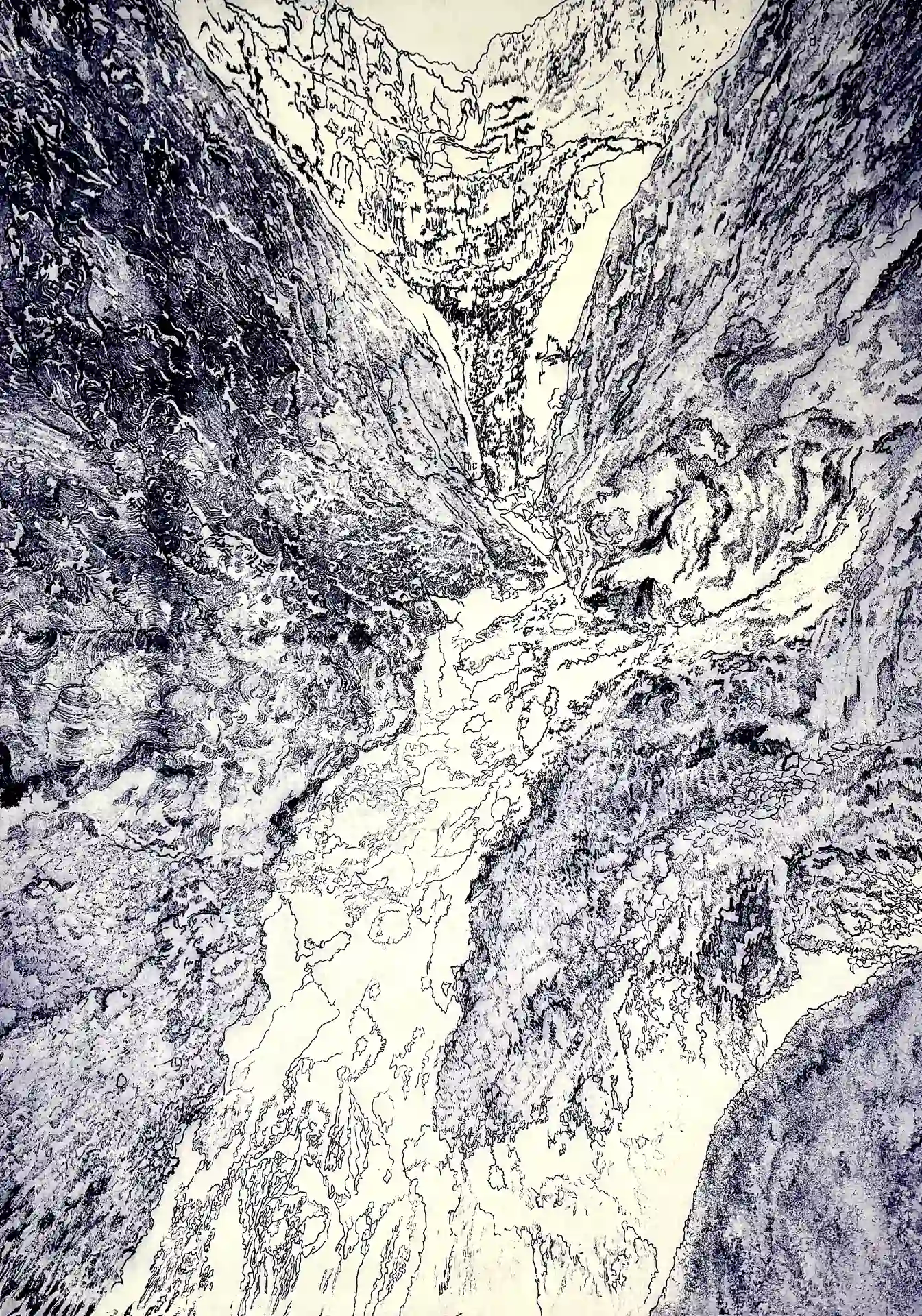
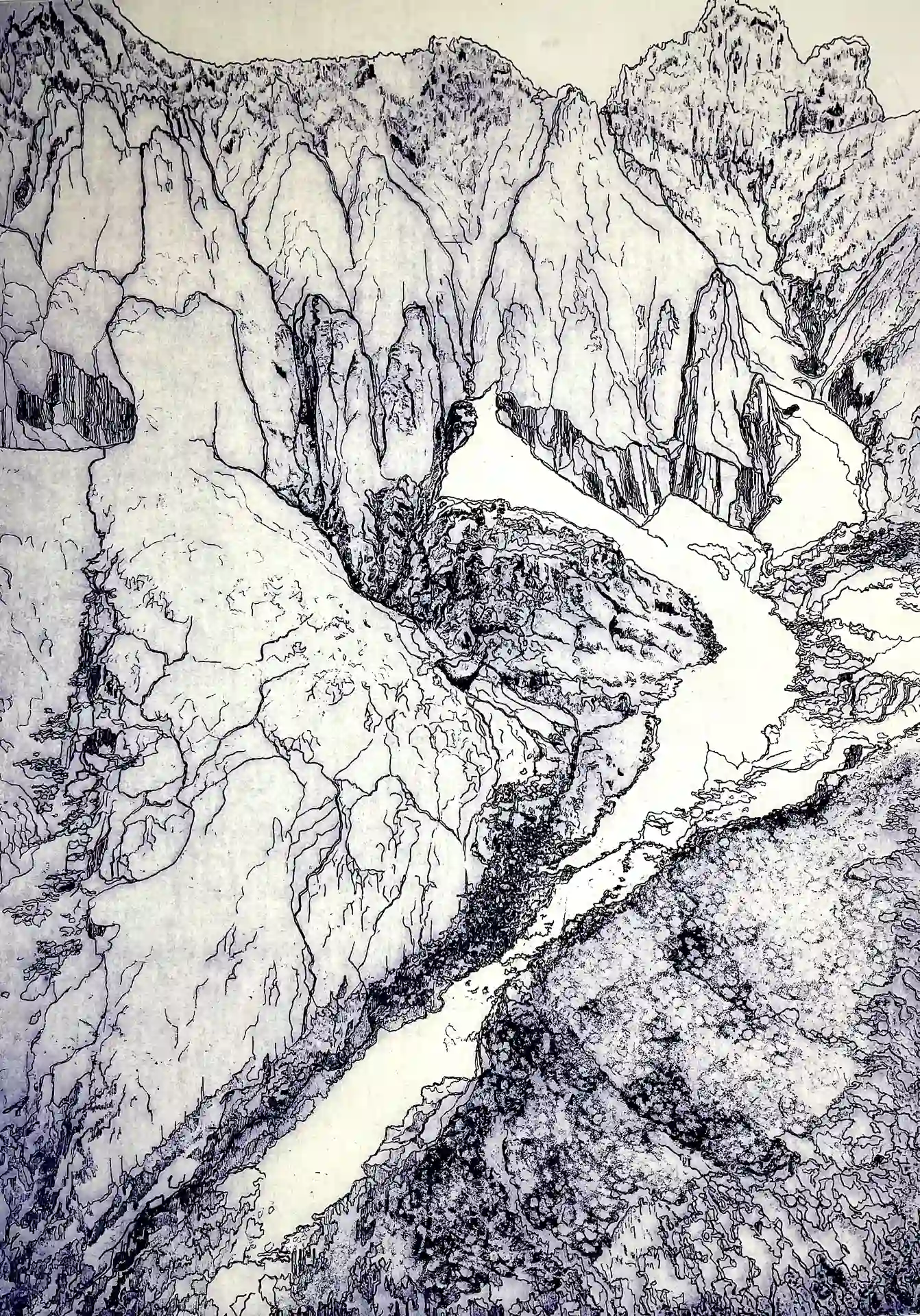
On the coast, the cliffs. Entangled in subtle motion. They lay bare the open,
in which everything is energy. A latitude, a diagonal—which which measure prevails? Not everything is straight, and the belly of the deities swallows and digests the new villages, the ancient civilisations.
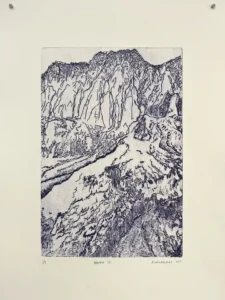
A series of eight etchings. Photographs of the coast of Bahia, Brazil. Lagoa Azul Beach.
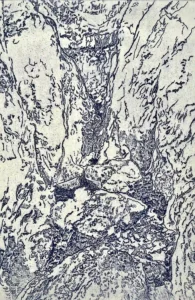
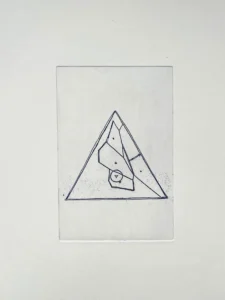
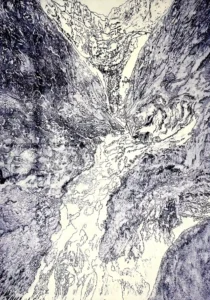
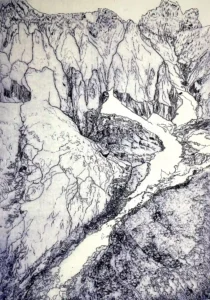
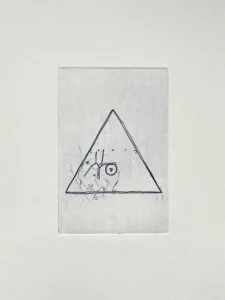
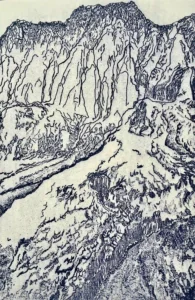
- Abrupt VI_ etching_ edition of 9_ 35x25cm
- Abrupt V_ etching_ edition of 9_ 50x35cm
- Abrupt III_ etching_ edition of 9_ 50x35cm
- Abrupt VII_ etching_ edition of 9_ 35x25cm
- Abrupt II_ etching_ edition of 10_ 100x70cm
- Abrupt I_ etching_ edition 10_ 100x70cm
- Abrupt VII_ etching_ edition of 9_ 35x25cm
- Abrupt IV_ etching_ edition of 9_ 50x35cm
“Wind Patterns”, Plato Gallery 2025 _ Porto / Portugal
“The Extractive Gaze: Data, Soil and Body”, Gaat Gallery 2025 _ Lisbon / Portugal
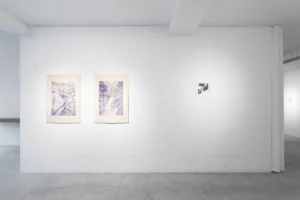
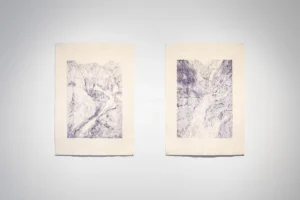
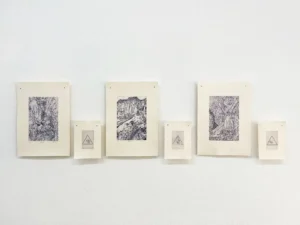
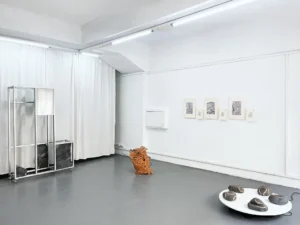
Exhibition: The Extractive Gaze: Data, Soil & Body
JP Galvão
Exhibition: Route of the Winds
Maria Miguel von Hafe
Exhibition: The Extractive Gaze: Data, Soil & Body
JP Galvão
A group show featuring Fernando Moletta, Flavia Regaldo, Natália Loyola, Pedro Gramaxo,
Pedro Pedrosa Fonseca, Stephanie Monica & Diogo Amorim.
Curated by JP Galvão
“I was plunged into a state of wonder and admiration. I was in the process of witnessing the unveiling of
the mysteries of the subterranean world!”
— Jules Verne, Journey to the Center of the Earth
Verne’s cry of discovery echoes into our present, but its meaning has shifted. The contemporary
subterranean is not just a geological stratum; it is the data mine, the biological sample, the
archived memory beneath the skin. We no longer journey to the centre of the earth, but into the
extracted core of our own existence.
Once, on a certain winter day, I stood before a vast landscape of cliffs in south west England —
surrounded by the sea, the rocks, the clouds, the soil. I was absorbed in the rawness of it, in the need to
share that encounter with another: a friend, a lover, someone who would understand the quiet pull
between body and earth. Like so many of us, I carried a device that extends my gaze and captures
presence. That moment became not just a photograph, but a data imprint — a digital echo of an
embodied experience. We are here, on this earth, and simultaneously there, in the cloud. A photograph is
made; an extraction occurs. (personal note from the curator, December 2018)
This exhibition, The Extractive Gaze: Data, Soil & Body, explores the parallel systems of
control that see both the Earth's skin and human skin as contested territories. The colonial gaze
that once mapped land for extraction now operates as a biometric and corporate gaze, still a
matter of war and colonization, erosion, desertification and ethnic cleanse. Our faces and
fingerprints unlock devices; our gestures feed the cloud; our movements in the city are tracked;
our genetic code becomes a resource for pharmaceutical empires. As theorist Shoshana Zuboff warns in The Age of Surveillance Capitalism, “The goal now is to automate us.” We are the
raw material. The “virtual you” is the new oil, mined, refined, and distributed through invisible
circuits of power.
In this system, the gaze becomes a tool of extraction. It is the mode of looking that frames its
target—be it a forest, a body of water, or a human body—as an object available for taking. The
Earth’s skin is stripped of its minerals, its oil, its life — while human skin, too, is mined for data,
reduced to code, image, and biometric trace. The parallel is not metaphorical but material.
In response, the artists in this exhibition propose a different kind of looking: a deeper, more
attentive gaze. They present works that are portraits of the earth in different tones and
perspectives. That engages with elemental materials—stone, sound, oil, clay, soil, paper,
resin—and technological devices, creating connections that ask us to reconsider our
relationship with these layers. The soil holds fossils, seeds, minerals — a geological memory of
transformation. Our own skin holds DNA, scars, and the memory of touch and trauma — a
biological memory of intimacy and survival.
As you move through the space, you are encouraged to listen, to observe the textures and the
hum of data. Here we are invited to linger — to look longer, to feel the porousness of our
presence. The earth, in its many forms, is not a passive backdrop. It steadily gazes back. In a
world of constant extraction, how do we move from being a resource to be mined back to being
a body in reciprocal contact with the earth?
Exhibition: Route of the Winds
Maria Miguel von Hafe
Rota dos ventos 5 April – 10 May 2025 With: Ana Grebler, Flavia Regaldo, Julia Baumfeld, Juliana Matsumura, Laura Caetano, Ska Batista. Curated by: Ana Grebler
Perhaps a text is, deep down, a game of rhythms, of footsteps, of the time it takes between one word and another. Perhaps a text is a guide. Imagine me carrying a flag, or two. Free tours.
This is a text about a set of graphic marks — no, of writings — no, of engravings. Engravings. To engrave. Time. Through time. By means of it. Like writing, printing. Expansion, reach. Far away, it travels far and it is not unique. Out there. Beyond. Back here. Going and returning. One continent, two continents. An exercise in imagination: there! here! beyond! over there! Gravity. Weight. Movement. Come on! But then laziness... Drag. Traction.
Friction. Because time and distance are lies. Lies that weigh on the body. Ten-hour journeys are ten-year journeys. And how long does creation take? How long does an encounter take? How long do we spend in a place, and how long until it becomes ours? To discover. To draw. Drawings on the earth. On the sand. On the mud. Furrows. Ink (whenever I think of furrows, I always think of ink). Impression. Touch, skin. Paper. Image. Map. Body. Hand. Ink, again. The drawing of the palm
of the hands. Fate traced out. Already from afar, already forever. The path to be followed. The path cut through. Journeys and others. Those who pass through us, who find us, who seek us. The river and the sea.
What goes and keeps going, and what returns. Forever. As though that were its destiny: to leave only to return. And we, traced through time and drawing the mirror of what surrounds us. Of the mountains of our body, of the voices that, sharpened, pierce. Deep, profoundly. That tell us — come back. Or else — stay, I will come to you. The world is a translation of what inhabits us intimately. Of lines. Of character. Of the sea as though it knew its own scale: immense, infinite. Ten-hour journeys that are... impossibly eternal. Time passing
and distance. Never again, no. Never. What ground is this? I remember looking at the moon and seeing myself in it. Twenty-eight days. Everything in the world and around it seems to reveal itself within us. As though we were part of it. As though we were world, earth, nature, landscape. As though we were landscape. As though we were moon, sun, water. As though we were
night, mist, darkness. As though we were, and as we are. As we contain it, as we let it show through us. As we fall silent and as we melt. As we freeze, as we cry. And how it is in that senseless manifestation that we become capable of looking and understanding: that way! The door had opened through the tears. Like a compass, the sea always knows where to return.